Tag Archives: Authors

10 Questions with Alison Morton.

Today I’m very glad to bring to you a Q&A with Alison Morton, author of the Roma Nova series.

You can read my reviews of Aurelia and Insurrectio by clicking the images below to open a new window.

51pkqvjge9l29845159


One of the biggest things I’ve enjoyed about the series is that it turns the traditional and outdated idea of social structure on its head.

I hope you enjoy the questions, do let me know your thoughts 🙂

P.S look out for my review of Retalio book 6 in the series soon!


Q1 – For anyone who’s read my reviews of your works I’m sure they will know how much I’ve enjoyed reading them but for anyone new what would you say to convince them to give your books a try?

You don’t believe in starting with an easy one, do you, David?  😉

Seriously, I try to provide a cracking story and provoke a few questions along the way. Yes, my books are thrillers, but without dripping body parts and with a different take on what might have happened at the end of the Roman Empire.

I enjoy a good twist when I read, so I like to put a few of those in my own books, but of course, all good reads are not only about the story, but equally about characters. We love to gasp with horror, feel that frisson of fear, fall in love and celebrate along with our heroine (or hero).

Q2 – Strong female leads are something I’m starting to see more and more in books and I love it. Did you always set out to write a series that knocks on the head the idea of the male characters being in charge?

In brief, yes! I wanted a female character who led the action and pushed the story through. Too often the woman is the sidekick or the mother/daughter/sister/colleague who waves the hero goodbye as he sets off on his quest, whether in the 4th, 21st or 43rd century. Virginia Woolf wrote in 1929 about fictitious women, “But almost without exception they are shown in their relation to men.” So it’s nothing new!

A little secret: if I find myself slipping back into the action man/passive woman trap when writing, I reverse the dialogue to make sure my heroine is making the decisions!  But it doesn’t make Roma Novan men any less masculine or tough. (I explain it all here.)

Q3 – Your idea of alternative history and that the fall of Rome didn’t mean the end of Roman culture opens up lots of writing possibilities, where did the idea come from?

Several things! I’ve been a ‘Roman nut’ since I walked on my first mosaic at Ampurias in northeast Spain. In fact I’ve clambered over quite a lot of Roman Europe! The idea of a modern Roman heroine has been bubbling away in my head for years.  She would have to be modern as even in Late Antiquity no woman could have a public role, let alone a military one, and Rome was essentially a military society. Then I read Robert Harris’s Fatherland and learnt about alternative timelines and outcomes.Two more neurons connected in the brain!

No fingers were hovering above a keyboard yet, though. Then I saw a really bad film. The cinematography was gorgeous, it was set in modern Rome and it had the enormous bonus of starring Ewan McGregor. (Your women readers will understand the last one better than men, I feel.) However, the dialogue and continuity were rubbish. I knew I could do better. The trigger was pulled. Ninety days later I had a manuscript of 90,000 words. Rubbish, of course, but it went on after much slashing, rewriting and polishing to become INCEPTIO.  The legend of Roma Nova was born.

Q4 – The great thing about the setting of your tales is that you have some leeway with historical accuracy. Was the accuracy in describing the Roma Nova culture important to you?

Absolutely! I have an MA in History which has given me a grounding in being picky about accuracy and sources in a methodological way. I don’t think you can alternate history without knowing it first.

When you choose to diverge from the standard historical timeline, you have to know exactly what the world was like at that point. This is the last solid foothold you have on the historical record. For example, the Roma Nova storyline is that the group of senatorial families who trekked out of Italy at the end of the fourth century to become the first Roma Novans were pagans persecuted by Christian Emperor Theodosius II. This persecution really was taking place at the time (not something we’re taught about). Theodosius signed the final edict outlawing worship of the traditional Roman gods in AD 394; the punishment was death.

Once you have researched that divergence point in time ad nauseam, then you project forwards using historical logical until you reach thelater time when your story is set. It helps to have a general knowledge of ,and a feel for ,history here. If not, research!

In fact, everything has to be checked from technology and attitudes in the 1960s (AURELIA), how to mount a coup d’état, intelligence techniques, warfighting of the 1980s (INSURRECTIO, RETALIO), weaponry, signals, locations and transferable Roman practices for all the books. But I love research. Honestly!

Q5 – How long have you been a writer and what influenced you to first put pen to paper?

I’ve written most of my life, but mostly practical stuff: student theses, government papers, exercise reports, corporate documentation, PR copy, articles, an academic dissertation even. As a trained translator, my work turning foreign language text into English was precise with a touch of creativity in expression, plus I edited at least one million words in that time. Now, making up stories? Ever since childhood. Writing them down? That only started in 2009 with that bad film.

Q6 – Would you contemplate writing a book in any other genre?

Ha! The great Conn Iggulden who endorsed INSURRECTIO gave me a suggestion about that. But I’m not telling at the moment!

Q7 – How important is feedback from your readers?

Very important. I’m not so grand that I don’t read and take notice of my reviews. Of course, they are all subjective, but I’ve gleaned some excellent advice from readers and fans since INCEPTIO was published in 2013.

The Roma Nova Enthusiasts’ Group on Facebook is small but going well, as is my Facebook author page and I always love it when people react to my blogposts (alison-morton.com) or tweets (@alison_morton).

Q8 – Who have been your biggest influences within the writing community?

This is such a difficult question as it changes all the time! Like many Roman writers, my first Roman book was The Eagle of the Ninth by Rosemary Sutcliff. I grew up on a very mixed diet of fiction, swinging from Georgette Heyer, Leslie Charteris’s The Saint to Peter O’Donnell’s Modesty Blaise and Dennis Wheatley’s adventure tales.

I adore Gore Vidal’s Julian, and anything by Margaret Attwood and Tom Clancy. These days, Lindsey Davis is a clear favourite along with Steven Saylor, Ruth Downie, William Boyd, J D Robb and of course, Robert Harris.

Q9 – What books are currently on your reading shelf?

Legionary: the Roman Soldier’s (Unofficial) Manual by Philip Matyszak. I’m enjoying it tremendously. I’m ex-military myself, so it’s raising a few smiles.

Q10 – Future plans? More books I hope J

More books, certainly!  I’ve just completed a novella featuring Carina and set between INCEPTIO and PERFIDITAS. Perhaps I’ll write more ‘inbetweeners’ or a collection of short stories. Then there’s the foundation story of Roma Nova waiting for me…

Thank you so much for letting me ‘invade’ your blog, David!


10 Questions with……. Jesse Teller PLUS SNEAK PEAK :P

Hello!

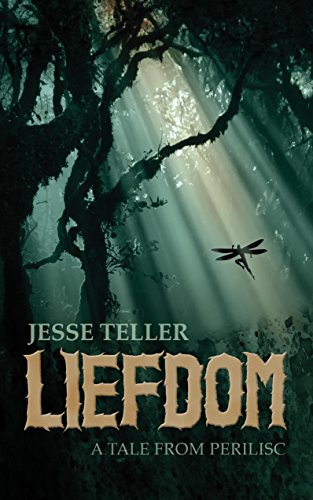
Did you see my review of Liefdom by Jesse Teller? No!! well click here to read it quick! 

Today I’m very glad to continue my 10 questiosn with feature with non other than Jesse Teller himself who very kindly took the time to answer some of my questions.

I do hope you enjoy, keep reading to the end for sneak peak of whats to come next from Jesse!


Wellcome Jesse,

Q1 – For anyone who’s read my reviews they will already know about the life of Gentry Mandrake but for those who’ve not had a chance to read the book yet can you give them a little insight into the story?

Okay, so Gentry Mandrake is a fairy. In my world, fairies are born to a different realm called The Veil, and every time a fairy is born, a child is born. That fairy and that child are bound together. The fairy serves as the child’s immune system to magic and other properties of my fantasy world. If the child dies, the fairy dies, and vice versa. All children are born innocent. So when Mandrake is born and he’s of monstrous size, has natural armor, and natural weapons, it begs the question, what kind of monstrous baby could have inspired such a monstrous fairy? We find out during the course of the book whether Mandrake is really a monster, serving a monstrous child, or if he is something else.

Q2 – I love the idea of the connection between humans and fairies..and especially the idea of the consequences of being a bad human/fairy has on the other.. Where did this idea come from and did it take a while for you to develop it fully?

Well I guess you could say parenthood. If a parent goes sour, usually the child does as well. Not all the time, but sometimes. So, in my world, when a fairy becomes jaded and dark, so does the child, and vice versa. This puts fairies as the guardians of the child’s innocence. Just as, in many ways, a parent is the guardian of a child’s innocence. When a person goes truly evil, when a child goes truly evil, it’s soul is severed from the fairy, and the fairy has a chance to turn itself back. This is the shift between changeling and imp. This mimics parents and children too, because when people become truly evil, it’s not necessarily a reflection of the way they were raised. At a certain point, they just cannot blame the parents anymore for their own decisions. In Liefdom, as in most of my work, I’m studying the relationship between parents and children.

Q3 – Something that really sticks with me from the book is the progression Mandrake goes through as the story develops. My number 1 must for a book is character development and I loved how you managed this. Was it hard for you to find the right balance between action and character development?

Not really. Character development is not an engine in itself. A lot of writers consider themselves masters of a train yard. On one track, they have plot development, on another they have character, and still another they have scene development, setting, voice. To these writers, they are managing the travel of all these different trains on many different tracks, trying to get all the goods, all of the story, in one place at one time, at different paces, with different strategies. For me, this analogy doesn’t hold up. I’m more like an arsonist burning the story to the ground. Create certain things, let’s call the heat of the fire the plot, the smoke is character development, the fire itself is the action. All these things go up simultaneously. All these things happen at the same time. So, the action creates the character development. I don’t see them as separate entities at all, just one great conflagration.

Q4 – How long have you been a writer and what influenced you to first put pen to paper?

Well it was my first writing assignment, right? That’s when everybody starts writing. They’re in grade school and they’re told to write some sort of short story. Mine was about a purple hippopotamus. I was in fifth grade. Some writers, it starts in college, when they can put together their ideas and they are driven. They’re telling themselves, this is what I want to do for my career, and they’re moving towards that goal. With me, I didn’t have that. There was a whole life full of distractions. I wrote occasionally. I wrote when I was given an assignment to. I didn’t really start creating a world until I was much older. Didn’t start writing with purpose until high school. But the thing that told me I really wanted to do it was the way it felt. Telling a story, creating a story, something captivating, something that pulled the reader, if just for a second, out of their world, their understanding. I was aware of that in fifth grade. I became aware of it with every story I told. It gets seductive after awhile. Coming up with a story for people to talk about, for people to experience, you can get carried away with it if you let yourself. It pulls at you, gently at first. If you write another chapter tonight, then you can spend the day talking about it with your wife, with your friend. It gets seductive. It can turn you into a junkie if you let it.

Q5 – Would you contemplate writing a book in any other genre?

I’m working on an autobiography. I’m not intellectual enough for sci-fi. Not funny enough for comedy. I’d love to be able to write historical fiction, maybe medical drama, but these have a lot of research to them. I respect authors of all genres, but fantasy is really my thing. In fantasy, if you can dream it up, you can find a way to make it happen. In fantasy, you can be undone by an infection, or standing your own against thousands of men. Fantasy is really the only language that I speak.

Q6 – How important is feedback from your readers?

Well, you can’t grow without feedback. That’s just a fact. If you’re writing in a bubble, you can’t expect to move on when you find yourself churning the same ground over and over again. I’ve got two people who have read everything, and they keep me honest. When a new review comes out, good or bad, I’m excited about it, because I learn from all of it. I find peer review to be the most helpful, hearing the opinions of other writers. But everybody who reads my work has an opinion, and I’d love to hear all of them.

Q7 – Who have been your biggest influences within the writing community?

Anybody who works really hard, who puts out quality work relentlessly. Glen Cook was really big for me in this respect. He put out a lot of solid work and I liked his gritty take on the fantasy genre. I went to a lot of workshops with an agent named Donald Maass. He had a big influence on how I wrote, process and technique. I’m inspired by author/marketers. There are indie authors who write and publish their own work and then spend years marketing it and getting it out to the world. That’s just inspiring to me. I can’t really pull that off. I’m obsessed with the work. I find myself working late at night, isolating myself in the work, pounding out one word after the next. But my wife does all my marketing. If she didn’t, nobody would ever hear of me. I’m not even sure I would ever publish, just sit in my basement and pound out one word after the next.

Q8 – What books are currently on your reading shelf?

Paradise Lost, John Milton. This has been a dream for a long time, a long time. The idea of the process of writing this piece sets my imagination on fire. This guy was blind when he wrote this epic poem. He was blind, which means he couldn’t write it out himself, he had to dictate it. When you’re writing, part of your mind’s eye is in the place that you’re writing, but your actual eye is on the board or on the screen. You’ve got that veil between you and the world that you’re writing about because you’re looking at a screen. This veil, this tiny step of distance that most writers have, Milton didn’t have. So when he described the fall of Lucifer, he was in the air tumbling at the same rate as Lucifer. When he described the building of the castle Pandemonium, he stood on its foundations as it was being erected. He knew the fires of Hell. He knew the bliss of Heaven. He experienced it all as he was dictating it. I’m also going to read the rest of Robert E. Howard. I’ve got his complete works. He’s my favorite writer of all time. I want to say I’ve read everything he’s done. He was a contemporary of H.P. Lovecraft. He wrote pulp fantasy and horror, created Conan, Kull, Bran Mak Morn. He wrote Solomon Kane, the puritan warrior witch-hunter, demon-hunter. Can’t get enough of that guy. I’ve got some of my own contemporaries on the list as well, other indie authors, Dyrk Ashton, Josiah Bancroft, M.L. Spencer. It’s an exciting time to be a reader. Before now, there was never really a viable way for a writer to get his or her work out unless they were traditionally published. Now there’s a free flowing of ideas and experimental projects that we’ve never seen before.

Q9 – What’s the best bit of advice you would give to those considering writing a book?

Write all the time. Pick a small window of time during your day every day and allow yourself in that time to obsess about your work. Throw everything else away, just for those brief half-hour, two hours, four hours, throw everything else away. Allow yourself to say, “Nothing else matters at this moment but my work.” And then just go, just pound out the words, just write and write and write, and when the timer goes off, and it’s time to go back to the real world, do so, content in the knowledge that tomorrow that same window of time will be open to you.

Q10 – Future plans? And will we see Mandrake again any time soon?

My future plans are to publish 1-2 novels every year for the rest of my life. I’ve got a book coming out in October where Mandrake makes a cameo. But in the releases for the next 15 years, we won’t see Mandrake. As time progresses, I believe he’ll come back into the main story unfolding of the world, but for now, Liefdom is the only glimpse we have into Mandrake. I’ve written a number of rough drafts, they’re poised and ready to go. I’ve got a lot of story saved up, waiting on a shelf. So keep your ear to the ground. You’ll hear more from me soon.

Thanks Jesse!


What’s next for Jesse.. well pn the 5th October his new book Song is released!
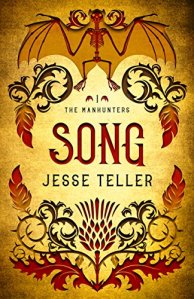
61IwerjRIcL

Here’s the blurb –

Some of the darkest minds in Perilisc attacked Mending Keep, releasing all its prisoners. Despite his strained relationship with the crown, Rayph Ivoryfist calls old friends to his aid in a subversive attempt to protect King Nardoc and thwart terrorist plots to ruin the Festival of Blossoms. But someone else is targeting Rayph, and even his fellow Manhunters might not be enough to save him.

Jesse has kindly given me a excerpt to share with you all, do let me know what you think of it. If you like what you read head to Amazon to pre-order your copy now!

The Guard of Mending Keep

One Year After The Escape

The serving boy’s face was stained green with disgust and horror. He looked about to be sick, about to flee, about to weep. Rayph saw the trembling lip and the panic in the eyes, and he knew what the boy was carrying. It was small, maybe a little over a foot wide, spherical, and covered with a towel. The boy wove a path through the reclining bathhouse patrons and made his slow, methodical way around the main tub to the corner where Rayph sat with his good friend, playing crease and taking in the steam.

As the boy drew closer, the dread that rose up within Rayph prompted him to turn to Dova and grimace. Rayph moved his tile, tapping it lightly with his finger, and shook his head.

“I’m afraid we are about to be interrupted,” Rayph said.

The boy trembled beside the gaming table. His white, sweating face held the world’s shock, and Rayph nodded at him. “Set it down.” He waved his hand across the boy’s eye line and muttered his spell’s incantation. The serving child’s face smoothed clear of all trepidation, and he let out a long-held breath.

“Where did you get it?” Rayph asked.

The boy’s dark eyes looked troubled even through the effects of the spell. “He hurt me,” the boy said.

“Hurt you how?” Rayph asked.

The boy pointed to his temple. “He got in here. He burned me.”

Rayph clenched his fist and anger bubbled deep within him. “What did he look like?”

“He was trimerian, but his third eye,” the boy rubbed his forehead, “it seemed to be flaming. He stunk of sulfur.”

Rayph’s blood ran cold, and he stood. “Watch the boy. Lock down the house. If he returns, do not engage, just defend, Dova. He is beyond even you.”

He looked to his ethereal friend, naught but churning wind where his body sat. The towel draped over Dova’s shoulders and tied around his waist, the only indicator of his form.

Rayph grabbed the boy’s shoulders a little too rough, just a little too hard. “Where did he go?” Rayph tried not to let fear get the better of his voice, but it trembled. There are so many innocents here. If he unleashes, how much of the city can I save? The answer was very little.

Dova exploded with a slight puff of wind. The towels fell to the floor. Rayph could feel his friend fill the room, warm air, fluttering and vibrant with life, swelled, blowing curtains in a flurry. The doors to the bathhouse slammed shut.

“Where did he go, son?” Rayph asked the boy.

“Who said he’s gone?” The voice held a new lilt of arrogance to it, a soft tinkling, musical and filled with spite. The boy leapt back. His forehead ripped open, betraying an eye. His back split and out flapped two wings that bled greasy smoke.

“Clear the room,” Rayph commanded as he loosed his spell. The power of the spell’s thrall was so great that every reclined man leapt to his feet and rushed for the door. The doors flew open to slam closed again. Every lamp in the room surged, hissing flame before dying completely. The room was thrown into gloom, the only light issuing from the great opening in the roof centered over them.

With a flick of his wrist and the uttering of a command word, the air around Rayph’s right hand tore and his sword dropped from the wound. The air zipped closed again, and Rayph turned to the serving boy, who hovered before him.

“You harm that boy any further and I will hunt you, Meric. I will plunge into that darkness you surround yourself in and I will rip you from it.”

The boy tossed his head back and unfurled a hideous laugh that trembled the ceramic tiles of the wall. “I have not come to quarrel with you, old friend.”

“You and I were never friends,” Rayph said. The sky above the opening darkened, and Rayph stepped closer. “Why have you come here? Why show yourself now, after this many millennia?”

“The nation is wide open, dear friend. No one is watching over Lorinth in your absence. You have forsaken your post.”

“I still guard this nation. I serve not the throne, but this is still my home. I will return as court wizard one day.”

The boy’s head lobbed back, and he poured out another hideous laugh, so violent the corners of the mouth split, and the boy coughed blood. “Too late, Rayph, you will return too late.” The head shook. “You have not yet looked at the present I left for you. How rude you are, Ivoryfist.”

Rayph extended an arm toward the table and muttered a word. His eyes stayed locked to Meric as the object floated the room to hover before Rayph. With a jerk of the cloth, he unveiled the severed head. Rayph looked in horror at the face, so contorted in pain from its last moment he could not recognize it.

He stared at it. The left side of the face was badly burned, the neck severed with some keen, hot blade that cauterized the wound perfectly. Deep claw marks covered the right side of the face and neck. Blood stained the chin and mouth.

Rayph’s heart broke out in a rampaging rhythm, and his mind burst into flames as he recognized the face. “No.” He looked away, but his eye was drawn to the head again as the identity of the head locked in his mind. “It can’t be.”

A gurgling laugh filled the room, and Rayph summoned forth the power to smite Meric.

“No, Rayph, you mustn’t!” Dova screamed. He threw his whistling form before Rayph, and two thrumming hands landed on his shoulders. The air that comprised Dova’s body filled with the water of the tub they stood in, making a figure of rampaging moisture. “If you engage him here, you will destroy my city. You must not.”

“Listen to Dova, Rayph. He always was one for caution,” Meric said. “Caution and cowardice looking so much alike and all.”

“Rayph, who is it?” Dova motioned toward the head.

“Stoic,” Rayph breathed. “He has killed Stoic.” Saying it aloud let the words take on meaning. His friend was gone, his guard, dead. What would become of Mending Keep? Had they all fled? Had the world’s unkillable fiends made good an escape?

He knew the futility of the words before he spoke them but felt helpless to say anything else. “I will make you hurt for this, Meric. In this one act, you have killed yourself.” Rayph felt nauseous.

“Step aside, Dova,” he said.

“Oh, my dear Rayph, please do keep tight check on that temper of yours. I would hate to reduce this city to rubble because you threw a fit,” Meric said. The black smoke issuing from the flapping wings filled the room with unbreathable air. “Stoic is gone, as are his charges, but that does not mean we need come to blows. I was not the one that killed your boy.”

“This head was severed with your blade. Do not try to deny it.”

“Yes, for easier transportation, I assure you. He was dead long before I got there.”

Was Meric lying? Did he have any reason to? Why bring the head at all? Meric was not one to gloat. It was not his way. Why alert Rayph the prison had been broken in to? There was an element to this Rayph could not see, something big moving powerful pieces about the board.

“Who did this?” Rayph asked.

The boy laughed again, weaker this time. He doesn’t have much time. I have to get Meric out of that boy as soon as possible.

“I won’t do all of your work for you, Ivoryfist,” Meric said. Lightning flashed outside, the inky clouds that followed Meric everywhere boiling in the sky above them.

“Does this mean you’re coming off sabbatical?” Meric asked.

“I will find out who did this and why, and when I do, if your name comes up at all…”

The boy laughed again, a hissing wheeze that scared Rayph.

“Remember who helped you when it all comes out, Rayph. Remember who alerted you to the break. You owe me now,” Meric said.

“I owe you nothing. You did not do this for anyone’s reasons but your own.” It’s big. It’s really big, but I can’t see it.

Meric laughed again. The wings pumped, throwing blood through the air, and the boy’s body lifted.

“Leave the boy!” Rayph said.

“You don’t give me orders any more, Rayph. Those days are over.” The boy’s body lifted high above the bathhouse, and Rayph splashed into the center of the tub to stare up at darkened skies. With a deafening explosion, Meric broke loose of the boy’s body, and the child dropped. Rayph set his feet and watched as the body tumbled. The boy dropped through the opening in the ceiling, and Rayph caught him in his arms. The sky opened and rain hammered the city. Rayph looked up at his friend and grimaced.

“I must leave, Dova,” Rayph said. “But first I have to know what happened to Stoic. Can I use your lab and summoning room?”

“Everything I own is at your command, Ivoryfist, you know that.”

The boy woke up screaming.

Did you enjoy that? if so why not pre-order your copy of the book – Amazon

About the Author

Jesse Teller fell in love with fantasy when he was five years old and played his first game of Dungeons & Dragons. The game gave him the ability to create stories and characters from a young age. He started consuming fantasy in every form and, by nine, was obsessed with the genre. As a young adult, he knew he wanted to make his life about fantasy. From exploring the relationship between man and woman, to studying the qualities of a leader or a tyrant, Jesse Teller uses his stories and settings to study real-world themes and issues.

He lives with his supportive wife, Rebekah, and his two inspiring children, Rayph and Tobin.

Recognition

SPFBO 2017 entrant
Literary Titan Gold Book Award Winner, April 2017
Drunken Druid Editor’s Choice, March 2017
Drunken Druid 2016 Book of the Year Short List
Hungry Monster Gold Book Award Winner, September 2016

“Jesse Teller is a talented author with the future in his hands.” —Peter Tr, booknest.eu

“A very strong author who boldly builds the world he has created with strong themes and no apologies.” —Dianne Bylo, Tome Tender Book Blog

“Jesse’s newest project, Song, is part of his Perilisc fantasy world: a richly detailed setting, ripe with legends, magic, and secrets whispered but not yet explored.” —Bookwraiths.com

Author Links:
Website
Facebook
Goodreads
Amazon
Twitter
Reddit
Smashwords

 

Liefdom: A Tale from Perilisc by Jesse Teller – Review

Title – Liefdom: A Tale from Perilisc
Author – Jesse Teller
Genre – Dark Fantasy
Length – 262 Pages
Publication – August 2016
My Rating – 5/5 Stars

Synopsis

A zealous guardian in a peaceful city, Gentry Mandrake is a fairy unlike any other. Cast out and hated for his differences, his violent nature makes him wonder at the purity of his soul. He hunts for belonging while fighting to protect the human child bound to him. Explore the mythical realm of The Veil, the grating torture of the Sulfur Fields, and the biting tension between power and purpose in this wondrous struggle against a demonic wizard and his denizens. Can Mandrake overcome such terrible foes to defend those he loves?

Review

I’m a massive fantasy fan I’m not going to lie. To me there’s so many possibilities with fantasy but at the same time this means you’ve really got to hit a high standard to have me enjoy the story.. Well Jesse Teller certainly delivered.

Mandrake isn’t like other fairies.. he’s different in so many ways, and isn’t accepted by anyone. Little do the fairies know Mandrake is their champion and their going to need him very soon.

What really fascinated me about the story was the connection between the fairies and humans and how the actions of one could affect the other.

Because of this connection Mandrake knows his child Is in danger and not only does he have foes to battle in his realm he must also help save his child in the human world..but how can he?

It’s a magical tale. There’s lots of action but there’s a light-hearted feel at times as Mandrake deals with emotions that he’s never felt before.

What Teller gets spot on is the development speed of his characters versus plot..they develop naturally together and nothing is forced on the reader which means you can really get sucked in and enjoy this one.

I also really loved that some characters are a mystery and until the book develops you never quite know which way their loyalty lies.

Overall it’s very well written with fun and mesmerising plot that gives you just the right mix of action/non action scenes.

Often I find little things I don’t like about books, a certain word here or a development with a character that just didn’t feel right but this was perfect to me, no other word to describe it. It ticked everything I want and more.

A fast paced action packed entertaining read.

My thanks go to Rebekah Teller for bringing the book to my attention and provided a review copy. Loved it so much I paid Amazon for an official copy 🙂

To find out more head to Goodreads or Amazon

Guest Post – Anne Boileau – Clink Street Blogival2017

Calendar

Today is my first post as part of Click Street’s #Blogival2017.

I took part in the 2016 Blogival and the reason I’m back again this year is simply becuase it’s a wonderful way for the authors to interact with readers and It brings something a little extra to my blog.

There’s plenty more stops on the tour.. please do have a look. Word of mouth really helps not only the authors but us bloggers too.

I’ll be sharing some fellow bloggers posts via my twitter account so keep an eye out.

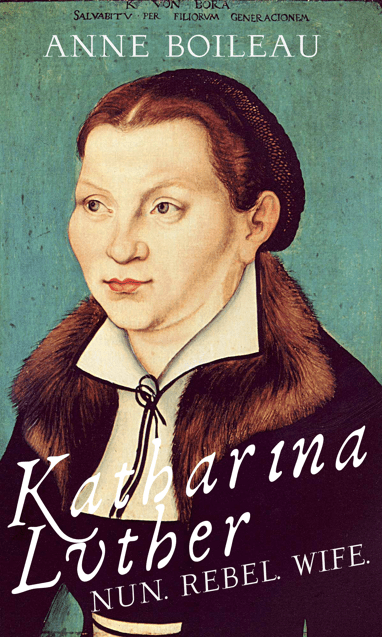
Now what do I have for you today you ask? Well I had the pleasure of reviewing Katharina Luther: Nun. Rebel. Wife last year and was itching to know more about the inspiration behind the tale. Author Anne Boileau has very kindly prepared a post for me to share with you…

But first here’s a bit more about the book –

On 31st October 1517, Martin Luther pinned ninety-five theses on the Castle Church door, Wittenberg, criticizing the Church of Rome; they were printed and published by Lucas Cranach and caused a storm. Nine young nuns, intoxicated by Luther’s subversive writings, became restless and longed to leave their convent. On Good Friday 1523 a haulier smuggled them out hidden in empty herring barrels. Five of them settled in Wittenberg, the very eye of the storm, and one of them – Katharina von Bora – scandalised the world by marrying the revolutionary former monk. Following a near miscarriage, she is confined to her bed to await the birth of their first child; during this time, she sets down her own story. Against a backdrop of 16th Century Europe this vivid account of Katharina von Bora’s early life brings to the spotlight this spirited and courageous woman.

But wait.. there’s more click here to read my review of Katharina Luther: Nun. Rebel. Wife!

Now you have that review fresh in your mind enjoy the guest post! 🙂


You ask me what was the inspiration behind the novel, Katharina Luther. Nun. Rebel. Wife. The answer to that is,  I didn’t find Katharina, she found me; and she took me by surprise.

In 1992 I travelled to the former German Democratic Republic; it was barely three years after the Wall came down (the Germans call it die Wende, which means the change or turn around). I was researching for my dissertation on Land Management, Agriculture and Conservation in the New Lands of Germany following Unification; This was my conclusion of a BSc degree in Rural Resource Development at Writtle College and Anglia University in Essex. I already spoke fluent German and wanted to visit the former East Germany; Strutt and Parker awarded me a travel grant, so  I went with my husband to Brandenburg and Saxony.

Such contrasts! We visited ancient monastic carp ponds at Nieski, dating back to the 12th Century, heaving with wildlife, and recently designated as  a Biosphere Culture Landscape by UNESCO.  Then we stood on the edge of an enormous open-cast coal mine, stretching into the horizon, a desert. We saw lakes polluted with slurry from industrial pig production units and huge dairy plants with literally thousands of miserable incarcerated cows.

But then there were the beautiful well-managed forests, abounding with wildlife, and the Spreewald with its water meadows, creeks and old thatched farmsteads.

The ancient towns were dilapidated but had not been ripped apart in the sixties and seventies for the needs of the motor car as happened in the west.

We visited Wittenberg where the Black Cloister was promoted as Martin Luther’s home. It was in that old monastic house that I first came across Katharina von Bora. There was a small exhibition all about her. Portraits by Cranach and other, later paintings; a pair of shoes and stockings, a ring given to her by King Christian of Denmark, a little book of Hours, even one of her dresses, and so on. We were both intrigued. It had never occurred to us that Martin Luther had been married, having assumed that as a monk he would have remained single and celibate. We were wrong!

Anyway, I went home, wrote my dissertation, got my degree and found a job. I watched my daughters grow up and leave home. But Katharina had sown a little seed in my heart and when I had more time I decided to find out more about her. I returned to Wittenberg, visited the other significant Luther towns: Eisenach and the Wartburg Castle; Erfurt where Luther was a student and then a monk; Torgau and Leipzig; I read a lot, in German, about those turbulent times and found a wealth of material about Katharina, who is a well-known figure in Germany, but virtually unknown in the UK.

That is why I decided to write her story for an English-speaking readership. I wanted to shine a light on the life of the woman behind the man who – whether you like him or loathe him – ushered in the modern world. He could never have followed through and achieved what he did without the help and support of a strong, well educated woman at his side ­– not only to run his household and give him a family to keep his mind in the real world, but also to kerb his irascibility and keep him healthy in body and mind.

Katharina von Bora, or Frau Doktor Luther,  kept the show on the road. Not for nothing did he call her Herr Kathe.

Anne Boileau

June 2017


Purchase from Amazon UK –  https://www.amazon.co.uk/Katharina-Luther-Nun-Rebel-Wife-ebook/dp/B01J95GP8W/ref=sr_1_1?s=digital-text&ie=UTF8&qid=1473953274&sr=1-1&keywords=anne+boileau

About the author: Anne Boileau (also known as Polly Clarke) lives in Essex. She studied German in Munich and worked as interpreter and translator before turning to language-teaching in England. She also holds a degree in Conservation and Land Management from Anglia University and has written and given talks on various aspects of conservation. Now she shares, writes and enjoys poetry; her work has appeared in a number of anthologies and magazines; she has also won some awards, including First Prize with Grey Hen Press, 2016. She translates modern German poetry into English with Camden Mews Translators and was Chair of Suffolk Poetry Society from 2011 to 2014.

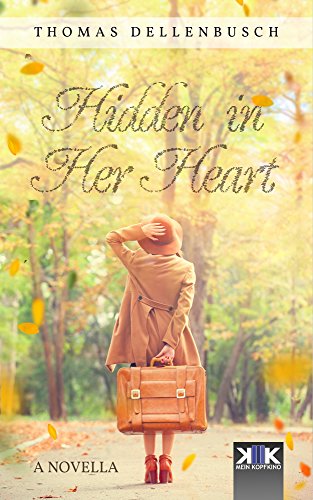
Hidden in Her Heart by Thomas Dellenbusch – Review

Title – Hidden in Her Heart
Author – Thomas Dellenbusch
Genre – Romance
Length – 118 Pages
Publication – 3rd June 2017
My Rating – 5/5 Stars

Synopsis

Translated Version from the popular German book series
of Movie-Length-Stories
A young, attractive single mother moves into a small Lower Bavarian village in the Summer of 1963. She is not looking for a job, nor is she looking to make friends. When the villagers discover that several men are visiting her regularly, they are horrified. They assume that this stranger is a prostitute, and look for ways to chase her away. The only one to take her side and stand by her is a young journalist living in the village. He suspects she is hiding here. But from whom or what? And is his support genuine, or was he sent to discover her secret?

Review

Romance?? Yes you read that correctly.. I’m reviewing a romance novella. Yes it’s not my genre but the more I read the more I actually quite enjoy it. I think the author just needs to get the balance of romance and plot right for me to enjoy the tale which Thomas Dellenbusch certainly has.

This isn’t the first book I’ve reviewed by Dellenbusch but the others were thrillers, this couldn’t be any more different. This was one of the main reasons I wanted to read this book.. I needed to see how well Thomas could turn his hand to a completely different genre, and let me tell you he didn’t let me down.

This is a very sweet tale about a woman with a past she’s running away from and a journalist with his own issues in life whose worlds collide.

It’s a tale about looking beneath the surface and not to judge a book by it’s cover.

I enjoyed the characters and how the relationship developed. It’s only 118 pages so it’s fast following but not rushed in my opinion and is perfect to read in one sitting if you have a spare couple of hours.

As much as I enjoyed the story I really thing this book is more about the author, it shows he’s able to write multiple genres and can even make someone like me enjoy a romantic story.

If you’re after a short read or something to cleanse the palate after some heavier reads then get this one, I hope you’ll enjoy it just as much as I did.

Credit to the author, I was intrigued by his characters immediately and that reason alone had me hooked.

To find out more head to Goodreads or Amazon

The Detriment by David Videcette – Review

Title – The Detriment
Author – David Videcette
Genre – Crime Thriller
Length – 358 Pages
Publication – 29th June 2017
My Rating – 5/5 Stars

Synopsis

“The truth costs nothing, but a lie can cost you everything…”

June 2007: a barbaric nail bomb is planted outside a London nightclub, a spy is found dead in his garden, and a blazing Jeep is driven into Glasgow airport. Three events bound by an earth-shattering connection that should have remained buried forever.

From the author of ‘The Theseus Paradox’, the smash-hit 7/7 thriller based on true events, comes the sequel about a real-life mystery that threatens to destroy a nation. Detective Inspector Jake Flannagan must uncover how a series of astonishing events are inextricably linked, before the past closes in on him.

We all have secrets we say we’ll never tell…

What people are saying about author, David Videcette:

“Videcette has the hallmarks of being a dangerous storyteller.” – Crimesquad.com

“Combines police experience with an audacious stroke of imagination.” – Crime Fiction Lover

David Videcette is a former Scotland Yard investigator who has worked on a wealth of infamous cases, including the 7/7 London bombings. With twenty years’ policing experience, he is an expert on terrorism and organised crime. ‘

I can’t tell you the truth, but I can tell you another story…’

Review

After reading David Videcette’s debut The Theseus Paradox I knew instantly I had to buy this book. The author set the standard very high last time but definitely managed to give the reader another compelling story but also managed to develop the lead character Jake which is hard in such a fast paced thriller.

Ok so if you’ve read the previous book you’ll know about Jake. He’s a good guy and good at his job but at times he jumps before he thinks, always with the right intentions though. This is a theme explored during The Detriment where Jake gets deeper and deeper into trouble with his superiors when it seems he just can’t follow protocol… Like he’s addicted to action and can’t step back from it.

As a reader you get to see the real motivations behind Jake’s actions. He’s not trying to hurt anyone..he’s just trying to do everything in his power to help.

In this tale we learn a lot more about Jake and that for me was the best thing about this book as it makes him human and you really feel for him. He’s a tortured soul and deep down has some issues he needs to work through.

Besides the personal side of things there’s a big case to be handled based on real events. After a car bomb is found Jake’s skills are put to the test to get to the bottom of the attempted attack..is it really terror related? What are the motives?

While seeking the truth Jake uncovers some sketchy dealings within our own government which in turn just leads to more and more questions.

It’s a fast paced and engrossing tale that really leaves you contemplating the story, it won’t leave you easily.

Another thing I have to say I love about the book is the little discussion points the author suggests at the end of the tale and appendix where the facts are stated, this helps get the tale deeply ingrained with you leaving me without a shadow of a doubt I’ll buy the next book the author releases.

Jake will have a hard time coming back after the events in this books so I’m excited to see what happens next.

To find out more head to Goodreads or Amazon.

A Violent Aftermath – Guest Post by author Gordon Doherty – (@GordonDoherty)

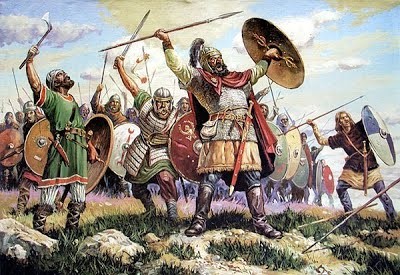
In late 378 AD, the Eastern Roman Empire was in pieces. Emperor Valens lay dead on the plains of Adrianople, surrounded by the corpses of his best generals and legions. Victorious, the Goths of Fritigern roamed all over the land of Thracia (modern day European Turkey and Bulgaria) like conquerors, and with no emperor or army to curtail or contest them, it must have felt like the end of the world to the Roman people – holed up in the few high-walled cities capable of resisting the Goths.

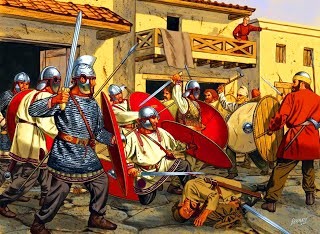
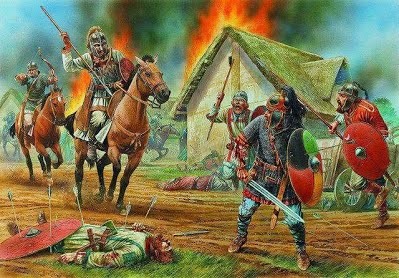
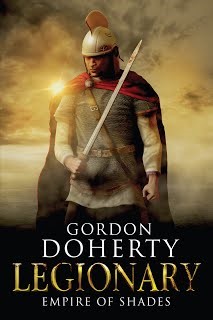
The stages of the Gothic War (left-right): revolt, pillage and then victory. And that’s where Legionary: Empire of Shades begins – in a fallen land.

Thanks to Osprey Publishing for this excellent artwork.


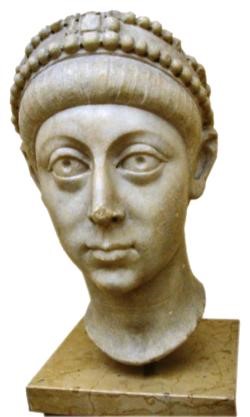
Theodosius I was the man chosen to tackle this sorry state of affairs. A Spaniard who had proven himself in recent military engagements in Pannonia, he was offered the Eastern throne by his Western counterpart, Emperor Gratian. Gratian’s thinking and the conversations held between the two men must have been quite a thing to eavesdrop upon – for Gratian had only a few years previously ordered the brutal beheading of Theodosius’ father, viewed as a rival. Regardless, Theodosius accepted the offer. Did he fear Gratian? Did he perhaps see the ‘gift’ of the Eastern Empire as a way to prove his loyalty to his father’s killer and guarantee his own safety? Or might Theodosius even have had a hand in his father’s death? We will never know (although I do indulge in a bit of speculation in ‘Empire of Shades’).

5

Theodosius I


After accepting the Eastern purple, Theodosius made his headquarters at Thessalonica. The city, capital of the Diocese of Macedonia, was well-positioned: on the eastern coast of modern-day Greece, far south enough from troubled Thracia so as to distance himself from immediate threat, but close enough to plot a reconquest. There he set about reviving the shattered Eastern Army. Firstly, he erected a great turf wall around the city – partly to bolster its defences but also to enclose an area that could serve as a military campus within which he could rejuvenate the ruined Eastern Army. And that was Theodosius’ next step – to summon to Thessalonica the remaining fragments of the legions shattered at the Battle of Adrianople, who were by now hiding in the hills and woods on the periphery of Thracia.


Left: The Roman city of Thessalonica and its famous Galerius Rotunda. Right: The lay of the land following the Adrianople disaster.


But as these army ‘fragments’ congregated at Thessalonica, it would have quickly become apparent to Theodosius just how few had survived the disaster, and it seems he acted upon this stark truth quickly. Starting in 379 AD, he issued a series of decrees to allow the depleted ranks to be filled and for obliterated legions to be reformed. Retired veterans were obliged to return to duty, as were their sons – attempts at bribery to escape service would now be dealt with severely. Indeed, noblemen were required to supply their slaves to the army, and refusal would result in said noblemen being burnt at the stake! Even peasants, beggars and deserters were swept up in an effort to plug the manpower shortage.

Starting at the same time as this mass-recruitment, and continuing over the next few years, Theodosius raised five new generals, or ‘Magistri Militum’ to command these raw troops. With fresh recruits and new leaders, Theodosius now needed a victory to cement their loyalty and his place on the throne. One of his first retaliatory strikes against the Goths occupying Thracia was carried out by a small Roman expeditionary force: under cover of darkness, they outmanoeuvred and fell upon a drunken, sleeping warband (thought to have been four or five-thousand-strong), descending upon them from a hillside to claim a decisive victory.

News of the triumph was very much welcomed in Thessalonica, but Emperor Theodosius knew it was merely a warband that had been defeated, barely denting the horde. And still, the legions were too few and too thin to consider action against Fritigern’s main force. Thus, in search of yet more manpower, Theodosius was forced to turn his eye towards the north, into the wilds of ‘Barbaricum’ (everything north of the River Danube).

Theodosius was forced to look to the most unexpected of places for fresh recruits… the lands of Barbaricum! (left: the Carpathian Mountains, right: the woods and hills nearby)


Bringing more Goths into the empire – as allies to fight against their marauding kinsmen – was a risky strategy but a wholly necessary one. Indeed, it had been policy in past (albeit far-more stable) years. It is here that the heroes of the XI Claudia Legion come to the fore in ‘Empire of Shades’. Tasked with trekking into Barbaricum and escorting dubious allies back into the war-torn empire, they then face the prospect of once again standing up against Fritigern’s horde. Weaker, fewer, and with recent defeats branded on each legionary’s mind, the soldiers of the empire must learn to believe once more, to stand together, and to rekindle the dying light of the East….

11

Available at all good online stores, now!

Gordon’s website: www.gordondoherty.co.uk

Q&A with Charlotte E. English!

Regular followers of my blog will know the name Charlotte E. English..quite probably my favourite author right now. The biggest thing I’ve enjoyed is how she manages to write books that are different but at the same time the same..Have I confused you? Well take the Malykant Mysteries series, currently 7 books strong. Each has the same basic idea.. Konrad Savast brings justice for those murdered but each tale is very different from the last but builds nicely on the foundations set in the previous tale.

Charlotte has kindly answered some questions for me 🙂

Thank you Charlotte!

Enjoy!


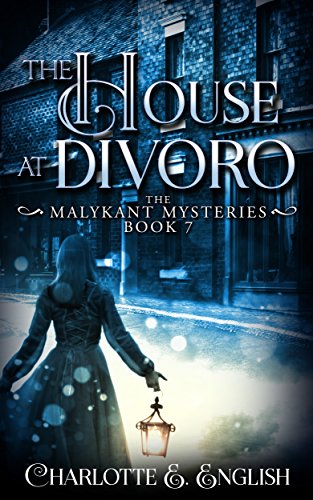
First I must ask, if you are willing to share, who does your covers? They are so eye-catching and for me fit with the tone of the tales perfectly.

I have a few different cover artists by now, but the ones for the Malykant Mysteries are done by Streetlight Graphics. They do terrific work every time, and I’m looking forward to seeing what they come up with for the next batch of covers!

Covers for me are so so important, get it right and someone will buy the book..get it wrong and they won’t even look twice at it. Do you agree with a covers importance?

Yes, of course. As a buyer of books as well as a writer, I know that the cover is the first thing that catches my attention when I am shopping. It also sets the mood for the story, and creates expectations in the reader as to what they’ll be getting if they dive into the book, so it’s important to get it right. I think the Malykant Mysteries covers work well in both respects – they are eye-catching and also set the mood well.

Where has your inspiration for the series come from?

Well, funny story… the short answer is that I don’t know, because I never set out to write anything like it. There came a winter some years ago when I had just finished writing a long novel, and my mood at the time was as grey as the weather. I felt in need of a change of pace before I embarked upon the next long project, so I thought: I’ll write something shorter, and light-hearted, and funny.

I couldn’t write a word of any of this. I sat in a chair with a notebook and pen and tried… and what I got instead was Konrad Savast, grim as winter itself, chasing murderers through a frozen forest. Which I enjoyed, in spite of its being the very opposite of what I had planned to do. And so I learned that sometimes, it’s best to let my subconscious drive, because who knows where we might end up?

How do you manage to keep the series fresh?

I think it helps that the series has a lot of scope to begin with – the basic story is quite simple, in that somebody dies and Konrad has to figure it out. There’s infinite variation possible within that. Meanwhile, this is the only dark fantasy series that I write; my other projects are very different. This means that every dark and creepy idea that I get is Konrad’s by default. And there is a lot to draw on from popular mythology; Konrad has encountered my own take on vampires and werewolves, not to mention ghosts galore, and there’s so much more still left to work with.

7 books in, does Konrad have an expiration date looming?

Not at all! We are barely getting started here. In the last few titles, I’ve been laying the groundwork for some new story arcs which will take the series through many more books. I expect to be writing about Konrad and friends for some years to come.

I’ve said it before but for me you are Queen of the short story although I love your longer works too. Do you have a preference on which you prefer to write?

Once I would have said longer novels, without hesitation, but at the moment I’m finding that I prefer the shorter stories. I think it’s because I have always needed variety, as a writer – however much I love and enjoy each series that I write, I cannot stick with the same thing for too many months together without growing stale. Shorter books lend themselves well to this approach, as I can produce a complete title in a relatively short time and then swap to something else. I’ve just started a new series of shorter-length titles, Modern Magick, and like the Malykants, I’ll be writing these in between all the other things I do. Maybe it sounds a bit mad that way, but it works for me.

Do ever find yourself scrapping paragraphs to make the books fit a certain word count?

Strangely, no. I didn’t plan the length of the first Malykant Mystery, any more than I planned its content. The story took shape by itself, and I haven’t had any trouble keeping the later books to approximately the same word count (although, book by book, they are gradually getting longer…).

What’s next for you?

My next release will be the first story in the new Modern Magick series, and currently I am writing one of those colourful fairy tale things that I love so much. Later in the year, I have the next Tales of Aylfenhame book coming up, and of course, book 8 of the Malykant Mysteries.


I’m very happy to know there’s more to come from Charlotte! If you missed my recent review of her latest work click here – The House at Divoro

You can learn more about Charlotte via her website here – http://www.charlotteenglish.com/  . The site also links nicely to her social media accounts so you can connect with the author whichever way you like 🙂

I’d love to know if you’ve read Charlotte’s work before of if you indeed plan to.

Matthew Harffy Q&A

Today I’m doing something a little different to my normal Q & A’s.

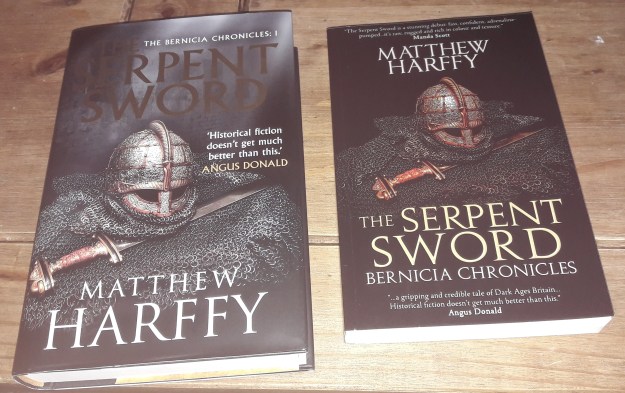
I’ve been a loyal fan of Matthews for a while now and I recently bought the hardback copy of his book, The Serpent Sword.

20170607_194841

Now I don’t think there was anything wrong with the self-published book but the new hardback is so gloriously beautiful I just had to own it.

One of the clear differences I spotted instantly was this beautiful map! Every good book needs a map!

20170607_194855

The new release got me thinking. Beobrand really has grown over the series from a young man into an older but not necessarily wiser man, trusted by many even though he doesn’t see his own worth in himself.

There is deep changes within him during Killer of Kings as it’s time for Beo to head home and face his past..

It’s be a long journey for Beobrand and also for the author.

Matthew very kindly offered to answer a few questions about his work.

Enjoy.


So one of the big changes since I first read The Serpent Sword is you’ve been picked up by Aria Fiction (Well-deserved I might add).

One of the biggest OMG moments is seeing a hardback version of The Serpent Sword hit the shelves. It’s really great to have been along with you on your journey and I’d like to ask a couple of questions.

Is it a good feeling to have a publisher behind you and do you miss anything about being self-published? 

It is great to have a team of professionals behind me now. The feeling that things are happening behind the scenes is really amazing. This includes things such as the brokering of translation deals, or selling the audio rights to Audible, and things like press releases, marketing and publicity.

As to whether I miss anything about being self-published, I think the truthful answer is not much. I suppose I am a control freak, and I have very strong ideas about how I like to do things, so if I miss anything, it is having total control. Having said that, I think Aria and its parent publisher, Head of Zeus, are perhaps different from the norm in terms of publishers, as they allow me a lot of input into things like the covers and are keen to involve me in most of the decisions, which I am really grateful for. Aria is a very young, dynamic publisher and they can get things done very quickly. I think I would possibly go mad working with one of the much bigger publishers, that have very slow turnaround from handing in a manuscript to seeing it published. As it is, I am already sometimes frustrated by the loss of agility from when I was self-published. However, any perceived loss of control is more than outweighed by improvements to quality and visibility and distribution of my books.

Do you feel any pressure to churn out the books or do you thrive having targets to meet?

Yes and no! Having deadlines that are written into a contract certainly focuses the mind and I would go as far as to say that at the beginning of the year, when I knew I had a new manuscript to deliver in November and I had nothing written, I felt the pressure. Now that I am hundred thousand words into the first draft of book 5, Warrior of Woden, that pressure has lessened. However, once I’ve handed it in, and I look towards book 6 which is due for delivery to my editor by November 2018, I am sure the pressure will be on me again. So there is pressure, but I actually think having targets is a really good thing for any long project. Even when I was self-published, I set myself weekly and monthly goals. Without them there is a tendency to drift and not to progress towards a defined target.

Since being picked up have the books gone through more editing?

The Serpent Sword and The Cross and The Curse both went through a couple of extra rounds of editing. But as they had already been published and edited when I was self-published, the process was lightweight, with not many changes being made. For the subsequent books, Blood and Blade, Kin of Cain and Killer of Kings, the editorial process has been slightly more thorough than when I was self-published I would say, mainly due to the fact that the publishers pay different types of editors, such as copy editors and proofreaders, who are professionals. When I did these things myself, I enlisted family and friends and was lucky to have people with an eye for detail who I could turn to.

I’ve been very impressed with some of the comments from my copy editor, who manages to spot points of inconsistency in things like names and spelling between books. For example, he mentioned that I had used the name of a small character in book 3 that was also mentioned in book 1, but in each occurrence it was a different character being referred to but sharing the same name. It was a very minor point but by changing the name in one of the books it removes any confusion that might be there for the reader.

So far in your writing career what’s been your highlight?

It’s hard to name just one. Getting the first good reviews from total strangers, finishing each novel, signing with Aria. I think recently the two things that stand out are hearing the audiobooks for the first time (I was worried that I wasn’t going to like them, but in the end I loved what Barnaby Edwards has done with them), and holding in my hands the recently released hardback edition of The Serpent Sword. There had been two versions of print on demand paperbacks of the book already, but for some reason the hardback feels more real. Not just that, but the book is now available in libraries and in high street shops, which is a huge step forward.

Any low moments?

There are lots of moments when the writing process gets me down. It is by definition solitary, and it is easy to lose sight of the ending of the story and to get lost. Now that I have a few books under my belt I push through these moments, trusting that I’ll find a way. So far, I’ve managed to do just that.

It’s also very disheartening to receive truly negative reviews. I understand that not everyone is going to like my writing, and that’s fine, but from time to time somebody will leave a review online that seems to be trying to cause offence. I know all authors get this type of review, so I know it’s nothing personal, but it certainly feels personal when somebody is slagging off a book it’s taken a year to write!

It doesn’t affect me now as I am not actively sending out my manuscripts looking for a deal, but earlier on in my career, when I was looking for a publisher and, before that, an agent, it was quite demoralising to receive rejection after rejection. Writing certainly isn’t for the fainthearted.

Looking at the hardback the biggest improvements I see is the map which is much more prominent and detailed. Whose idea was it to make this addition?

I agree! The map is wonderful. I had always wanted a better map in the books, but when I self-published I was doing all of the work myself, including the maps, so I didn’t have the skills or the time to do anything more detailed than a simple map of Britain with the place names of the major locations in the books. When releasing the books again, Aria spruced up the maps I had created, making them look more artistic, but they hadn’t added any more detail.

When the hardback was being designed, I went to a Head of Zeus sales conference in London and was approached by Nicolas Cheetham, the deputy MD of the publisher. He produced a rolled up printout of a new map that was more detailed and drawn in the style of Tolkien’s maps from Lord of the Rings! Nic had read the Serpent Sword and thought a better map would really elevate the hardback release. Having seen the final product, I can only agree with him. The plan at the moment is to include similar style maps in all subsequent hardback releases of the Bernicia Chronicles.

Who picks the quotes for the backs of the books, you or your publisher?

That was the publisher. There were a few that didn’t get used on the hardback, but I don’t know how they decided which to use. I’m guessing other quotes might get used on the paperback edition.

The most important question..when’s the next hardback coming out?

The hardback of The Cross and The Curse is due for release in November 2017, coinciding with the mass market paperback release of The Serpent Sword. Just in time for Christmas!

So the next book for release is Killer of Kings. What should we expect?

In Killer of Kings we follow Beobrand south into East Anglia. There he quickly finds himself embroiled in a battle of epic proportions. On his travels he also returns to his old home village in Kent where he meets old friends and uncovers some dark secrets.

What’s next for you?

Right now I am writing book 5 of the Bernicia Chronicles, Warrior of Woden. After that, it will be on to book 6! When I finish that, we’ll have to see what’s next. I’ve got a few ideas about more books in the series, or starting a new series, but time will tell!

Thanks for the great questions. It’s always a real pleasure doing an interview on your blog.


Thank you Matthew for taking the time to answer my questions.

Killer of Kings is out now! You can read my review here or head straight to Amazon

Want a Hardback copy of The Serpent Sword? Check out Amazon for more details.

Do you know Movie-Length-Stories? Guest-Post by Author Thomas Dellenbusch.

Today its pleasure to bring to a guest-Post by Author Thomas Dellenbusch from Germany. I recently reviewed Thomas’s work and asked the author if he would like to chance to give a little background info to himself and his work. I must admit I’m very glad indeed that he agreed 🙂

Enjoy

P.S if you missed my reviews click the following links (Spolier..both 5* ratings! ) –

The Hunt for the Mute Poetess 

The Hunt for a King


Hi everyone, my name is Thomas. David asked me to write this guest post for you to explain how I came to my movie-length-stories and for what they are good for. It’s a pleasure to me, because there is an important question I have to you ask about a rumor that exists in the German book-scene about English readers. I’ll come back to it later.

First let me introduce myself. I am a German author and publisher, born 1964 in Düsseldorf and still living there. My English isn’t native, so please excuse, if there are mistakes in my text, in particular in grammar. From 1982 to 1999 I was a detective at police, then quit voluntarily to become a writer, predominantly for the advertising industries. In 2013 I founded a small publishing company for movie-length-stories. I’ll come back to this topic. In my leisure time (apart from reading books of course) I like to play boardgames and watching good movies.

Why Movie-Length-Stories?

Back to the topic. In some evenings my girlfriend and I do like to switch off the TV and to read books aloud to each other. One of us read aloud and the other one listen to it. It’s like listening an audiobook but live. We like that a lot, but…  What shall we read? It’s not that easy as it sounds. Obviously full-novels are no option, because they are too long. You’ll never finish them in one evening. Short stories instead? Too short. Short stories end within a maximum of 20 pages, so they don’t fill the evening. There should be something in-between. Stories that fill an evening but also end in time. Stories with a reading time of about 2 hours like an average movie. Movie-Length-Stories. A term was born.

What I am talking about are novellas with a length of about 80 or 100 pages. But novellas are hard to find in German bookstores, because they aren’t that popular in Germany. German readers love full-novels, the thicker the better. Some German book-bloggers said to me that they are convinced that novellas could only be the half-way-finished rubbish by an unable and untalented author. Isn’t that kind of thinking silly? Anyway… I am a writer, so I decided to write my own movie-length-stories and to found a small publishing company for that purpose.

Meanwhile, 4 years later, my German slogan “KopfKino in Spielfilmlänge” (theatre-of-the-mind in movie-length) has its own fanbase, and there are currently 20 different movie-length-stories (and 6 anthologies) available, 8 of them written by me and the other ones by 6 other authors under contract. The genres are typical for entertainment: from romance to thrillers, but no horror, erotica or drama.

Every single story is available as a Kindle e-book and additional as an audiobook. A friend of mine is owner of a professional music-studio, so I can produce professional audiobooks for a fair price. My thought was, that if I offer stories for reading aloud, there should be also an audio-version available. And last but not least: Most of the 20 stories are also available as paperbacks, each 116 pages.

Meanwhile I got the response from my readers that reading aloud is not the primary way to use these movie-length-stories. Mainly they are bought for all the daily interludes, a trip on the train, the bus, the car or a plane, the hours spent in waiting-rooms or at the hairdresser’s, on your coffee-break or during an afternoon at the beach, before turning out the lights at bedtime and so on.

Now I come back to my question about the rumor about English readers that exist in the German book-scene. Whenever I speak to German professionals (editors, agents, publisher, etc.) I always receive the same answer: Thomas, you should live in America or in the UK. Because American and English readers meet novellas with much more respect than German readers do. This form of literature is much more popular there than it is here.

Unfortunately I don’t know your book-scene or your reading mentality. Is that true? Do you meet novellas with more respect, do you like them? Please let me know in the comments below.

Maybe now you probably want to try out what I am talking about? Recently my two movie-length-thrillers “CHASE: The Hunt for the Mute Poetess” and “CHASE: The Hunt for a King” have been translated into English by Richard Urmston, member of the American Translator Association. They are available on amazon.co.uk as Kindle ebooks and paperback. “The Hunt for the Mute Poetess” is also available as an audiobook, narrated by Morgan Peter.

I hope you’ll enjoy these two mysterious puzzles. Let me know afterwards. Thanks in advance.

Best to you and have fun

Thomas Dellenbusch

Movie-Length-Stories.com


Thank you Thomas!

Please do check out his work..they were a real treat to read. Head to Amazon to find out more.