Tag Archives: Author Interview

10 Questions With… Frank Ferrari!

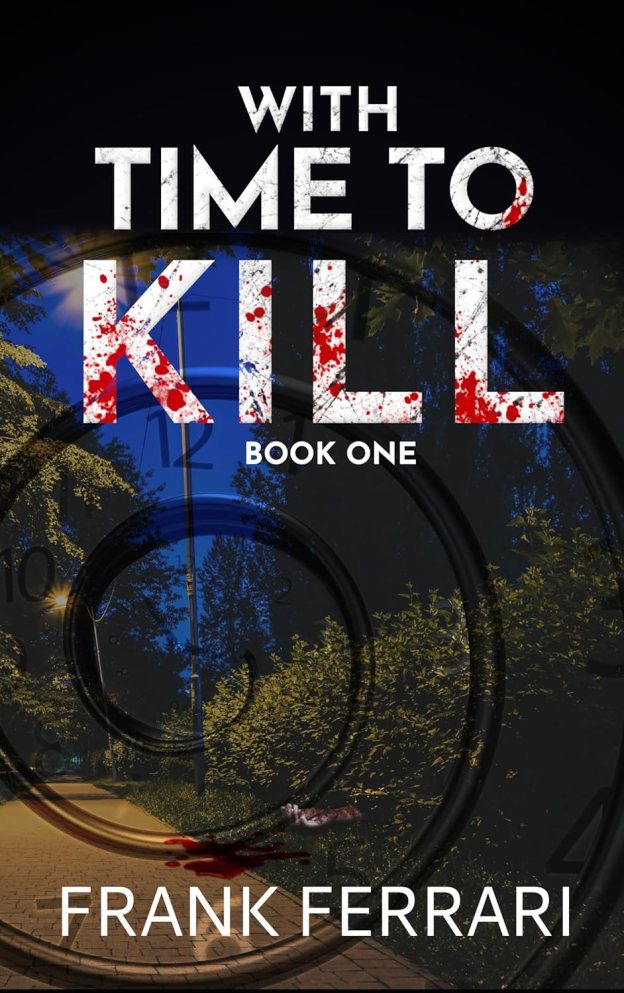
After reading With Time to Kill, (and loving it might I add!) I was very lucky to be given the chance to ask the author a few questions.
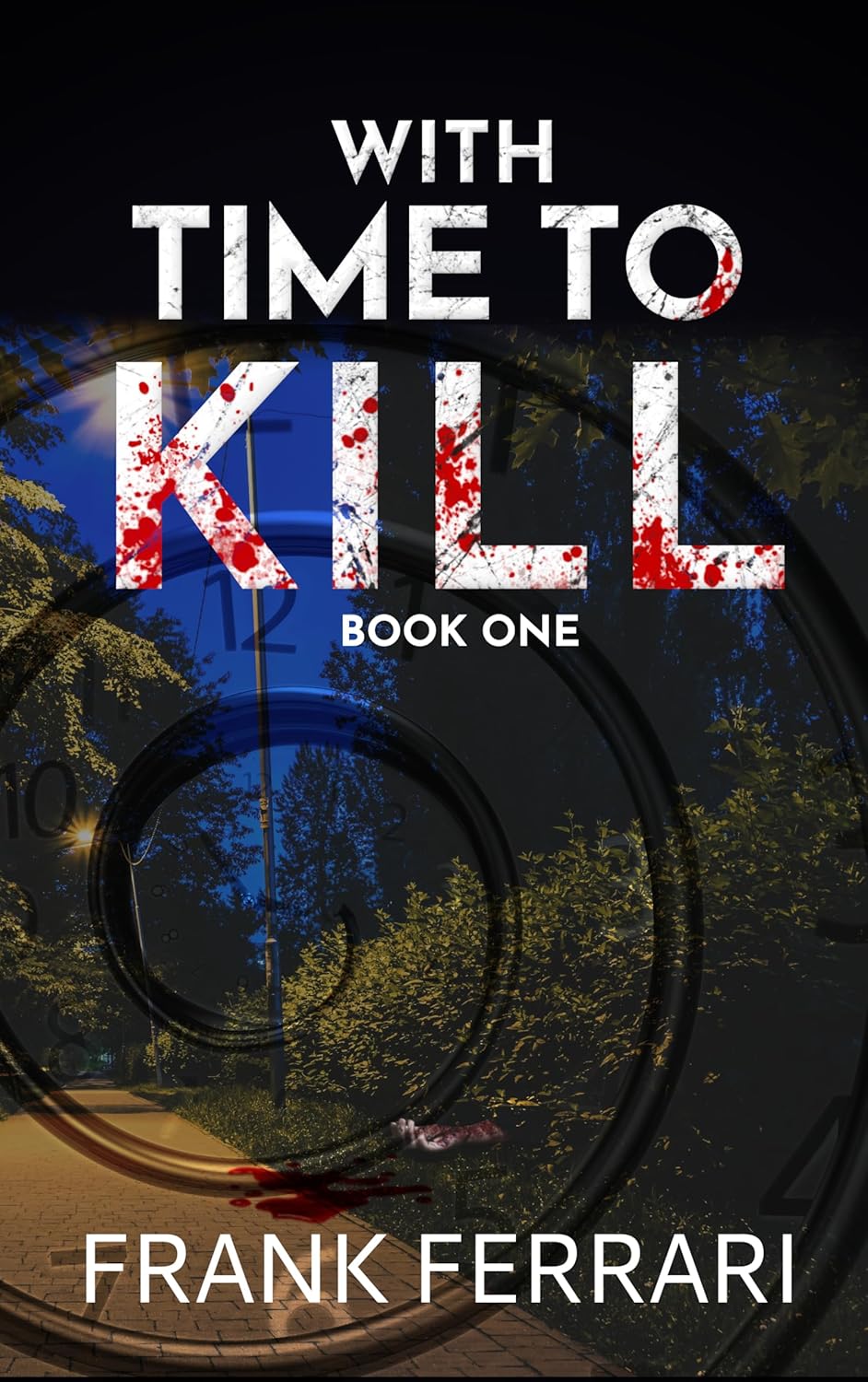
Firstly I’d like to thank Frank for taking the time to answer my questions, I still always get a buzz when an author agrees to one of these posts!

Without further ado I give you 10 questions with Frank Ferrari!

Q: What hit me first when reading With Time to Kill was how unique the story felt. Where did the inspiration for the series come from? You must like some science fiction yourself? My favourite even got a mention… I’m a massive Stargate fan. Did you find blending the genres together difficult or did it slot nicely?

Initially, With Time to Kill was supposed to be a short story about a guy who, after obtaining the ability to travel back in time, kills everybody who stood between him and his ambitions. He was going to be a corporate type (probably influenced by the environment I was working in back then!) and he was going to be very unlikeable. But I intended to make the story funny. I wanted it to be really dark humour, and the way the guy’s kills evolved was going to be ridiculous. For instance, I saw a scene in my mind in which his thirst for blood had reached such a high level that a person who jumped in front of him in the queue at Starbucks or Costa or something would become his victim.

As I say, it was supposed to be a short story – a little project to get me back into the swing of writing, having been away from it for a number of years.

Then, during a trip to the local supermarket with my wife, I spotted a guy perusing the flowers. A few days later, having forgotten to pick up something or other, my wife and I went back to that same supermarket, and there he was! The same guy checking out the flowers again. I don’t know who he was – have probably walked past him in the street several times since then – but what made me recognise him from one day to the other was his uniform: he was a local bus driver. In the car on the way home, I made a comment to my wife saying, ‘Imagine that guy has become obsessed with one of his passengers, and he’s trying to find the perfect bunch of flowers to leave at her doorstep…’

My wife literally shivered and said, ‘Ugh! That’s creepy!’

And that’s when I knew my story had to evolve. So, in essence, the inspiration was two ideas that came together to make something altogether different.

I really like science fiction – I was, once upon a time, a scientist myself! I lean more towards the works of Michael Crichton and Blake Crouch over the likes of Stargate and Babylon 5, however. In saying that, I thoroughly enjoyed Cixin Liu’s Remembrance of Earth’s Past trilogy (the first of which is The Three-Body Problem). I have never read such a vast, expansive story.

Blending the sci-fi element into what is essentially a Scottish crime tale just sort of happened! To begin with, I thought I was writing a science fiction story, but as I got to know the characters and I watched them develop, I knew the police had to get involved somehow. 

Q. What has surprised you the most since becoming a published author? I know there’s hurdles along the way but has anything good really stood out?

It’s a lot harder than I realised it would be! Like countless others, I read everything I could find about publishing a novel. Eventually, I settled on the self-publishing route for With Time to Kill and its successors. Legend has it, unless you’ve got 25k followers, or your name is James Patterson, traditional publishers will leave the bulk of promotion up to the author, all the while taking a healthy slice of the royalties. I figured – as many before me have – that if I’m going to have to promote my books myself, I might as well keep as much of the royalties as I possibly can. Flipping the switch from storyteller to marketer/salesperson is very difficult, though. Despite having a decade’s experience in pharmaceutical sales and marketing, I have not yet mastered this side of publishing.

Q. What motivates you to keep writing? I mean, what keeps it exciting? Do you lock yourself away for hours at a time? How do you avoid any writing slumps?

I write full time and have done so since day one. I was made redundant from my previous career and took the opportunity to explore my lifelong dream of writing. That first day in which I didn’t need to go to the office, or log onto the company Teams account, I sat behind my desk at home at 8:30am and I started writing. I wrote like it was a full-time 40+ hour job, and I’ve done so ever since. Keeping that routine has helped me avoid any slumps (so far!). In terms of what keeps it exciting, that part’s easy: I love writing, and the way I do it (see my answer below!) keeps me hooked.

Q. It must take a while to flesh out your ideas/timeline? I was really struck by how well you humanised the characters.. Did you do many rewrites? Do you outline the story in full or let the story lead you?

I’m glad the characters in With Time to Kill resonated with you. I firmly believe the best stories are the ones driven by how you feel about the characters. Plot is fine, but if you don’t feel something about the characters, it just isn’t the same.

My writing process blends the two approaches (outlining, and being led by the story). I often have certain points or places where the story must go, but how we get there, and what occurs along the way, is all organic. That’s what keeps it exciting for me – often it’s like I’m discovering the story as a reader would at the same time as I’m writing it.

When the day’s writing is done, I go over it in my head while out with the dog or making dinner, then at night I think about what’s going to happen next as I drift off to sleep. That helps me hit the pages running the following day. Once the first draft is complete, I let it sit for a while – a few weeks at least – and I go do something else. When I come back to it, I read through, then give it a comprehensive rewrite, fixing plot holes or inconsistencies, etc. When that’s done, I pass the draft to my wife, and we both read it through. She comes back to me with points and suggestions that invariably make the story better, and I implement those. After another read through, it’s ready for the professional eyes of my editor. After another few weeks, I incorporate his comments and suggestions, and then – after a final full read – it’s ready for wider consumption.

Q. I know I’m new to the series (I’ll make amends for that quickly!!) Do you think your writing evolved over the course of the series? Did you learn any lessons along the way?

My writing has definitely evolved. The editor I work with now was not the one who worked on With Time to Kill, but I’ve since gone back and incorporated his teachings into it. He taught me many things. For example, anyone reading the With Time to Kill books will see there’s some humour in them. Sometimes, in the early drafts, the jokes didn’t sit well amongst the darker goings-on around the characters. That’s one thing I’ve learned to manage. It’s perfectly okay to be funny, but there’s a time and a place! Upon reading The Last Trip for Good (the final instalment of the With Time to Kill trilogy) my editor said: ‘the writing has come on in leaps and bounds since the first manuscript I saw’, which showed me how far I had come.

Q. Were there any messages you were trying to get across to the reader through your words? It’s a fascinating idea to think about what we would do if we had the power to influence the past.. Did you expect it to be as thought-provoking as it is? 

As I started writing, I didn’t for one moment think I was going to come out with anything worthy of deep thought! I just wanted to write a story that, initially, was supposed to get me back into the groove. Later, it became an exercise in whether I could write a novel-length manuscript. As the story evolved, however, I found myself absorbed by the characters. What started as a pretty one-dimensional killer became a more complex, broken soul who, in order to realistically do the things he does, had to be the kind of person who could be nudged by outside influences. I became fascinated by Garry. He’s this morally blank canvas who, after a lifetime of loneliness, is suddenly caught between two opposing influences – one overwhelmingly ‘good’, and one very much not good! I suppose the question I wanted to answer was: what would drive somebody to kill in order to improve their life? With Time to Kill and its siblings is my answer!

Q. I can’t do one of these posts without asking you about how you feel about reviews? Do you take much notice? 

I’m supposed to say: ‘Nah, I don’t pay attention to reviews. Reading is incredibly subjective, and one person’s five stars is another’s zero stars…’ but I’m human! Of course I notice, especially in these early days. Pleasantly, most reviews for my books have been positive, which is a massive confidence boost. If I had to pick a favourite Amazon review for With Time to Kill, it would have to be one from a lady in the US, who expected something very different… She wrote: 

‘A psychological thriller that became part science fiction. I was so annoyed as I do not like sci-fi, I almost stopped reading. Glad I stuck with it. Turned into a fairly enjoyable read.’ And she gave it five stars! The fact that this avid psychological thriller reader was, in the end, convinced by a Scottish crime/sci-fi mash-up made me very happy indeed!

On top of that, seeing the feedback from people like yourself – and others with a similarly significant presence in the social book world – is very humbling. You, and others, have shown me that my books can stand shoulder-to-shoulder with those of more established writers, and that makes it all worthwhile.

Q. One of the things I find the hardest about loving books is there’s so much out there. How have you found promotion? Do you enjoy the whole social side?

Good promotion is the Holy Grail – everybody’s searching for it, but it’s the hardest thing to find. There’s also a danger with it: every writer gets bombarded with emails and messages from so-called ‘experts’ in book marketing, all promising to get your book ‘the attention it deserves’. For a price, of course. It’s all absolute nonsense, and any aspiring writer reading this should take heed: these people will take your money and give you nothing of value in return. The truth is: there is no magic bullet. There’s no one-size-fits-all solution. We just need to stay resilient and keep trying.

I haven’t been great at the social media side of things. My time always seems to be taken up by writing the next book, editing the previous one, studying with the Chartered Institute of Editing and Proofreading (CIEP) as I’m currently doing, all while learning how to be a dad! I need to invest more time into social media and I have a list of videos/posts that I want to create (one video series is going to be defining some of the more Scottish terms in the With Time to Kill trilogy for non-Scottish readers).

In addition, blogs like this one, where indie authors are given a fair chance, are so valuable – on behalf of writers everywhere, thank you!

Q: Do you read a lot yourself? If so, what have you been reading or what genre do you go to?

I read every day, right before bed. Always have done. I like lots of different genres and, as is the case with music, I tend to fall in love with a writer/artist rather than any particular genre. For instance, my favourite author is Stephen King, although I wouldn’t class myself as a ‘horror’ fan. I recently read his Dark Tower series for the third time, and loved it just as much as the first. I also read ‘Salem’s Lot for the first time not long ago. It’s out-and-out horror but, man, some of the writing in that novel is just beautiful!

I also recently read John Grisham’s The Guardians, Karin Slaughter’s This is Why We Lied, and I’m currently reading The 6:20 Man by David Baldacci (the first of his works I’ve read).

Other writers I really like are John Marrs (anything by him is well worth a read), Blake Crouch (he’s got grounded sci-fi down to an art), JD Kirk (a fellow Scot and master of crime fiction), Andrew Mayne (his Theo Cray/Jessica Blackwood books are brilliant), and I’m a real sucker for the dystopian classics – Margaret Atwood’s The Handmaid’s Tale, Ray Bradbury’s Fahrenheit 451, Aldous Huxley’s Brave New World, Yevgeny Zamyatin’s We, and of course George Orwell’s Nineteen Eighty-Four.

Q. I really need to know… What’s next? What can we expect to see from you?

A few weeks ago, I finished the first draft of my next novel, which is unrelated to the With Time to Kill trilogy. It’s a tale of found family and rebellion set amidst a bleak, totalitarian dystopia. It came from an idea that has been knocking around in my head for over a decade, but always felt too big for me to tackle. The first draft needs a lot of work, but I’m pleased with the story and it’s going to spawn more books – probably a trilogy or quadrilogy, we’ll see. I’m letting it sit for now while I complete my accreditation with the CIEP, but I hope to have news about later in the year.

As regards the With Time to Kill trilogy, the covers are getting a bit of a facelift/revamp, bringing them more in keeping with the Scottish crime genre, so watch this space!


About the author.
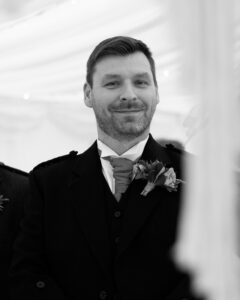
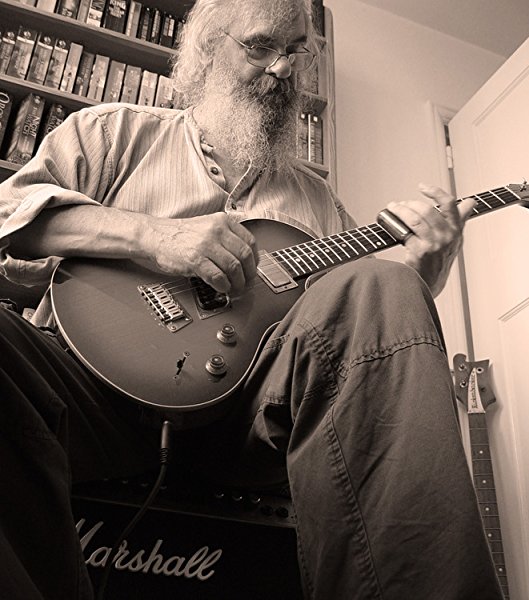
Frank Ferrari is a Scottish writer of speculative fiction, where science fiction collides with suspense and intrigue, and memorable characters lead you through dark, thrilling atmospheres. He is the author of With Time to Kill and its sequel The Dying of the Light, as well as Water of Sorrow, co-written with his late father.

Educated in science, Frank was a bench chemist, then spent over a decade working in the commercial pharmaceutical industry before returning to the passion that had gripped him as a child: writing stories. After years of short fiction, he turned to novel-writing during a difficult period in his life, finding therapy and purpose in the process. Out of that challenge, With Time to Kill was born.

Frank writes because he loves to read, and he seeks to offer readers the same escape and immersion that books have always given him. Originally from Perthshire and now living in the Borders – settings that feature in some of his novels – he finds inspiration in the landscapes around him. When not writing, he can often be found walking the hills and forests with his dog, or enjoying time with his wife and young daughter.


Want to know more about Frank and his books? Why not visit https://frankferrari.com/

10 Questions with Alison Morton.

Today I’m very glad to bring to you a Q&A with Alison Morton, author of the Roma Nova series.

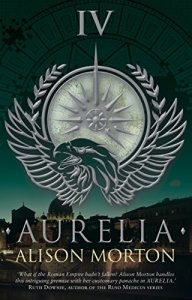
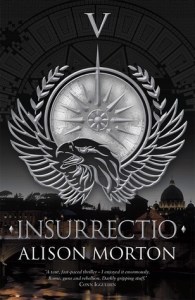
You can read my reviews of Aurelia and Insurrectio by clicking the images below to open a new window.

51pkqvjge9l29845159


One of the biggest things I’ve enjoyed about the series is that it turns the traditional and outdated idea of social structure on its head.

I hope you enjoy the questions, do let me know your thoughts 🙂

P.S look out for my review of Retalio book 6 in the series soon!


Q1 – For anyone who’s read my reviews of your works I’m sure they will know how much I’ve enjoyed reading them but for anyone new what would you say to convince them to give your books a try?

You don’t believe in starting with an easy one, do you, David?  😉

Seriously, I try to provide a cracking story and provoke a few questions along the way. Yes, my books are thrillers, but without dripping body parts and with a different take on what might have happened at the end of the Roman Empire.

I enjoy a good twist when I read, so I like to put a few of those in my own books, but of course, all good reads are not only about the story, but equally about characters. We love to gasp with horror, feel that frisson of fear, fall in love and celebrate along with our heroine (or hero).

Q2 – Strong female leads are something I’m starting to see more and more in books and I love it. Did you always set out to write a series that knocks on the head the idea of the male characters being in charge?

In brief, yes! I wanted a female character who led the action and pushed the story through. Too often the woman is the sidekick or the mother/daughter/sister/colleague who waves the hero goodbye as he sets off on his quest, whether in the 4th, 21st or 43rd century. Virginia Woolf wrote in 1929 about fictitious women, “But almost without exception they are shown in their relation to men.” So it’s nothing new!

A little secret: if I find myself slipping back into the action man/passive woman trap when writing, I reverse the dialogue to make sure my heroine is making the decisions!  But it doesn’t make Roma Novan men any less masculine or tough. (I explain it all here.)

Q3 – Your idea of alternative history and that the fall of Rome didn’t mean the end of Roman culture opens up lots of writing possibilities, where did the idea come from?

Several things! I’ve been a ‘Roman nut’ since I walked on my first mosaic at Ampurias in northeast Spain. In fact I’ve clambered over quite a lot of Roman Europe! The idea of a modern Roman heroine has been bubbling away in my head for years.  She would have to be modern as even in Late Antiquity no woman could have a public role, let alone a military one, and Rome was essentially a military society. Then I read Robert Harris’s Fatherland and learnt about alternative timelines and outcomes.Two more neurons connected in the brain!

No fingers were hovering above a keyboard yet, though. Then I saw a really bad film. The cinematography was gorgeous, it was set in modern Rome and it had the enormous bonus of starring Ewan McGregor. (Your women readers will understand the last one better than men, I feel.) However, the dialogue and continuity were rubbish. I knew I could do better. The trigger was pulled. Ninety days later I had a manuscript of 90,000 words. Rubbish, of course, but it went on after much slashing, rewriting and polishing to become INCEPTIO.  The legend of Roma Nova was born.

Q4 – The great thing about the setting of your tales is that you have some leeway with historical accuracy. Was the accuracy in describing the Roma Nova culture important to you?

Absolutely! I have an MA in History which has given me a grounding in being picky about accuracy and sources in a methodological way. I don’t think you can alternate history without knowing it first.

When you choose to diverge from the standard historical timeline, you have to know exactly what the world was like at that point. This is the last solid foothold you have on the historical record. For example, the Roma Nova storyline is that the group of senatorial families who trekked out of Italy at the end of the fourth century to become the first Roma Novans were pagans persecuted by Christian Emperor Theodosius II. This persecution really was taking place at the time (not something we’re taught about). Theodosius signed the final edict outlawing worship of the traditional Roman gods in AD 394; the punishment was death.

Once you have researched that divergence point in time ad nauseam, then you project forwards using historical logical until you reach thelater time when your story is set. It helps to have a general knowledge of ,and a feel for ,history here. If not, research!

In fact, everything has to be checked from technology and attitudes in the 1960s (AURELIA), how to mount a coup d’état, intelligence techniques, warfighting of the 1980s (INSURRECTIO, RETALIO), weaponry, signals, locations and transferable Roman practices for all the books. But I love research. Honestly!

Q5 – How long have you been a writer and what influenced you to first put pen to paper?

I’ve written most of my life, but mostly practical stuff: student theses, government papers, exercise reports, corporate documentation, PR copy, articles, an academic dissertation even. As a trained translator, my work turning foreign language text into English was precise with a touch of creativity in expression, plus I edited at least one million words in that time. Now, making up stories? Ever since childhood. Writing them down? That only started in 2009 with that bad film.

Q6 – Would you contemplate writing a book in any other genre?

Ha! The great Conn Iggulden who endorsed INSURRECTIO gave me a suggestion about that. But I’m not telling at the moment!

Q7 – How important is feedback from your readers?

Very important. I’m not so grand that I don’t read and take notice of my reviews. Of course, they are all subjective, but I’ve gleaned some excellent advice from readers and fans since INCEPTIO was published in 2013.

The Roma Nova Enthusiasts’ Group on Facebook is small but going well, as is my Facebook author page and I always love it when people react to my blogposts (alison-morton.com) or tweets (@alison_morton).

Q8 – Who have been your biggest influences within the writing community?

This is such a difficult question as it changes all the time! Like many Roman writers, my first Roman book was The Eagle of the Ninth by Rosemary Sutcliff. I grew up on a very mixed diet of fiction, swinging from Georgette Heyer, Leslie Charteris’s The Saint to Peter O’Donnell’s Modesty Blaise and Dennis Wheatley’s adventure tales.

I adore Gore Vidal’s Julian, and anything by Margaret Attwood and Tom Clancy. These days, Lindsey Davis is a clear favourite along with Steven Saylor, Ruth Downie, William Boyd, J D Robb and of course, Robert Harris.

Q9 – What books are currently on your reading shelf?

Legionary: the Roman Soldier’s (Unofficial) Manual by Philip Matyszak. I’m enjoying it tremendously. I’m ex-military myself, so it’s raising a few smiles.

Q10 – Future plans? More books I hope J

More books, certainly!  I’ve just completed a novella featuring Carina and set between INCEPTIO and PERFIDITAS. Perhaps I’ll write more ‘inbetweeners’ or a collection of short stories. Then there’s the foundation story of Roma Nova waiting for me…

Thank you so much for letting me ‘invade’ your blog, David!


10 Questions with……. Jesse Teller PLUS SNEAK PEAK :P

Hello!

Did you see my review of Liefdom by Jesse Teller? No!! well click here to read it quick! 

Today I’m very glad to continue my 10 questiosn with feature with non other than Jesse Teller himself who very kindly took the time to answer some of my questions.

I do hope you enjoy, keep reading to the end for sneak peak of whats to come next from Jesse!


Wellcome Jesse,

Q1 – For anyone who’s read my reviews they will already know about the life of Gentry Mandrake but for those who’ve not had a chance to read the book yet can you give them a little insight into the story?

Okay, so Gentry Mandrake is a fairy. In my world, fairies are born to a different realm called The Veil, and every time a fairy is born, a child is born. That fairy and that child are bound together. The fairy serves as the child’s immune system to magic and other properties of my fantasy world. If the child dies, the fairy dies, and vice versa. All children are born innocent. So when Mandrake is born and he’s of monstrous size, has natural armor, and natural weapons, it begs the question, what kind of monstrous baby could have inspired such a monstrous fairy? We find out during the course of the book whether Mandrake is really a monster, serving a monstrous child, or if he is something else.

Q2 – I love the idea of the connection between humans and fairies..and especially the idea of the consequences of being a bad human/fairy has on the other.. Where did this idea come from and did it take a while for you to develop it fully?

Well I guess you could say parenthood. If a parent goes sour, usually the child does as well. Not all the time, but sometimes. So, in my world, when a fairy becomes jaded and dark, so does the child, and vice versa. This puts fairies as the guardians of the child’s innocence. Just as, in many ways, a parent is the guardian of a child’s innocence. When a person goes truly evil, when a child goes truly evil, it’s soul is severed from the fairy, and the fairy has a chance to turn itself back. This is the shift between changeling and imp. This mimics parents and children too, because when people become truly evil, it’s not necessarily a reflection of the way they were raised. At a certain point, they just cannot blame the parents anymore for their own decisions. In Liefdom, as in most of my work, I’m studying the relationship between parents and children.

Q3 – Something that really sticks with me from the book is the progression Mandrake goes through as the story develops. My number 1 must for a book is character development and I loved how you managed this. Was it hard for you to find the right balance between action and character development?

Not really. Character development is not an engine in itself. A lot of writers consider themselves masters of a train yard. On one track, they have plot development, on another they have character, and still another they have scene development, setting, voice. To these writers, they are managing the travel of all these different trains on many different tracks, trying to get all the goods, all of the story, in one place at one time, at different paces, with different strategies. For me, this analogy doesn’t hold up. I’m more like an arsonist burning the story to the ground. Create certain things, let’s call the heat of the fire the plot, the smoke is character development, the fire itself is the action. All these things go up simultaneously. All these things happen at the same time. So, the action creates the character development. I don’t see them as separate entities at all, just one great conflagration.

Q4 – How long have you been a writer and what influenced you to first put pen to paper?

Well it was my first writing assignment, right? That’s when everybody starts writing. They’re in grade school and they’re told to write some sort of short story. Mine was about a purple hippopotamus. I was in fifth grade. Some writers, it starts in college, when they can put together their ideas and they are driven. They’re telling themselves, this is what I want to do for my career, and they’re moving towards that goal. With me, I didn’t have that. There was a whole life full of distractions. I wrote occasionally. I wrote when I was given an assignment to. I didn’t really start creating a world until I was much older. Didn’t start writing with purpose until high school. But the thing that told me I really wanted to do it was the way it felt. Telling a story, creating a story, something captivating, something that pulled the reader, if just for a second, out of their world, their understanding. I was aware of that in fifth grade. I became aware of it with every story I told. It gets seductive after awhile. Coming up with a story for people to talk about, for people to experience, you can get carried away with it if you let yourself. It pulls at you, gently at first. If you write another chapter tonight, then you can spend the day talking about it with your wife, with your friend. It gets seductive. It can turn you into a junkie if you let it.

Q5 – Would you contemplate writing a book in any other genre?

I’m working on an autobiography. I’m not intellectual enough for sci-fi. Not funny enough for comedy. I’d love to be able to write historical fiction, maybe medical drama, but these have a lot of research to them. I respect authors of all genres, but fantasy is really my thing. In fantasy, if you can dream it up, you can find a way to make it happen. In fantasy, you can be undone by an infection, or standing your own against thousands of men. Fantasy is really the only language that I speak.

Q6 – How important is feedback from your readers?

Well, you can’t grow without feedback. That’s just a fact. If you’re writing in a bubble, you can’t expect to move on when you find yourself churning the same ground over and over again. I’ve got two people who have read everything, and they keep me honest. When a new review comes out, good or bad, I’m excited about it, because I learn from all of it. I find peer review to be the most helpful, hearing the opinions of other writers. But everybody who reads my work has an opinion, and I’d love to hear all of them.

Q7 – Who have been your biggest influences within the writing community?

Anybody who works really hard, who puts out quality work relentlessly. Glen Cook was really big for me in this respect. He put out a lot of solid work and I liked his gritty take on the fantasy genre. I went to a lot of workshops with an agent named Donald Maass. He had a big influence on how I wrote, process and technique. I’m inspired by author/marketers. There are indie authors who write and publish their own work and then spend years marketing it and getting it out to the world. That’s just inspiring to me. I can’t really pull that off. I’m obsessed with the work. I find myself working late at night, isolating myself in the work, pounding out one word after the next. But my wife does all my marketing. If she didn’t, nobody would ever hear of me. I’m not even sure I would ever publish, just sit in my basement and pound out one word after the next.

Q8 – What books are currently on your reading shelf?

Paradise Lost, John Milton. This has been a dream for a long time, a long time. The idea of the process of writing this piece sets my imagination on fire. This guy was blind when he wrote this epic poem. He was blind, which means he couldn’t write it out himself, he had to dictate it. When you’re writing, part of your mind’s eye is in the place that you’re writing, but your actual eye is on the board or on the screen. You’ve got that veil between you and the world that you’re writing about because you’re looking at a screen. This veil, this tiny step of distance that most writers have, Milton didn’t have. So when he described the fall of Lucifer, he was in the air tumbling at the same rate as Lucifer. When he described the building of the castle Pandemonium, he stood on its foundations as it was being erected. He knew the fires of Hell. He knew the bliss of Heaven. He experienced it all as he was dictating it. I’m also going to read the rest of Robert E. Howard. I’ve got his complete works. He’s my favorite writer of all time. I want to say I’ve read everything he’s done. He was a contemporary of H.P. Lovecraft. He wrote pulp fantasy and horror, created Conan, Kull, Bran Mak Morn. He wrote Solomon Kane, the puritan warrior witch-hunter, demon-hunter. Can’t get enough of that guy. I’ve got some of my own contemporaries on the list as well, other indie authors, Dyrk Ashton, Josiah Bancroft, M.L. Spencer. It’s an exciting time to be a reader. Before now, there was never really a viable way for a writer to get his or her work out unless they were traditionally published. Now there’s a free flowing of ideas and experimental projects that we’ve never seen before.

Q9 – What’s the best bit of advice you would give to those considering writing a book?

Write all the time. Pick a small window of time during your day every day and allow yourself in that time to obsess about your work. Throw everything else away, just for those brief half-hour, two hours, four hours, throw everything else away. Allow yourself to say, “Nothing else matters at this moment but my work.” And then just go, just pound out the words, just write and write and write, and when the timer goes off, and it’s time to go back to the real world, do so, content in the knowledge that tomorrow that same window of time will be open to you.

Q10 – Future plans? And will we see Mandrake again any time soon?

My future plans are to publish 1-2 novels every year for the rest of my life. I’ve got a book coming out in October where Mandrake makes a cameo. But in the releases for the next 15 years, we won’t see Mandrake. As time progresses, I believe he’ll come back into the main story unfolding of the world, but for now, Liefdom is the only glimpse we have into Mandrake. I’ve written a number of rough drafts, they’re poised and ready to go. I’ve got a lot of story saved up, waiting on a shelf. So keep your ear to the ground. You’ll hear more from me soon.

Thanks Jesse!


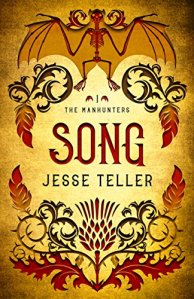
What’s next for Jesse.. well pn the 5th October his new book Song is released!

61IwerjRIcL

Here’s the blurb –

Some of the darkest minds in Perilisc attacked Mending Keep, releasing all its prisoners. Despite his strained relationship with the crown, Rayph Ivoryfist calls old friends to his aid in a subversive attempt to protect King Nardoc and thwart terrorist plots to ruin the Festival of Blossoms. But someone else is targeting Rayph, and even his fellow Manhunters might not be enough to save him.

Jesse has kindly given me a excerpt to share with you all, do let me know what you think of it. If you like what you read head to Amazon to pre-order your copy now!

The Guard of Mending Keep

One Year After The Escape

The serving boy’s face was stained green with disgust and horror. He looked about to be sick, about to flee, about to weep. Rayph saw the trembling lip and the panic in the eyes, and he knew what the boy was carrying. It was small, maybe a little over a foot wide, spherical, and covered with a towel. The boy wove a path through the reclining bathhouse patrons and made his slow, methodical way around the main tub to the corner where Rayph sat with his good friend, playing crease and taking in the steam.

As the boy drew closer, the dread that rose up within Rayph prompted him to turn to Dova and grimace. Rayph moved his tile, tapping it lightly with his finger, and shook his head.

“I’m afraid we are about to be interrupted,” Rayph said.

The boy trembled beside the gaming table. His white, sweating face held the world’s shock, and Rayph nodded at him. “Set it down.” He waved his hand across the boy’s eye line and muttered his spell’s incantation. The serving child’s face smoothed clear of all trepidation, and he let out a long-held breath.

“Where did you get it?” Rayph asked.

The boy’s dark eyes looked troubled even through the effects of the spell. “He hurt me,” the boy said.

“Hurt you how?” Rayph asked.

The boy pointed to his temple. “He got in here. He burned me.”

Rayph clenched his fist and anger bubbled deep within him. “What did he look like?”

“He was trimerian, but his third eye,” the boy rubbed his forehead, “it seemed to be flaming. He stunk of sulfur.”

Rayph’s blood ran cold, and he stood. “Watch the boy. Lock down the house. If he returns, do not engage, just defend, Dova. He is beyond even you.”

He looked to his ethereal friend, naught but churning wind where his body sat. The towel draped over Dova’s shoulders and tied around his waist, the only indicator of his form.

Rayph grabbed the boy’s shoulders a little too rough, just a little too hard. “Where did he go?” Rayph tried not to let fear get the better of his voice, but it trembled. There are so many innocents here. If he unleashes, how much of the city can I save? The answer was very little.

Dova exploded with a slight puff of wind. The towels fell to the floor. Rayph could feel his friend fill the room, warm air, fluttering and vibrant with life, swelled, blowing curtains in a flurry. The doors to the bathhouse slammed shut.

“Where did he go, son?” Rayph asked the boy.

“Who said he’s gone?” The voice held a new lilt of arrogance to it, a soft tinkling, musical and filled with spite. The boy leapt back. His forehead ripped open, betraying an eye. His back split and out flapped two wings that bled greasy smoke.

“Clear the room,” Rayph commanded as he loosed his spell. The power of the spell’s thrall was so great that every reclined man leapt to his feet and rushed for the door. The doors flew open to slam closed again. Every lamp in the room surged, hissing flame before dying completely. The room was thrown into gloom, the only light issuing from the great opening in the roof centered over them.

With a flick of his wrist and the uttering of a command word, the air around Rayph’s right hand tore and his sword dropped from the wound. The air zipped closed again, and Rayph turned to the serving boy, who hovered before him.

“You harm that boy any further and I will hunt you, Meric. I will plunge into that darkness you surround yourself in and I will rip you from it.”

The boy tossed his head back and unfurled a hideous laugh that trembled the ceramic tiles of the wall. “I have not come to quarrel with you, old friend.”

“You and I were never friends,” Rayph said. The sky above the opening darkened, and Rayph stepped closer. “Why have you come here? Why show yourself now, after this many millennia?”

“The nation is wide open, dear friend. No one is watching over Lorinth in your absence. You have forsaken your post.”

“I still guard this nation. I serve not the throne, but this is still my home. I will return as court wizard one day.”

The boy’s head lobbed back, and he poured out another hideous laugh, so violent the corners of the mouth split, and the boy coughed blood. “Too late, Rayph, you will return too late.” The head shook. “You have not yet looked at the present I left for you. How rude you are, Ivoryfist.”

Rayph extended an arm toward the table and muttered a word. His eyes stayed locked to Meric as the object floated the room to hover before Rayph. With a jerk of the cloth, he unveiled the severed head. Rayph looked in horror at the face, so contorted in pain from its last moment he could not recognize it.

He stared at it. The left side of the face was badly burned, the neck severed with some keen, hot blade that cauterized the wound perfectly. Deep claw marks covered the right side of the face and neck. Blood stained the chin and mouth.

Rayph’s heart broke out in a rampaging rhythm, and his mind burst into flames as he recognized the face. “No.” He looked away, but his eye was drawn to the head again as the identity of the head locked in his mind. “It can’t be.”

A gurgling laugh filled the room, and Rayph summoned forth the power to smite Meric.

“No, Rayph, you mustn’t!” Dova screamed. He threw his whistling form before Rayph, and two thrumming hands landed on his shoulders. The air that comprised Dova’s body filled with the water of the tub they stood in, making a figure of rampaging moisture. “If you engage him here, you will destroy my city. You must not.”

“Listen to Dova, Rayph. He always was one for caution,” Meric said. “Caution and cowardice looking so much alike and all.”

“Rayph, who is it?” Dova motioned toward the head.

“Stoic,” Rayph breathed. “He has killed Stoic.” Saying it aloud let the words take on meaning. His friend was gone, his guard, dead. What would become of Mending Keep? Had they all fled? Had the world’s unkillable fiends made good an escape?

He knew the futility of the words before he spoke them but felt helpless to say anything else. “I will make you hurt for this, Meric. In this one act, you have killed yourself.” Rayph felt nauseous.

“Step aside, Dova,” he said.

“Oh, my dear Rayph, please do keep tight check on that temper of yours. I would hate to reduce this city to rubble because you threw a fit,” Meric said. The black smoke issuing from the flapping wings filled the room with unbreathable air. “Stoic is gone, as are his charges, but that does not mean we need come to blows. I was not the one that killed your boy.”

“This head was severed with your blade. Do not try to deny it.”

“Yes, for easier transportation, I assure you. He was dead long before I got there.”

Was Meric lying? Did he have any reason to? Why bring the head at all? Meric was not one to gloat. It was not his way. Why alert Rayph the prison had been broken in to? There was an element to this Rayph could not see, something big moving powerful pieces about the board.

“Who did this?” Rayph asked.

The boy laughed again, weaker this time. He doesn’t have much time. I have to get Meric out of that boy as soon as possible.

“I won’t do all of your work for you, Ivoryfist,” Meric said. Lightning flashed outside, the inky clouds that followed Meric everywhere boiling in the sky above them.

“Does this mean you’re coming off sabbatical?” Meric asked.

“I will find out who did this and why, and when I do, if your name comes up at all…”

The boy laughed again, a hissing wheeze that scared Rayph.

“Remember who helped you when it all comes out, Rayph. Remember who alerted you to the break. You owe me now,” Meric said.

“I owe you nothing. You did not do this for anyone’s reasons but your own.” It’s big. It’s really big, but I can’t see it.

Meric laughed again. The wings pumped, throwing blood through the air, and the boy’s body lifted.

“Leave the boy!” Rayph said.

“You don’t give me orders any more, Rayph. Those days are over.” The boy’s body lifted high above the bathhouse, and Rayph splashed into the center of the tub to stare up at darkened skies. With a deafening explosion, Meric broke loose of the boy’s body, and the child dropped. Rayph set his feet and watched as the body tumbled. The boy dropped through the opening in the ceiling, and Rayph caught him in his arms. The sky opened and rain hammered the city. Rayph looked up at his friend and grimaced.

“I must leave, Dova,” Rayph said. “But first I have to know what happened to Stoic. Can I use your lab and summoning room?”

“Everything I own is at your command, Ivoryfist, you know that.”

The boy woke up screaming.

Did you enjoy that? if so why not pre-order your copy of the book – Amazon

About the Author

Jesse Teller fell in love with fantasy when he was five years old and played his first game of Dungeons & Dragons. The game gave him the ability to create stories and characters from a young age. He started consuming fantasy in every form and, by nine, was obsessed with the genre. As a young adult, he knew he wanted to make his life about fantasy. From exploring the relationship between man and woman, to studying the qualities of a leader or a tyrant, Jesse Teller uses his stories and settings to study real-world themes and issues.

He lives with his supportive wife, Rebekah, and his two inspiring children, Rayph and Tobin.

Recognition

SPFBO 2017 entrant
Literary Titan Gold Book Award Winner, April 2017
Drunken Druid Editor’s Choice, March 2017
Drunken Druid 2016 Book of the Year Short List
Hungry Monster Gold Book Award Winner, September 2016

“Jesse Teller is a talented author with the future in his hands.” —Peter Tr, booknest.eu

“A very strong author who boldly builds the world he has created with strong themes and no apologies.” —Dianne Bylo, Tome Tender Book Blog

“Jesse’s newest project, Song, is part of his Perilisc fantasy world: a richly detailed setting, ripe with legends, magic, and secrets whispered but not yet explored.” —Bookwraiths.com

Author Links:
Website
Facebook
Goodreads
Amazon
Twitter
Reddit
Smashwords


Guest Post – Anne Boileau – Clink Street Blogival2017

Calendar

Today is my first post as part of Click Street’s #Blogival2017.

I took part in the 2016 Blogival and the reason I’m back again this year is simply becuase it’s a wonderful way for the authors to interact with readers and It brings something a little extra to my blog.

There’s plenty more stops on the tour.. please do have a look. Word of mouth really helps not only the authors but us bloggers too.

I’ll be sharing some fellow bloggers posts via my twitter account so keep an eye out.

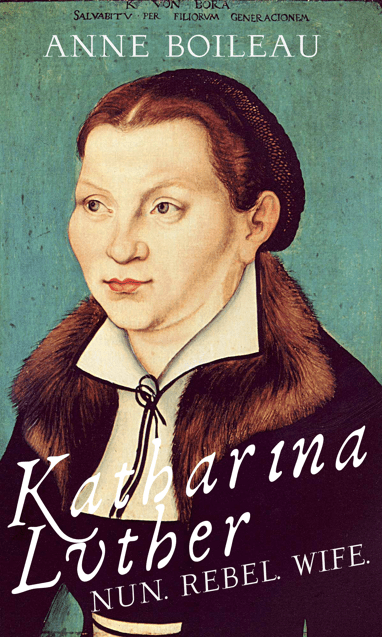
Now what do I have for you today you ask? Well I had the pleasure of reviewing Katharina Luther: Nun. Rebel. Wife last year and was itching to know more about the inspiration behind the tale. Author Anne Boileau has very kindly prepared a post for me to share with you…

But first here’s a bit more about the book –

On 31st October 1517, Martin Luther pinned ninety-five theses on the Castle Church door, Wittenberg, criticizing the Church of Rome; they were printed and published by Lucas Cranach and caused a storm. Nine young nuns, intoxicated by Luther’s subversive writings, became restless and longed to leave their convent. On Good Friday 1523 a haulier smuggled them out hidden in empty herring barrels. Five of them settled in Wittenberg, the very eye of the storm, and one of them – Katharina von Bora – scandalised the world by marrying the revolutionary former monk. Following a near miscarriage, she is confined to her bed to await the birth of their first child; during this time, she sets down her own story. Against a backdrop of 16th Century Europe this vivid account of Katharina von Bora’s early life brings to the spotlight this spirited and courageous woman.

But wait.. there’s more click here to read my review of Katharina Luther: Nun. Rebel. Wife!

Now you have that review fresh in your mind enjoy the guest post! 🙂


You ask me what was the inspiration behind the novel, Katharina Luther. Nun. Rebel. Wife. The answer to that is,  I didn’t find Katharina, she found me; and she took me by surprise.

In 1992 I travelled to the former German Democratic Republic; it was barely three years after the Wall came down (the Germans call it die Wende, which means the change or turn around). I was researching for my dissertation on Land Management, Agriculture and Conservation in the New Lands of Germany following Unification; This was my conclusion of a BSc degree in Rural Resource Development at Writtle College and Anglia University in Essex. I already spoke fluent German and wanted to visit the former East Germany; Strutt and Parker awarded me a travel grant, so  I went with my husband to Brandenburg and Saxony.

Such contrasts! We visited ancient monastic carp ponds at Nieski, dating back to the 12th Century, heaving with wildlife, and recently designated as  a Biosphere Culture Landscape by UNESCO.  Then we stood on the edge of an enormous open-cast coal mine, stretching into the horizon, a desert. We saw lakes polluted with slurry from industrial pig production units and huge dairy plants with literally thousands of miserable incarcerated cows.

But then there were the beautiful well-managed forests, abounding with wildlife, and the Spreewald with its water meadows, creeks and old thatched farmsteads.

The ancient towns were dilapidated but had not been ripped apart in the sixties and seventies for the needs of the motor car as happened in the west.

We visited Wittenberg where the Black Cloister was promoted as Martin Luther’s home. It was in that old monastic house that I first came across Katharina von Bora. There was a small exhibition all about her. Portraits by Cranach and other, later paintings; a pair of shoes and stockings, a ring given to her by King Christian of Denmark, a little book of Hours, even one of her dresses, and so on. We were both intrigued. It had never occurred to us that Martin Luther had been married, having assumed that as a monk he would have remained single and celibate. We were wrong!

Anyway, I went home, wrote my dissertation, got my degree and found a job. I watched my daughters grow up and leave home. But Katharina had sown a little seed in my heart and when I had more time I decided to find out more about her. I returned to Wittenberg, visited the other significant Luther towns: Eisenach and the Wartburg Castle; Erfurt where Luther was a student and then a monk; Torgau and Leipzig; I read a lot, in German, about those turbulent times and found a wealth of material about Katharina, who is a well-known figure in Germany, but virtually unknown in the UK.

That is why I decided to write her story for an English-speaking readership. I wanted to shine a light on the life of the woman behind the man who – whether you like him or loathe him – ushered in the modern world. He could never have followed through and achieved what he did without the help and support of a strong, well educated woman at his side ­– not only to run his household and give him a family to keep his mind in the real world, but also to kerb his irascibility and keep him healthy in body and mind.

Katharina von Bora, or Frau Doktor Luther,  kept the show on the road. Not for nothing did he call her Herr Kathe.

Anne Boileau

June 2017


Purchase from Amazon UK –  https://www.amazon.co.uk/Katharina-Luther-Nun-Rebel-Wife-ebook/dp/B01J95GP8W/ref=sr_1_1?s=digital-text&ie=UTF8&qid=1473953274&sr=1-1&keywords=anne+boileau

About the author: Anne Boileau (also known as Polly Clarke) lives in Essex. She studied German in Munich and worked as interpreter and translator before turning to language-teaching in England. She also holds a degree in Conservation and Land Management from Anglia University and has written and given talks on various aspects of conservation. Now she shares, writes and enjoys poetry; her work has appeared in a number of anthologies and magazines; she has also won some awards, including First Prize with Grey Hen Press, 2016. She translates modern German poetry into English with Camden Mews Translators and was Chair of Suffolk Poetry Society from 2011 to 2014.

10 Questions with…Frank Westworth

Today I bring to you my 10 questions feature with author Frank Westworth. If you’ve been following my reviews you’ll know I’m a big fan of his work.


Frank is the author of the brilliant Killing Sisters series and also the JJ Stoner short tales I love so much.

If you havent already please take a look at the Author Spotlight I did for Frank last year.

You should also check out my recent reviews for the following books –

The Stoner Stories – Volume 1

The Redemption Of Charm

I hope you enjoy the Q&A 🙂


First of all welcome to my blog Frank. The first question has to be the most important… so obviously I want to know if you are a tea or coffee kind of man? Or do you prefer something stronger?

Both. Everything. No limits. Whatever tastes right. No constraints. If I want to drink a coffee – I drink coffee. Tea’s the same, there are tea days and there are coffee days. And there are … something stronger days too. They are the jewels. When that time is the right time, only Stolichnaya will do … if there’s none nearby, then maybe Famous Grouse, or a lot of cheap beer. A lot… an awful lot.

Once a month I tend to let my hair down (not that I have much these days) and enjoy a slap up takeaway meal. I mean as much as I can eat. It’s my guilty pleasure. What’s yours?

Guilty? There is a thing. Why feel guilt about a pleasure? You deserve pleasure, and so do I. But… rules got laid down in all of us when we were growing up. I can still feel a little guilt about breaking those rules. So… ordering more food than I can eat, and wasting the rest. Drinking more than is sane, to the point of embarrassment. Riding a motorcycle further and faster through the wildest storm in the darkest night through the Welsh mountains…
Forbidden conversation in the dark hours on forbidden topics with people you don’t know and do not even like.

Are you afraid of anything strange? I myself am afraid of clowns which I believe is totally justifiable.

No. Fear is a strange thing. I’ve died twice – although I can’t recommend this much as a learning experience – and after that very little is a concern, almost nothing is an actual fear.

Are you a morning or night person?

Depends. A beautiful dawn is as beautiful as a beautiful evening, and the blackest night is as challenging as the brightest day.

Rufus appears out of nowhere with a time-traveling phone booth. You can go anytime in the PAST. What time are you traveling to and what are you going to do when you get there? (For those of you who don’t know who Rufus is… watch Bill and Ted. I love those movies!)

  1. I want to endlessly sit in an audience anywhere and listen live to Jimi Hendrix playing Little Wing. Loop. Repeat. Forever.

Now an important question. I don’t want facts, I want opinion. How many sides does a circle have? (I’ve had many a drunken conversation on the topic, exciting I know)

Four. Accept no other answer.

Ok so I guess I should ask some questions about your writing. Give me five words to describe JJ Stoner.

Relentless. Loyal. Vindictive. Clever. Violent.

Do you have any inspirations inside and outside of the writing community?

Oh yes. Far too many to list – you’d doze off. Every brilliant book is a unique inspiration, like every outstanding movie, and every great piece of music, and standing in love with mountains, forests, rivers, ships and cities. Everything, pretty much, is an inspiration – something to think about and enjoy.

What’s currently on your own bookshelf?

I’m reading Entanglement by Zygmunt Miloszewski, after that comes Kings of America by RJ Ellory. And after that? I’m not sure whether to dive into something SciFi or maybe another thriller of some kind. There’s a lot of books on the shelves.

What’s next for Frank Westworth?

A holiday – off to Malta. Holidays are the very best times to write fiction, and as I’ve hit the end of the trilogy I need to get into the fourth book. Trilogies always have four books, right? Right.

Thank you Frank..this is a fun little Q & A 🙂 Ha

To find out more about Frank’s work head to Murder, Mayhem & More or Goodreads