Category Archives: 10 Questions With…

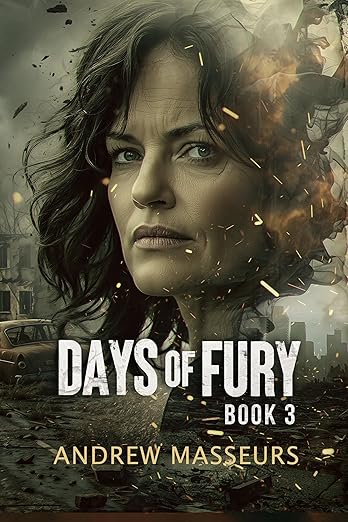
Days of Fury: A Day in the Life Series, Book Three by Andrew Masseurs – REVIEW + Q&A

Well it’s been a few weeks since I’ve posted…well apart from some scheduled posts…the reason being I’ve been struck down and under the weather feeling rotten with zero ability to concentrate. Seems like everyone is Ill at the moment.

What better way than to clear the cobwebs than a review with a little bonus thrown in..

Today I’m reviewing Days of Fury: A Day in the Life Series, Book Three by Andrew Masseurs.

I was lucky enough to have the chance to ask a few questions of the author so keep reading 😊

Here’s the blurb

Who can you trust?

They called it, The Vanishing. When the world’s population mysteriously disappeared. Where new predatory species stalk the earth. Where every turn could lead to certain death. In book three of the A Day in the Life award winning series we will find out what happened to Teresa, Michael and Pup on that fateful night of terrors. When Shelby and Lucy found themselves separated from their family. In a world that sees humanity as a virus that must be eradicated. The worst enemy could be yourself or the person standing next to you.

How did Teresa come to hold the fatal dagger’s handle? Who is the villainous Tony? How did Steven become a prisoner? What new secrets is the Earth unveiling?

All will be revealed and more, in this must-read thrilling sequel, Days of Fury.

Review

I mean.. after the ending of the last book I just had to continue the series. For those not familiar we are following the lives of the last humans on earth as they try to stay alive..One day life as we known it vanished.. all but a few remain and the how and why is still a little unclear..the reader gets to search for the truth at the same time as the characters. One family in particular got given a second chance.. but this world..it’s not safe for anyone with monsters now roaming.

To understand this instalment it’s vital you’ve read book 2.. a lot has happens but there’s still so much unknown.. and that’s where the events of Days of Fury comes in..

The author manages to fill in some of the blanks, the how’s and the whys of how characters ended up where they did, and wonderfully adds depth not only to the main cast but the supporting cast,, although it’s clear maybe they were never supporting cast.. we just didn’t know their part yet..

I think what shines for me is the clear and steady development of the plot.. while the reader is left guessing as much as the characters as to what will happen next, it’s clear the author has taken the time to plan events and is working up to something big.. while the story progresses we are treated to a rich and wonderful world and events, mixed perfectly with character development.

Days of Fury starts strong giving us the background of someone we think is a new character and quickly sets the tone of the book. While the first book in the series was about finding a place in the new world, the second about survival.. the third for me is emotional development as the each character comes to terms with not only the event of the vanishing and the horrible monsters.. but learning to face the prospect that not everyone left alive is a good person, and for some the vanishing has brought out the worst in them…which side of the coin are they on..good or bad.

It’s a wonderful instalment that truly solidifies the series with the reader. With so much action you need to keep the readers focus right where you want it and Andrew Masseurs certainly does that. The post-apocalyptic world he’s created is immensely breathtaking and I can only see things going from strength to strength.

Oh and not to spoil things but if you like a few twists and turns.. yeah this is for you!

Easy 5* and I’m ready for book 4

To find out more head to Goodread or Amazon.

For those as keen as me why not head over to the authors website.


Now the most exciting part of this post! Andrew Masseurs kindly took the time to answer some of my burning questions. Let me know what you think.

Q: The “A Day in the Life Series” seems to have grown at pace. Has the series been something you’ve been working on for a while?

The A Day in the Life series has certainly grown in pace this year (2024) With three books added to the series. There was a break as I wrote book one four years ago. In 2022 and 23 I wrote two unreleased novels in different genres. Coming back to the series in early 24 was like coming home. I wrote The Day After very quickly. I had the first draft done in a month. Then proceeded to edit it over the next two. Days of Fury book three took a little longer as I needed to be very careful with timelines while keeping rhythms and pacing. The Uncles of the Apocalypse came out of nowhere and I can’t even remember writing it. It was like being on a plane ride where you’ve slept through most of it and find you’ve suddenly arrived at your destination. The series will be slowing down as I’ve started to explore audiobooks. Book One was narrated brilliantly by David Piper. I’ve spent the last few months learning the trade of audiobook engineering. I released the first version of The Day After as an inexperienced audiobook journeyman. I ‘ve gained immense respect for the art of the audiobook and I’m redoing a second version of The Day After. I’ve got a better microphone. I’ve set up an acoustic treated room. I’ve learnt as much as I can about editing and recording. The second version of The Day After (reloaded) will be coming out very soon. I will then go back and redo Book One A Day in the Life myself to keep the narration the same throughout the series and record Days of Fury book three and The Uncles of the Apocalypse. I’d imagine all of this will take four to five months or more as its working, recording and editing while trying to work as well as having family time.  Each hour of recording for me takes around four to five hours of editing. It’s a bit nuts really but I’m hoping will be well worth it for the listener. So, the fifth book in the series will be coming out probably later in 2025. I really want that book to be something special.

Q: Where did the inspiration for the series come from?

A love of the apocalypse. I remember watching The Quiet Earth when I was twelve and just loving the opening scene where the main actor wakes up and everyone is gone. I Am Legend is also a favourite and I love the novel version by Richard Matheson. I started writing book one A Day in the Life while on holiday. I couldn’t get into the book I was reading and so started writing a novel about what was happening on holiday. I really had no idea what the story was about. I was as surprised as anyone when I wrote the line, and now they are all gone. Suddenly, the novella became about the disappearance of everyone. Then I had monsters appearing. I was scrambling to find the answers myself. Who would have thought it I’d still be writing four books into the series.

Q: In your time as an author so far have you had to learn any hard lessons with publishing?

Many. The first book was originally published. I found myself doing most of the marketing. After researching the role of being self-published I discovered it is not unusual and a lot of self-published authors are doing extremely well. My former self from four years ago would not recognise the person I’ve become. Writing my drafts. Getting them edited. Formatting the novel myself. Finding artists. Trying to create the best possible version of the novel possible and now audiobooks. The hardest lesson is basically that you must sell yourself. Marketing is everything. No one will know you or your books if you don’t sell the book. Its tough. But you must do it. Sale, sale, sale. If you can’t do it, then you’re in the wrong business.  I’ve reached thousands of people with my series and I’m hoping that will become hundreds of thousands. Keep on moving, keep on moving.

Q: What motivates you to keeping writing? I mean, what keeps it exciting?

For me it’s always about having fun. I know when it’s working cause then it doesn’t feel like work. I try to keep each next book fresh. I try not to follow the same ideas. I try to keep away from repeating what worked in the last book. For me as a reader and a writer I want to be surprised. I want to be kept guessing. As a lover of novels and movies I personally always enjoy something that is new. Something that has never been done before. This is getting harder and harder to do. Especially with the explosion of streaming these days. How can you come up with something that has never done before? I try to keep it unique. I try to stay in my lane. I try to keep it as Kiwi as possible. I try to laugh and not take myself to seriously and number one I try to have fun. As a result, whether it be creating an audiobook or writing a novel I’m always looking for the next mountain to climb. I’m loving the journey. I also have grown so fond of all the characters I feel like I owe them. I feel a personal obligation to write something that grows them all. I plant a seed and help it grow.

Q: What made you decide to release book 4 so quickly after book 3?

Days of Fury book three was finished halfway through the year. There were several reasons as to why it came out the same time as book four. One, was I lost my original artist.  He had disappeared down a rabbit hole and was unable to be contacted. I spent two to three months trying to find an artist who could possibly compare. I luckily came across Saber who arguably has created something comparable as well as taking it to another level. It’s funny some people love the artwork of book one and two. Some love the artwork of books three and four. I love both. The other reason was The Uncles book four was finished by the time I had the artwork for books three and four. I also felt that Days of Fury book three was a dark read. It explains a lot of what was unexplained in The Day After book two. It also introduces a new character in Tony. I had to take a cleansing shower after writing his part in the whole story. After finishing the book, I didn’t want to leave the reader with book three left in their minds. I also wanted the reader to have a bit of a thrill ride for coming with me this far. I paid them back with the roller coaster ride that is The Uncles of the Apocalypse. Probably my favourite book in the whole series so far. 

Q: How do you celebrate when you finish a book and it’s published? Is it nerve racking wait for the first sale/review?

How do I celebrate? I don’t think I ever have. Is a book ever really finished? Once I’ve finished a book and have it published, I’m normally juggling writing the next one as well doing the audiobook for the previous one.  Theres never really a time to take your foot off the accelerator. As soon as the book is published then its time to market it. With reviews. I think I was nervous with the first book. I didn’t know what to expect. As times moved on, I make sure I’m happy first and try not to think about it. I think I will celebrate when the whole series is finished and take a break…maybe. 

Q: Do you read a lot yourself? If so what have you been reading or what is your go to genre?

I’m reading and listening to stories more then ever. I listen to audiobooks and have grown quite a collection from established artists to indie authors. I tend to have a soft spot for thrillers and horror but love any genre if the story is original and riveting. I love a good scare. I’ve always loved movies. These days there’s so much noise I tend to get more enjoyment out of writing. 

Q: Other than writing what else do you enjoy? Music?

Family is number one. I love hanging out with my wife and kids. They are all characters who make each day special. I have two dogs and two cats. The dogs I love. The cats I have a love / hate relationship with. They are very demanding. Feed me! I spent over twenty years making music. It put me in good stead for the work ethic needed to be an author. I love writing and making songs. After doing it for most of my life it was a nice change to jump ships. Though, they are both extremely similar veins. I find writing is all about rhythms. Much like music. I try not to think while I’m creating music. I try to feel. Writing is the same thing. Get lost in the story and the story will take care of itself. My best songs were created quickly without overthinking. I’m finding the same thing with writing. I love to exercise though finding the time has become harder and harder.

Q:Reviews are clearly important to readers and authors alike, but we all know sometimes reviews can also be unhelpful. How do you handle negative reviews?

Coming from the music world I’d already built some what of a tough hide. In this day and age and with social media and the ability for someone to cut you down in a sentence its extremely tough. But it comes with being a creative. It’s part of the territory. I try to make something that I love. If I love it, then I hope someone else will get enjoyment out of it. That’s all I can hope for. With the positive will always come the negative. You can’t please everyone and if you try, you’ll probably end up not pleasing anyone.

Anthony Hopkins once said, “what other people think is none of my business.”  I like that. It is none of my business. I just must back myself and put the art out there with the thought that I hope you enjoy the book and find it an enjoyable read for the time you’ve given up for it.

Q. I really need to know… What’s next? More books, I hope. You seem to have found your niche, would you ever look at writing a different genre?

I’m sixty pages into book five. I’m creating the audiobooks for the first four books in the series. Once book five is finished I feel a war coming on. It could be two to three more books. A large finale to the whole series. I can feel it. I can sense it. The family will be at the heart of it. The results could be catastrophic or satisfying. I’m not sure yet. All I know is it will be epic. The world around is also changing. I can’t wait to write inside it.  Once the series is finished, I’m not sure what will happen next. Could it be books on characters inside the world? Could it be a stand alone novel? Could it be another series on a different idea? My current ideas for the books are always changing as I write so I can’t say. But yes, there will be plenty more books!

I hope you enjoyed the Q&A and my thanks go to Andrew Masseurs for being so willing to answer my questions ha ha.

Mapping The Night by John David Bethel – REVIEW PLUS Q&A!!

Today it’s my pleasure to review the latest release from John David Bethel – Mapping the night!.

I was also lucky enough to be able to pin the author down to answer a few of my burning questions so do read on for more 🙂

Here’s the blurb

The evil that hides in the dark is not always what it seems.

FBI Special Agents Eileen Prado and Ira Fisher are inserted into the investigation of the Upper East Side serial murders at the instigation of forces working within government who want the identity of one of the victims kept quiet. Their partners in the NYPD have their own agenda. They are hiding the true identity of the man known as The Uptown Savage.

Review

A young woman is found unresponsive in bed.. no one knows what happened to her but her little boy was found at the scene trying his best to wake his mam up. Unfortunately for the little boy is mother is beyond saving.

Two investigators arrive to arrive and set about chatting to those in the area but no one has seen anything out of the ordinary…When asked the little boy recounts his morning and how he discovered his mother, but nothing seems out of the usual either.. there’s no real clue to what happened.

As the investigation continues, they look deeper into the victims life, and her visitors, but can they figure out what happened? And is she the only victim? How did no one see anything?

I really enjoyed Levitt and Broaden as they investigated the case, they played off each other nicely and their style was just what you’d want, they keep it simple and focus on the task at hand. They believe in clues.. evidence.. studying the victims to gain insight into the motives of the perpetrator. They are also clearly good at what they do.. they don’t miss a beat eliminating evidence or the risk of contamination.. these guys know what they are doing!

I think what really brings this story up to the cracking tale it is would be the pace… it’s got a bit of suspense there.. just the right amount of detail to keep you hooked but never enough to spoil anything..I also really liked the ending.. not to give anything away but it feels like the author wants to leave the reader with their own imagination abit.. once you put the book down you’ll be left in contemplation..

The little boy, Zane is very intriguing too.. he’s traumatised clearly by what has happened but is that the reason he’s unresponsive to questions? Does he know something that might help the case, and if so how do they tease this out of him without him shutting down. Levitt and Broaden really do want to do right by the boy.

I’m a big fan of flow and pace and what Mapping the Night does is spot on.. the author is clearly a master at the descriptive art.. there’s tonnes of little detail thrown in but nothing stops the flow, it all works and just adds to the whole mystery as you take in all the surroundings like you are there yourself.

For me it’s the natural flow, pace and development of the characters that make it a resounding 5*.

Interested? – Buy link


Keep reading for a bit more info about the author followed by my Q&A!!

Author Bio

As the son of a U.S. State Department Foreign Service Officer, J. David Bethel hopscotched around the world, from one of his father’s embassy postings to another, finding himself, in 1959, in Cuba, sitting in a hotel room with Fidel Castro, just one week after Castro had come to power. 

“He was there with his brother Raul, and Che Guevara – all these men with big beards, long hair, the rifles and handguns, just a week after they came out of the mountains,” recalls Bethel. “When Castro noticed I was looking at his pistol, he asked my dad, ‘Can I show your son my gun? And my dad said yes, but first unload it.’” 

As David held the heavy gun, he couldn’t help but like the revolutionary leader — until a few minutes later when Castro gave a press conference that Bethel’s father, a press attache for the American embassy, helped organize. A reporter badgered Castro with questions the Cuban leader clearly didn’t want to answer. Bethel watched, stunned, as Castro’s entire personality changed. Castro’s stone-cold glare toward the reporter still chills down Bethel’s spine. “He was a completely different person,” recalls Bethel. “It was a lesson to me about the dark side of human nature.” 

Today, Bethel is an award-winning author, mining his memories from his globetrotting youth as the son of an embassy press attache for his political and psychological thrillers that explore the violence always simmering in the dark recesses of human nature.  As Bethel says, “My childhood was fertile training ground for a fiction writer.” 

His latest novel, Mapping the Night (2024), follows a pair of investigators – one for the FBI, the other for the NYPD — whose probe into a New York City serial killer is being hampered by a person – or persons – in government. The question is why? 

As with Bethel’s other books, Mapping the Night is fast-paced, intricately plotted, with compelling characters in the kinds of glamorous, high-stakes worlds in which Bethel grew up and later worked. 

A graduate of Tulane University, Bethel followed his father into a government career and politics. He served as press secretary and speechwriter for Members of Congress as well as a senior adviser and speechwriter for the secretaries of Commerce and Education. 

Bethel also worked as a media consultant for prominent communications management firms, and wrote speeches, opinion editorials in leading newspapers, and congressional testimony for CEOs from the nation’s largest corporations. 

Getting so close to political and business leaders, Bethel saw the dynamics of power first-hand. And while he never stumbled into the kinds of murderous conspiracies he’d later write about — “I worked for very smart, dedicated people trying to make a difference,” he says, adding with a laugh: “Not like today.” 

Still, he recognized the literary potential of his experiences in politics. “I was always writing down ideas,” he said. “Politics mixes everything that fiction authors write about: sex, crime, psychology, power — all of it. I take a kernel of an idea and weave it into a story.” 

Not surprisingly, many of his novels lean into politics. Evil Town (2015, Tell-Tale Publishing Group) tracks an FBI investigation into the murder of the wife of popular Florida congressman that takes the story from the Pentagon to small-town Florida. No Immaculate Conceptions (2018, Two Dog Publishing) follows a frantic young presidential speechwriter who is pursued by a psychopath. 

A meeting with a fan broadened his writing. A private investigator who admired Bethel’s work recruited him to write a true-crime book about the case of a man who was kidnapped, tortured, and extorted for millions of dollars. Bethel felt it would make a better springboard for a psychological thriller, albeit one that brought him from political intrigue to a psychological thriller. 

After the ensuing novel, Blood Moon (Tell-Tale Publishing Group) in 2016 came Wretched (2022, AAEB Publishers), in which the justifiable homicide of a town bully leads to the investigation of a serial killer; Unheard Of (2019, Whiz Bang Publishing), about a serial killer haunting the Las Vegas Strip; Little Wars (2020, Whiz Bang Publishing) about a family murder-suicide local officials seem strangely intent on keeping under wraps. 

 “I’m always trying to understand these people, the Ted Bundys of the world, to understand what leads them to such horrible ends,” he says. “I now understand that these people are predators and for them hunting other human beings is like a hunter going after an animal. Nothing is going to stop them unless they themselves are caught or killed.” 

Now living in Florida in the Orlando Area, Bethel has retired from politics and government and devotes himself to writing. “I have the experiences, I have the imagination,” he says. “I take all this stuff that’s in my back pocket and with a lot of hard work and muscle turn it into fiction.” 

                                                                 ###

johndavidbethel.com

Instagram

X (Formally Twitter)

Facebook


10 Questions With…

I’m very excited to have had the chance to ask the author a few questions, let me know what you think 🙂

Q: Your latest offering, Mapping the Night, is gripping from the start and the ending. It leaves the reader fulfilled but at the same time it’s thought provoking. Did you always have this story planned from when your first put pen to paper or did the plot change and evolve as you wrote the story?

A:  When I begin writing I have no idea where I’m going. I have the kernel of an idea and dive in. With Mapping the Night, I began with a scene I read about in a newspaper article covering the investigation of serial murders in New York City. The police found the young son of a murder victim applying ice to his mother’s forehead trying to revive her. He said it was what she did when he was sick and he wanted to “make her better.” That scene haunted me and it was my jumping off point for the novel. I had no idea where I was going with it.

Many writers work from a detailed outline and prepare elaborate backstories for their characters. This provides a foundation that takes them from the first sentence to the final one knowing where they are going and how they are going to get there. I tried that approach initially but found it took the fun out of writing for me. I wanted to write the way I read. Being surprised about what is around the corner. About how characters react to their situations. I discovered early on that the outline and backstory process would not work for me.

Q: You’ve quite a nice collection of works to your name now, do you have a favorite? And is there anything particularly, review, award etc, that makes you feel especially proud?

A:  Asking me which novel is my favorite is like asking a parent which child is their favorite. My first, Evil Town has a special place, of course. It proved to me that I could write a novel. That said, my follow-up Washington Trilogy (No Immaculate Conceptions, Sirens, No Country Loved) demonstrated the ability to sustain a series and delve into the workings of American politics and government, and write in depth about the men and women who involve themselves as the nation’s leaders.

With Blood Moon, I chose a completely different path. With that novel, as well as Unheard of, Holding Back the Dark and Wretched, I probed the darkness of people who commit unspeakable crimes, and set them against those who fight such evil. This required a great deal of research and learning about the impulses and deviancy that drives the offenders, and learning about the training and skills of those who fight this evil. I consulted everything from true crime books, to psychological studies, to law enforcement tracts to create believable scenarios.

Mapping the Night is yet another departure. More than my previous novels, it combines both political and psychological themes, and looks more closely at how the characters deal personally with the demands put on them by the circumstances in which they find themselves.

Little Wars is an outlier on this list. The plot unravels in a small rural town during the final few days of World War 2. The investigation into the murder of a family strips the veneer of normality from the surface of the community revealing threats to an anticipated bright future following the war years.

As to reviews or rewards, all positive reviews provide some legitimacy to my choice to be a writer. Even negative ones can have that effect if seen in the right light. That someone read a novel I wrote and found it worthy of comment – positive or negative – is a plus. The commenter took the time to read my novel and was affected enough to share their thoughts.

Q: You’ve clearly mastered the dark and bone chilling tales, would you ever consider writing in a different style, or genre?

A:  As I noted earlier, I am motivated by the germ of a story and go from there. To date, my imagination has been tweaked by political and psychological “germs”, but I would not rule out other directions. I doubt science fiction is in my future. I’m more a “here and now” person.

Q: Reviews are clearly important to readers and authors alike, but we all know sometimes reviews can also be unhelpful. How do you handle negative reviews? And is it hard to let negative comments go and focus on all the positives?

A:  I have enough rejection letters to paper every wall in my house, and that doesn’t count all the email rejections I’ve received in recent years. If I allowed those to influence me, I’d never have written a word. Rejection and negativity are part of the business. Literature is an art, not a science.

I have learned from rejection and critical reviews. Writers should always be open to criticism and suggestions for improvement, whether we agree with them or not. When fully engaged in the task it’s possible to become so invested in the product that you lose perspective. That is, you’ve worked so hard to get it right, it’s difficult to accept that sometimes you get it wrong. Accept criticism gracefully and allow yourself to carefully consider what you’re being told. In the end, it’s up to you to accept or reject edits, and even rewrites, but I’ve found that critiques can be helpful and can improve your product.

When I look back at some of my earlier novels, I see where I fell short. I also see improvement come as I moved ahead with my writing. I never consciously went through my writing and identified weaknesses or made a list of areas that needed improvement. It happened organically. For example, early on I don’t think I developed fully three-dimensional characters. I put them in the center of the plotline and let it revolve around them without offering readers a depth of insight on why the character took a particular course of action, or reacted to their circumstances as they did. The story itself worked and the plot remained intriguing judging from the comments of critics and readers. But I discovered complexly drawn characters in the novels I was reading. They had relationships that impacted how they pursued their work; they had backgrounds that affected how they viewed their workmates and antagonists; and so on.

Each novel is a learning experience.

Q: Where does your inspiration come from? And do you find the writing process difficult?

A:  Inspiration has come from a number of different sources. As noted, for Mapping the Night, it came from a newspaper article; Unheard of drew from a series of murders of homeless people in Las Vegas; Wretched is based on the true story of the unsolved killing of Ken Rex McElroy, the town bully whose crimes included sexual assaults, robberies and physical violence over a three decade reign of terror; Holding Back the Dark mined the crimes of such serial killers as Ted Bundy, Edward Kemper and Herbert Mullins.

Yes, writing is a challenging process. It requires a tremendous amount of discipline to dedicate hours of your life pounding on a keyboard, alone with your thoughts, and not getting up until you have exhausted yourself for the day.

For me, it means no less than four hours every day no matter what else is going on in my life. That is a chore not only for me but for those in my life. As my wife says, “You’re gone not only during the hours you’re holed up your office, but for most of the rest of the day because your mind is still on what you’re writing.” And that means that I’m unavailable to those around me for at least six months.

There have been times when events caused an interruption in my writing. It was not only frustrating being away from the story, but reinserting myself and picking up on the train of thought — the flow — was difficult. There are usually false starts before the engine is humming again. And the only way to get that engine humming smoothly is by refusing to give in to any frustration or desire to get out of that chair.

Q: What do you feel makes a great story?

A:  A compelling plot does it for me. If a story captures my imagination, I can get lost in the narrative. And I’ve found that the most effective novels have multiple, intertwining plots that crisscross each other. Each introduces complex stories and characters who, although unique to a particular plotline, reveal traits that allow the actors to come together comfortably when the denouement brings the various storylines to a conclusion.

Stephen King comes to mind immediately as a master story-teller. His novels put the reader in the middle of the action and drive relentlessly to the finish line. Characterization is also important in King’s novels as demonstrated in Misery and The Stand, for example, and showcase his ability to paint memorable characters. But it is the story that define his novels and, for me, distinguish King’s talent.

Q: What is your favourite part of being a writer?

A:  The creativity. Filling a blank piece of paper (or screen) with words and conceiving cities, towns, neighborhoods, streets, houses, men, women and children. Putting these locations and the characters under some pressure or making demands on them requiring their good and bad angels to surface and interact; using that interaction to reveal human strengths and weaknesses.

Creating worlds and people within them has allowed me to better understand how disconnected we can be from each other. Most of us live a very self-contained existence. We work with a finite number of people; we go home to our families; we have a small circle of friends; we interact in the same environment and with the same people on a regular basis. When writing, I have to broaden my horizons. Different characters live in different worlds. They have different interests and diverse connections. Writing have taught me to look around. See more than what’s in front of me. If we all can do that, we’d better understand each other and the worlds we live in. Writing has broadened my perspective on life

Q: What’s your favourite under-appreciated novel?

A:  I have no idea which of my novels is under-appreciated, or, for that matter, which is the most appreciated. Changing the criteria just a bit, I’d say the novel that should garner more public consideration is No Country Loved. Written prior to the tragic events of January 6th, it anticipates this day and the political fallout that ensues. Although not completely prescient, there is enough in the novel that will be familiar to readers. Disturbingly so, I think.

Q: What was the most recent book you’ve read yourself that you would recommend?

A:  I recently finished Jolie Blon’s Bounce by James Lee Burke. Burke’s descriptions of the swamps and marshes in Louisiana put the reader shin deep in the muck and mire, and on alert for dangerous critters that are lurking about – human and animal. He builds his story upon the foundation of history and tales that define that region, and creates characters that are current, but defined by their past. Burke is a master story teller with an incredible ability to paint a world the reader will fully inhabit.

Q: What’s next for J David Bethel? Can you give us any hints what we can expect next?

A:  I have completed a sequel to Mapping the Night entitled Squinting at Shadows. The sequel is based on the murder of the daughter of Senator Charles Percy; an unsolved crime that occurred during his first campaign for the Senate.

A quick synopsis: FBI special agents reopen the cold case and begin to peel back layers of lies and the misuse of power that have hidden the truth of the murder. The investigation takes them from the toney neighborhoods of suburban Chicago to the halls of Congress and the corruption-ridden nation of Suriname. Along the way they become embroiled in a complex web of political intrigue and enmeshed in the dangerous world of international weapons trafficking and regime change.

I’ll keep you posted on publication possibilities.


My thanks today go to the author and also Lori @ De Waal & Associates for the chance to review the book and for taking the time to answer my questions 🙂

BLOG TOUR – JULIA PRIMA A Roma Nova Foundation Story by Alison Morton plus 10 Question With…

Today I’m pleased to be taking part in the blog tour for JULIA PRIMA A Roma Nova Foundation Story by Alison Morton.

I was also lucky enough to have the chance to ask the author some questions about their work so keep reading on for a 10 Questions With feature. I’ve not had one on the blog in a while so very esxcited!!

Here’s the book blurb.

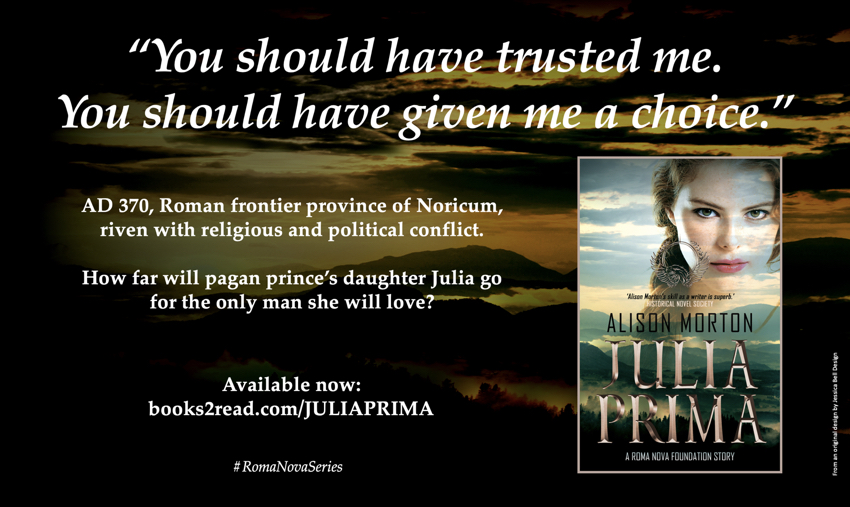
“You should have trusted me. You should have given me a choice.”

AD 370, Roman frontier province of Noricum. Neither wholly married nor wholly divorced, Julia Bacausa is trapped in the power struggle between the Christian church and her pagan ruler father.

Tribune Lucius Apulius’s career is blighted by his determination to stay faithful to the Roman gods in a Christian empire. Stripped of his command in Britannia, he’s demoted to the backwater of Noricum – and encounters Julia.

Unwittingly, he takes her for a whore. When confronted by who she is, he is overcome with remorse and fear. Despite this disaster, Julia and Lucius are drawn to one another by an irresistible attraction.

But their intensifying bond is broken when Lucius is banished to Rome. Distraught, Julia gambles everything to join him. Following her heart’s desire brings danger she could never have envisaged…

Review.

Julia Prima is book 10 in the wonderful Roma Nova series by Alison Morton. It’s a foundation story so you don’t need to have read the previous books in the series to enjoy it but it could hurt to get them all if you haven’t already 🙂 .

We meet Julia, trapped in a system that allows a female little independence, and at a time when family honour was held above all.  

Julia is legally divorced but stuck in an environment with battling religious system.

When the eye-catching Lucius arrives Julia finally finds what she’s been after, a natural attraction that builds, emotions, the kind that will make you do anything.

Word soon spreads and as Julia’s ex husband holds some sway Lucius soon has his orders to pack his bags.. he has to follow orders even if he doesn’t want to but does he really know how Julia feels?

Now, Julia’s father is clever.. he knows she can’t be a spinster for the rest of her life and he finds her a match he hopes will work.. it’s not for love.. it would be convenience for both.. but Julia isn’t one for letting a man tell her what she can and can’t do in life and she sets out to find Lucius.. a long and hard journey.

Along the way religious beliefs at the time play a big part.. she’s a young woman.. while she’s not alone she really needs to be careful and story is soon thought of to keep her identify unknown but how long can they last without someone finding her…. Or have they already found her?

Now to the nitty-gritty.. plot.. FANTASTIC. I’ve read a lot of the authors work and I really felt this one just packed an extra punch.. it’s more emotional.. a desperate journey which I found more intense and gritty.. LOVED IT!

Development wise everything is paced well and as always the author manages to mix plot and romance seamlessly. If you are a follower of my reviews you’ll know I’m not a fan of romance when it feels forced into a story but Alison Morton adds these aspects naturally allowing the story to feel real… you feel the connections between the characters.

While I loved the character of Julia and her shear strength & determination I also fell in love with Aegius and Asella who accompany Julia on her journey. I’m not one for spoilers but these 3 together are what makes this book work.

Wonderful writing with an easy flowing exciting plot. What more could I ask for!

A spectacular 5*

To find out more head to Goodreads or Amazon.  Or any good bookseller. Keep it local if you can 😊

Now would you like to see a 10 Questions With feature, here we go….

10 Questions with…

Q1. I’ve absolutely fallen in love with the Roma Nova Series, so I loved the idea of a prequel. Was it hard to come up with the plot or did you always have this in mind as the next step in the series?

Thank you for your kind words about the series! Every country has a history that has impacted its people and entered their genes. The story of Julia Bacausa and Lucius Apulius has always been lurking in the background since the first book, INCEPTIO, when Karen/Carina fled to the safety of the Roma Novan legation. Gaia Memmia, the legation officer, is helping her adapt:


She gave me a kids’ history book that illustrated how Apulius and his four daughters had founded Roma Nova at the end of the fourth century. I laughed at the heroic little cartoon characters waving their swords around, but Gaia took it all seriously. Descended from the Julii and Flavians, both tough political families, according to Gaia, Apulius had married a Celt from Noricum. Although Romanised for several generations, women in her family made decisions, fought in battles and managed property.

That was over ten years ago. Although I never planned to write a whole novel, the need to write the foundation story has crept up on me year by year…

Q2. No spoilers, but a lot of description was packed in superbly, locations, methods of travel, clothes, attitudes and so on. Did you do a lot of research into anything specific to help you write Julia’s tale? 

The short answer – yes, everything! I have a general knowledge of the period and I know the Alpine areas of Austria and Italy, and the Tuscany and Umbria areas of Italy. I’ve walked round a lot of Rome’s hard pavements.  The most important thing to remember is that Ancient Rome lasted 1,229 years in the West. A great deal had changed by AD 370 even from the classical period of the first two centuries AD. We know our own world has changed out of recognition from, say the 1950s, yet many core elements are still there. Moving history on is something all historical fiction writers should be aware of, and I paid particular attention to those changes. By AD 370, togas had all but been abandoned along with the three dining couch convention and, horror of horrors, Roman soldiers wore trousers!

On the practical side, I had excellent help from Roman writing friends Ruth Downie on travel and Gordon Doherty on reference books for Late Antiquity.

Q3. I love a good prologue and JULIA PRIMA’s packs a punch! I heard recently some readers actually don’t enjoy a good prologue. What are your thoughts? For me, a prologue sets things up nicely, so when done right will hook the reader in from the first page.

Ha! Prologues. 🙂 Any two fiction writers or readers will argue about prologues! I’m neutral on them. If there’s one in a book, I always read it. If the author has put one in, then there must be a reason for it. In JULIA PRIMA, the prologue seemed to naturally fall into place. I needed to set the story up, but the incident wasn’t an integral part of the first part of Julia’s own story, although it becomes extremely important as it goes along. It also lets the reader be in on a secret that Julia doesn’t know…

Q4. One thing I’ve always loved about your characters is the strength and depth given to the female roles, turning society norms on their heads. In JULIA PRIMA this continues but we also see some wonderful development of a male character Aegius who plays a big role and you did a wonderful job painting his history. Did you find it easy writing his story? 

I like portraying a strong male character who isn’t a love interest, but who is a typical tough nut. Their role is to be a friend/supporter who is straight-talking, stands no nonsense from the heroine, but is loyal. Lurio does this for Carina and Tertullius Plico for Aurelia. Whether any of them holds a candle for the heroine is for the reader to decide…

Q5. I know you’ve read some of my reviews previously and so you’ll know I’m not a romance man when it feels forced. Do you find it hard to balance the romance and plot within your stories, as it comes across effortlessly with just the right amount of detail to have things develop naturally.

I feel that a story without an emotional element is lacking; even the toughest thriller needs the characters to connect personally, even if not romantically, but it should be integral, not parachuted in as an afterthought. JULIA PRIMA is the most romantic novel I’ve written. It had to be, as the story is about two people who founded a dynasty. I’m a long-time member of the Romantic Novelists’ Association and they gave me my first lessons in novel writing.  Whether you write steamy romance or adventure with a light romantic touch, the most important thing is to keep the characters and their feelings authentic within the plot of the story. Conflict, misunderstandings, separation, danger, heartache, persistence and courage work for me. It’s always about feelings, not mechanics!

Q6. Other than your wonderful Roma Nova series you’ve also stepped into the thriller genre with the Mélisende Thrillers series. How did it feel moving away from the comfort of Roma Nova?

Quite peculiar! It was Conn Igguldden who said I wrote a good riot and a great heroine when he gave me a cover endorsement for INSURRECTIO. He challenged me to write a modern European heroine with the same backbone. Obviously, I gave her failings as well. 😉 As I live in France and am both British and French, Mel/Mélisende developed naturally. I did six years in the British forces, so I could write her military background, except that the French Army has some interesting differences in recruitment, traditions and training! I did find a way to sneak Rome in with a chase round Trajan’s Market in Double Pursuit!

Q7. The Roma Nova series is a great example of alternative history done right. If you could go back, is there anything you aren’t 100% happy with?

I think every novelist looks back, tempted to go through their first book or first few books and change things, but I think it’s better to move forward. I’m equally sure that I write better than I did ten years ago and would probably get through several red pens if I went back. However, INCEPTIO, my first book, remains far and away my best seller.

Q8. So you’ve conquered alternative history, smashed thrillers. Is there any genre you’d love to try next? Or indeed any that you would stay away from?

Crumbs! That’s a difficult question. When I started, I was just writing a story that had been simmering away in my brain. Apart from general experience as a reader, I had no idea about genres. I loved, and still love, historical fiction, adventure, spy, thriller, international crime and conspiracy stories along with being a dedicated fan of Georgette Heyer Regency novels, so I’m really mixed up! I think my writing topics, interests and themes reflect this mix.

Periods of change fascinate me, as do the roles of women in history. I love stumbling upon stories of unsung heroines, or women who could have played a decisive part in history if they had been male. Anything slightly quirky, really, but not erotica!

Q9. What was the most recent book you’ve read yourself that you would recommend?

Currently, I’m re-reading Lindsey Davis’s epic Master and God. She stepped away from the Falco and Flavia Albia series and wrote a 480-page barnstormer about Emperor Domitian with two beautifully constructed fictional characters: pragmatic, effective, yet reserved vigilis turned Praetorian Gaius Vinius and freedwoman Flavia Lucilla, a capable and favoured hairdresser to the imperial family, yet a lonely young woman. All of Davis’s hallmarks are there – the research, the poignancy, the understatement, the compassion. And her drawing of Domitian is masterly. Highly recommended!

Q10. I ask this every time but that’s because I really need to know… What’s next? More books, I hope. 😊

Yes, more books. A second Roma Nova foundation story, this one set in AD 395, as I’ve only told half the story behind the origin of Roma Nova. This always happens to me. I write one book, then find I have too much story and need to write a second, or even a third! Then I’d like to tackle a third Mélisende modern thriller. Plenty to keep me busy!

Why not follow the blog tour?

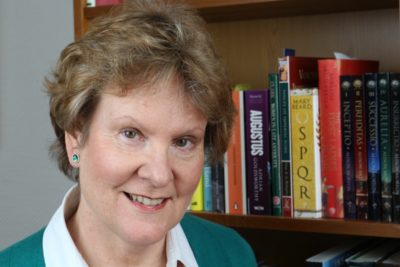
Author Bio.

Bio

Alison Morton writes award-winning thrillers featuring tough but compassionate heroines. Her nine-book Roma Nova series is set in an imaginary European country where a remnant of the ancient Roman Empire has survived into the 21st century and is ruled by women who face conspiracy, revolution and heartache but with a sharp line in dialogue.

She blends her fascination for Ancient Rome with six years’ military service and a life of reading crime, historical and thriller fiction. On the way, she collected a BA in modern languages and an MA in history. 

Alison now lives in Poitou in France, the home of Mélisende, the heroine of her two contemporary thrillers, Double Identity and Double Pursuit. Oh, and she’s writing the next Roma Nova story.

Social media links

Connect with Alison on her Roma Nova site: https://alison-morton.com

Facebook author page: https://www.facebook.com/AlisonMortonAuthor

Twitter: https://twitter.com/alison_morton     @alison_morton

Alison’s writing blog: https://alisonmortonauthor.com

Instagram: https://www.instagram.com/alisonmortonauthor/

Goodreads:  https://www.goodreads.com/author/show/5783095.Alison_Morton
Alison’s Amazon page: https://Author.to/AlisonMortonAmazon

Newsletter sign-up: https://www.alison-morton.com/newsletter/

10 Questions with….Ike Pius (@IkePius)

Today I bring to you a little Q&A with Ike Pius. I reviewed Ike’s book Bomber Boy back in 2016! so a Q&A is long overdue! ha.


Question 1 –   For readers who haven’t yet read your work can you give us a little bit of an insight as to what the book is about?

First let me say a big thank you for having me here on your blog, David. You have been very helpful in getting my book Bomber Boy out there in front of people.

Bomber Boy: Rise of the Underwear Bomber is more than just a story about Terrorism; this is a project for change. This is social activism… this is my lifeswork. The lead character is a terrorist or a suicide bomber who is sent to blow up a plane loaded with passengers bound for the United States.

That is exactly the point- He was sent. By whom? Why?

I try not only to make the reader laugh, but also to see that Terrorism goes a lot deeper than the folks at CNN are willing to let us see.

Question 2   Where did the idea for the story stem from?

The Underwear Bomber. The son of my country’s richest banker, is a very real person. Hence the idea for the book is inspired by real events. However, I labelled the book as fiction so as to dodge any legal issues.

Question 3  What motivated you to write the story?

Nigeria my country is always in the news for the wrong reasons. We are always looking for excuses to kill each other, but honestly religion seems to be the most effective reason we have.

I wrote a book titled Paradise That Was. This book was a story about the futility of Religious madness, particularly in the Nigerian setting.

Bomber Boy was supposed to be a radio skit to raise awareness about the book. somehow I saw more potetial in Bomber Boy and so decided to make it a book of its own.

Question 4    I enjoyed the book and quite honestly say for me it’s unique, how has it been received and how have you handled the feedback?

Well, for a guy like me with no background in literature, and no connections to the big publishing houses out there I really have no right to complain.

I just have to mention that many reviewers have refused to give me a chance just because of the colour of my skin. One American woman attempted to shoot me down in flames via a review on amazon… and then 2 years later she posted an even worse rating on goodreads. A man from Canada was moved to write about her “racism takes many forms.”

How I have handled the feedback? Difficulties have only made me stronger. I have improved the quality of the text and I am determined to keep pushing on.

Question 5  Do you plan to keep writing?

Interesting that you should ask this. Several times I have started a new draft, only to tear all up. I guess I don’t want to write anything less significant or meaningful than Bomber Boy. That would be like walking backwards. But when inspiration comes, I will be sure to write again.

Question 6  Do you have a day job? If so how do you balance this with day to day life

I run a small business which involves photography, graphics, and printing. My attitude towards life is: ‘stuff won’t get done by it’self.’

Question 7   I know you’ve worked hard to get bloggers like myself to read your work. Have you found the community as a whole supportive?

I believe that the future of publishing is not big presses or PR firms- it is bloggers. I therefore try as hard as I can to work with them. A lot of work still has to be done, like fishing out racists and scammers who don’t care about books but just want to take money from authors.

But yes, there have been a few supportive bloggers whom I have had the joy of meeting.

Question  8  What are your hopes for the next five years, personal and professional?

I would like to meet a nice girl. I would also like to see that my book Bomber Boy has gained acceptance. I don’t even know what that means, but I believe I’ll know when I get there.

Question  9  Tell me more about Ike. What do you enjoy doing in your spare time?

I enjoy watching TV. I think my favorite show is Only Fools and Horses. I also enjoy reading. My favorite book is Gaius Julius Caesar: The Conquest of Gaul. I like to eat too..hahaha

Question 10    What would you say to convince readers to give your work a read?

Please read my book… hahahahaha

Thank you Ike!

To find out more head to Amazon or Goodreads.

10 Questions with Alison Morton.

Today I’m very glad to bring to you a Q&A with Alison Morton, author of the Roma Nova series.

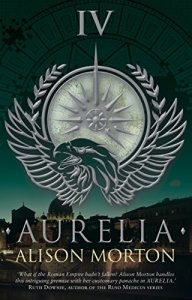
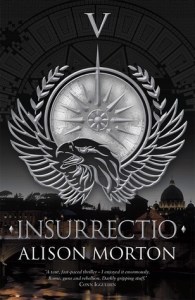
You can read my reviews of Aurelia and Insurrectio by clicking the images below to open a new window.

51pkqvjge9l29845159


One of the biggest things I’ve enjoyed about the series is that it turns the traditional and outdated idea of social structure on its head.

I hope you enjoy the questions, do let me know your thoughts 🙂

P.S look out for my review of Retalio book 6 in the series soon!


Q1 – For anyone who’s read my reviews of your works I’m sure they will know how much I’ve enjoyed reading them but for anyone new what would you say to convince them to give your books a try?

You don’t believe in starting with an easy one, do you, David?  😉

Seriously, I try to provide a cracking story and provoke a few questions along the way. Yes, my books are thrillers, but without dripping body parts and with a different take on what might have happened at the end of the Roman Empire.

I enjoy a good twist when I read, so I like to put a few of those in my own books, but of course, all good reads are not only about the story, but equally about characters. We love to gasp with horror, feel that frisson of fear, fall in love and celebrate along with our heroine (or hero).

Q2 – Strong female leads are something I’m starting to see more and more in books and I love it. Did you always set out to write a series that knocks on the head the idea of the male characters being in charge?

In brief, yes! I wanted a female character who led the action and pushed the story through. Too often the woman is the sidekick or the mother/daughter/sister/colleague who waves the hero goodbye as he sets off on his quest, whether in the 4th, 21st or 43rd century. Virginia Woolf wrote in 1929 about fictitious women, “But almost without exception they are shown in their relation to men.” So it’s nothing new!

A little secret: if I find myself slipping back into the action man/passive woman trap when writing, I reverse the dialogue to make sure my heroine is making the decisions!  But it doesn’t make Roma Novan men any less masculine or tough. (I explain it all here.)

Q3 – Your idea of alternative history and that the fall of Rome didn’t mean the end of Roman culture opens up lots of writing possibilities, where did the idea come from?

Several things! I’ve been a ‘Roman nut’ since I walked on my first mosaic at Ampurias in northeast Spain. In fact I’ve clambered over quite a lot of Roman Europe! The idea of a modern Roman heroine has been bubbling away in my head for years.  She would have to be modern as even in Late Antiquity no woman could have a public role, let alone a military one, and Rome was essentially a military society. Then I read Robert Harris’s Fatherland and learnt about alternative timelines and outcomes.Two more neurons connected in the brain!

No fingers were hovering above a keyboard yet, though. Then I saw a really bad film. The cinematography was gorgeous, it was set in modern Rome and it had the enormous bonus of starring Ewan McGregor. (Your women readers will understand the last one better than men, I feel.) However, the dialogue and continuity were rubbish. I knew I could do better. The trigger was pulled. Ninety days later I had a manuscript of 90,000 words. Rubbish, of course, but it went on after much slashing, rewriting and polishing to become INCEPTIO.  The legend of Roma Nova was born.

Q4 – The great thing about the setting of your tales is that you have some leeway with historical accuracy. Was the accuracy in describing the Roma Nova culture important to you?

Absolutely! I have an MA in History which has given me a grounding in being picky about accuracy and sources in a methodological way. I don’t think you can alternate history without knowing it first.

When you choose to diverge from the standard historical timeline, you have to know exactly what the world was like at that point. This is the last solid foothold you have on the historical record. For example, the Roma Nova storyline is that the group of senatorial families who trekked out of Italy at the end of the fourth century to become the first Roma Novans were pagans persecuted by Christian Emperor Theodosius II. This persecution really was taking place at the time (not something we’re taught about). Theodosius signed the final edict outlawing worship of the traditional Roman gods in AD 394; the punishment was death.

Once you have researched that divergence point in time ad nauseam, then you project forwards using historical logical until you reach thelater time when your story is set. It helps to have a general knowledge of ,and a feel for ,history here. If not, research!

In fact, everything has to be checked from technology and attitudes in the 1960s (AURELIA), how to mount a coup d’état, intelligence techniques, warfighting of the 1980s (INSURRECTIO, RETALIO), weaponry, signals, locations and transferable Roman practices for all the books. But I love research. Honestly!

Q5 – How long have you been a writer and what influenced you to first put pen to paper?

I’ve written most of my life, but mostly practical stuff: student theses, government papers, exercise reports, corporate documentation, PR copy, articles, an academic dissertation even. As a trained translator, my work turning foreign language text into English was precise with a touch of creativity in expression, plus I edited at least one million words in that time. Now, making up stories? Ever since childhood. Writing them down? That only started in 2009 with that bad film.

Q6 – Would you contemplate writing a book in any other genre?

Ha! The great Conn Iggulden who endorsed INSURRECTIO gave me a suggestion about that. But I’m not telling at the moment!

Q7 – How important is feedback from your readers?

Very important. I’m not so grand that I don’t read and take notice of my reviews. Of course, they are all subjective, but I’ve gleaned some excellent advice from readers and fans since INCEPTIO was published in 2013.

The Roma Nova Enthusiasts’ Group on Facebook is small but going well, as is my Facebook author page and I always love it when people react to my blogposts (alison-morton.com) or tweets (@alison_morton).

Q8 – Who have been your biggest influences within the writing community?

This is such a difficult question as it changes all the time! Like many Roman writers, my first Roman book was The Eagle of the Ninth by Rosemary Sutcliff. I grew up on a very mixed diet of fiction, swinging from Georgette Heyer, Leslie Charteris’s The Saint to Peter O’Donnell’s Modesty Blaise and Dennis Wheatley’s adventure tales.

I adore Gore Vidal’s Julian, and anything by Margaret Attwood and Tom Clancy. These days, Lindsey Davis is a clear favourite along with Steven Saylor, Ruth Downie, William Boyd, J D Robb and of course, Robert Harris.

Q9 – What books are currently on your reading shelf?

Legionary: the Roman Soldier’s (Unofficial) Manual by Philip Matyszak. I’m enjoying it tremendously. I’m ex-military myself, so it’s raising a few smiles.

Q10 – Future plans? More books I hope J

More books, certainly!  I’ve just completed a novella featuring Carina and set between INCEPTIO and PERFIDITAS. Perhaps I’ll write more ‘inbetweeners’ or a collection of short stories. Then there’s the foundation story of Roma Nova waiting for me…

Thank you so much for letting me ‘invade’ your blog, David!


10 Questions with……. Jesse Teller PLUS SNEAK PEAK :P

Hello!

Did you see my review of Liefdom by Jesse Teller? No!! well click here to read it quick! 

Today I’m very glad to continue my 10 questiosn with feature with non other than Jesse Teller himself who very kindly took the time to answer some of my questions.

I do hope you enjoy, keep reading to the end for sneak peak of whats to come next from Jesse!


Wellcome Jesse,

Q1 – For anyone who’s read my reviews they will already know about the life of Gentry Mandrake but for those who’ve not had a chance to read the book yet can you give them a little insight into the story?

Okay, so Gentry Mandrake is a fairy. In my world, fairies are born to a different realm called The Veil, and every time a fairy is born, a child is born. That fairy and that child are bound together. The fairy serves as the child’s immune system to magic and other properties of my fantasy world. If the child dies, the fairy dies, and vice versa. All children are born innocent. So when Mandrake is born and he’s of monstrous size, has natural armor, and natural weapons, it begs the question, what kind of monstrous baby could have inspired such a monstrous fairy? We find out during the course of the book whether Mandrake is really a monster, serving a monstrous child, or if he is something else.

Q2 – I love the idea of the connection between humans and fairies..and especially the idea of the consequences of being a bad human/fairy has on the other.. Where did this idea come from and did it take a while for you to develop it fully?

Well I guess you could say parenthood. If a parent goes sour, usually the child does as well. Not all the time, but sometimes. So, in my world, when a fairy becomes jaded and dark, so does the child, and vice versa. This puts fairies as the guardians of the child’s innocence. Just as, in many ways, a parent is the guardian of a child’s innocence. When a person goes truly evil, when a child goes truly evil, it’s soul is severed from the fairy, and the fairy has a chance to turn itself back. This is the shift between changeling and imp. This mimics parents and children too, because when people become truly evil, it’s not necessarily a reflection of the way they were raised. At a certain point, they just cannot blame the parents anymore for their own decisions. In Liefdom, as in most of my work, I’m studying the relationship between parents and children.

Q3 – Something that really sticks with me from the book is the progression Mandrake goes through as the story develops. My number 1 must for a book is character development and I loved how you managed this. Was it hard for you to find the right balance between action and character development?

Not really. Character development is not an engine in itself. A lot of writers consider themselves masters of a train yard. On one track, they have plot development, on another they have character, and still another they have scene development, setting, voice. To these writers, they are managing the travel of all these different trains on many different tracks, trying to get all the goods, all of the story, in one place at one time, at different paces, with different strategies. For me, this analogy doesn’t hold up. I’m more like an arsonist burning the story to the ground. Create certain things, let’s call the heat of the fire the plot, the smoke is character development, the fire itself is the action. All these things go up simultaneously. All these things happen at the same time. So, the action creates the character development. I don’t see them as separate entities at all, just one great conflagration.

Q4 – How long have you been a writer and what influenced you to first put pen to paper?

Well it was my first writing assignment, right? That’s when everybody starts writing. They’re in grade school and they’re told to write some sort of short story. Mine was about a purple hippopotamus. I was in fifth grade. Some writers, it starts in college, when they can put together their ideas and they are driven. They’re telling themselves, this is what I want to do for my career, and they’re moving towards that goal. With me, I didn’t have that. There was a whole life full of distractions. I wrote occasionally. I wrote when I was given an assignment to. I didn’t really start creating a world until I was much older. Didn’t start writing with purpose until high school. But the thing that told me I really wanted to do it was the way it felt. Telling a story, creating a story, something captivating, something that pulled the reader, if just for a second, out of their world, their understanding. I was aware of that in fifth grade. I became aware of it with every story I told. It gets seductive after awhile. Coming up with a story for people to talk about, for people to experience, you can get carried away with it if you let yourself. It pulls at you, gently at first. If you write another chapter tonight, then you can spend the day talking about it with your wife, with your friend. It gets seductive. It can turn you into a junkie if you let it.

Q5 – Would you contemplate writing a book in any other genre?

I’m working on an autobiography. I’m not intellectual enough for sci-fi. Not funny enough for comedy. I’d love to be able to write historical fiction, maybe medical drama, but these have a lot of research to them. I respect authors of all genres, but fantasy is really my thing. In fantasy, if you can dream it up, you can find a way to make it happen. In fantasy, you can be undone by an infection, or standing your own against thousands of men. Fantasy is really the only language that I speak.

Q6 – How important is feedback from your readers?

Well, you can’t grow without feedback. That’s just a fact. If you’re writing in a bubble, you can’t expect to move on when you find yourself churning the same ground over and over again. I’ve got two people who have read everything, and they keep me honest. When a new review comes out, good or bad, I’m excited about it, because I learn from all of it. I find peer review to be the most helpful, hearing the opinions of other writers. But everybody who reads my work has an opinion, and I’d love to hear all of them.

Q7 – Who have been your biggest influences within the writing community?

Anybody who works really hard, who puts out quality work relentlessly. Glen Cook was really big for me in this respect. He put out a lot of solid work and I liked his gritty take on the fantasy genre. I went to a lot of workshops with an agent named Donald Maass. He had a big influence on how I wrote, process and technique. I’m inspired by author/marketers. There are indie authors who write and publish their own work and then spend years marketing it and getting it out to the world. That’s just inspiring to me. I can’t really pull that off. I’m obsessed with the work. I find myself working late at night, isolating myself in the work, pounding out one word after the next. But my wife does all my marketing. If she didn’t, nobody would ever hear of me. I’m not even sure I would ever publish, just sit in my basement and pound out one word after the next.

Q8 – What books are currently on your reading shelf?

Paradise Lost, John Milton. This has been a dream for a long time, a long time. The idea of the process of writing this piece sets my imagination on fire. This guy was blind when he wrote this epic poem. He was blind, which means he couldn’t write it out himself, he had to dictate it. When you’re writing, part of your mind’s eye is in the place that you’re writing, but your actual eye is on the board or on the screen. You’ve got that veil between you and the world that you’re writing about because you’re looking at a screen. This veil, this tiny step of distance that most writers have, Milton didn’t have. So when he described the fall of Lucifer, he was in the air tumbling at the same rate as Lucifer. When he described the building of the castle Pandemonium, he stood on its foundations as it was being erected. He knew the fires of Hell. He knew the bliss of Heaven. He experienced it all as he was dictating it. I’m also going to read the rest of Robert E. Howard. I’ve got his complete works. He’s my favorite writer of all time. I want to say I’ve read everything he’s done. He was a contemporary of H.P. Lovecraft. He wrote pulp fantasy and horror, created Conan, Kull, Bran Mak Morn. He wrote Solomon Kane, the puritan warrior witch-hunter, demon-hunter. Can’t get enough of that guy. I’ve got some of my own contemporaries on the list as well, other indie authors, Dyrk Ashton, Josiah Bancroft, M.L. Spencer. It’s an exciting time to be a reader. Before now, there was never really a viable way for a writer to get his or her work out unless they were traditionally published. Now there’s a free flowing of ideas and experimental projects that we’ve never seen before.

Q9 – What’s the best bit of advice you would give to those considering writing a book?

Write all the time. Pick a small window of time during your day every day and allow yourself in that time to obsess about your work. Throw everything else away, just for those brief half-hour, two hours, four hours, throw everything else away. Allow yourself to say, “Nothing else matters at this moment but my work.” And then just go, just pound out the words, just write and write and write, and when the timer goes off, and it’s time to go back to the real world, do so, content in the knowledge that tomorrow that same window of time will be open to you.

Q10 – Future plans? And will we see Mandrake again any time soon?

My future plans are to publish 1-2 novels every year for the rest of my life. I’ve got a book coming out in October where Mandrake makes a cameo. But in the releases for the next 15 years, we won’t see Mandrake. As time progresses, I believe he’ll come back into the main story unfolding of the world, but for now, Liefdom is the only glimpse we have into Mandrake. I’ve written a number of rough drafts, they’re poised and ready to go. I’ve got a lot of story saved up, waiting on a shelf. So keep your ear to the ground. You’ll hear more from me soon.

Thanks Jesse!


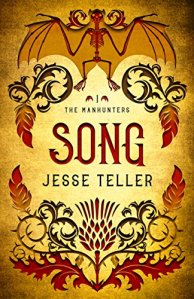
What’s next for Jesse.. well pn the 5th October his new book Song is released!

61IwerjRIcL

Here’s the blurb –

Some of the darkest minds in Perilisc attacked Mending Keep, releasing all its prisoners. Despite his strained relationship with the crown, Rayph Ivoryfist calls old friends to his aid in a subversive attempt to protect King Nardoc and thwart terrorist plots to ruin the Festival of Blossoms. But someone else is targeting Rayph, and even his fellow Manhunters might not be enough to save him.

Jesse has kindly given me a excerpt to share with you all, do let me know what you think of it. If you like what you read head to Amazon to pre-order your copy now!

The Guard of Mending Keep

One Year After The Escape

The serving boy’s face was stained green with disgust and horror. He looked about to be sick, about to flee, about to weep. Rayph saw the trembling lip and the panic in the eyes, and he knew what the boy was carrying. It was small, maybe a little over a foot wide, spherical, and covered with a towel. The boy wove a path through the reclining bathhouse patrons and made his slow, methodical way around the main tub to the corner where Rayph sat with his good friend, playing crease and taking in the steam.

As the boy drew closer, the dread that rose up within Rayph prompted him to turn to Dova and grimace. Rayph moved his tile, tapping it lightly with his finger, and shook his head.

“I’m afraid we are about to be interrupted,” Rayph said.

The boy trembled beside the gaming table. His white, sweating face held the world’s shock, and Rayph nodded at him. “Set it down.” He waved his hand across the boy’s eye line and muttered his spell’s incantation. The serving child’s face smoothed clear of all trepidation, and he let out a long-held breath.

“Where did you get it?” Rayph asked.

The boy’s dark eyes looked troubled even through the effects of the spell. “He hurt me,” the boy said.

“Hurt you how?” Rayph asked.

The boy pointed to his temple. “He got in here. He burned me.”

Rayph clenched his fist and anger bubbled deep within him. “What did he look like?”

“He was trimerian, but his third eye,” the boy rubbed his forehead, “it seemed to be flaming. He stunk of sulfur.”

Rayph’s blood ran cold, and he stood. “Watch the boy. Lock down the house. If he returns, do not engage, just defend, Dova. He is beyond even you.”

He looked to his ethereal friend, naught but churning wind where his body sat. The towel draped over Dova’s shoulders and tied around his waist, the only indicator of his form.

Rayph grabbed the boy’s shoulders a little too rough, just a little too hard. “Where did he go?” Rayph tried not to let fear get the better of his voice, but it trembled. There are so many innocents here. If he unleashes, how much of the city can I save? The answer was very little.

Dova exploded with a slight puff of wind. The towels fell to the floor. Rayph could feel his friend fill the room, warm air, fluttering and vibrant with life, swelled, blowing curtains in a flurry. The doors to the bathhouse slammed shut.

“Where did he go, son?” Rayph asked the boy.

“Who said he’s gone?” The voice held a new lilt of arrogance to it, a soft tinkling, musical and filled with spite. The boy leapt back. His forehead ripped open, betraying an eye. His back split and out flapped two wings that bled greasy smoke.

“Clear the room,” Rayph commanded as he loosed his spell. The power of the spell’s thrall was so great that every reclined man leapt to his feet and rushed for the door. The doors flew open to slam closed again. Every lamp in the room surged, hissing flame before dying completely. The room was thrown into gloom, the only light issuing from the great opening in the roof centered over them.

With a flick of his wrist and the uttering of a command word, the air around Rayph’s right hand tore and his sword dropped from the wound. The air zipped closed again, and Rayph turned to the serving boy, who hovered before him.

“You harm that boy any further and I will hunt you, Meric. I will plunge into that darkness you surround yourself in and I will rip you from it.”

The boy tossed his head back and unfurled a hideous laugh that trembled the ceramic tiles of the wall. “I have not come to quarrel with you, old friend.”

“You and I were never friends,” Rayph said. The sky above the opening darkened, and Rayph stepped closer. “Why have you come here? Why show yourself now, after this many millennia?”

“The nation is wide open, dear friend. No one is watching over Lorinth in your absence. You have forsaken your post.”

“I still guard this nation. I serve not the throne, but this is still my home. I will return as court wizard one day.”

The boy’s head lobbed back, and he poured out another hideous laugh, so violent the corners of the mouth split, and the boy coughed blood. “Too late, Rayph, you will return too late.” The head shook. “You have not yet looked at the present I left for you. How rude you are, Ivoryfist.”

Rayph extended an arm toward the table and muttered a word. His eyes stayed locked to Meric as the object floated the room to hover before Rayph. With a jerk of the cloth, he unveiled the severed head. Rayph looked in horror at the face, so contorted in pain from its last moment he could not recognize it.

He stared at it. The left side of the face was badly burned, the neck severed with some keen, hot blade that cauterized the wound perfectly. Deep claw marks covered the right side of the face and neck. Blood stained the chin and mouth.

Rayph’s heart broke out in a rampaging rhythm, and his mind burst into flames as he recognized the face. “No.” He looked away, but his eye was drawn to the head again as the identity of the head locked in his mind. “It can’t be.”

A gurgling laugh filled the room, and Rayph summoned forth the power to smite Meric.

“No, Rayph, you mustn’t!” Dova screamed. He threw his whistling form before Rayph, and two thrumming hands landed on his shoulders. The air that comprised Dova’s body filled with the water of the tub they stood in, making a figure of rampaging moisture. “If you engage him here, you will destroy my city. You must not.”

“Listen to Dova, Rayph. He always was one for caution,” Meric said. “Caution and cowardice looking so much alike and all.”

“Rayph, who is it?” Dova motioned toward the head.

“Stoic,” Rayph breathed. “He has killed Stoic.” Saying it aloud let the words take on meaning. His friend was gone, his guard, dead. What would become of Mending Keep? Had they all fled? Had the world’s unkillable fiends made good an escape?

He knew the futility of the words before he spoke them but felt helpless to say anything else. “I will make you hurt for this, Meric. In this one act, you have killed yourself.” Rayph felt nauseous.

“Step aside, Dova,” he said.

“Oh, my dear Rayph, please do keep tight check on that temper of yours. I would hate to reduce this city to rubble because you threw a fit,” Meric said. The black smoke issuing from the flapping wings filled the room with unbreathable air. “Stoic is gone, as are his charges, but that does not mean we need come to blows. I was not the one that killed your boy.”

“This head was severed with your blade. Do not try to deny it.”

“Yes, for easier transportation, I assure you. He was dead long before I got there.”

Was Meric lying? Did he have any reason to? Why bring the head at all? Meric was not one to gloat. It was not his way. Why alert Rayph the prison had been broken in to? There was an element to this Rayph could not see, something big moving powerful pieces about the board.

“Who did this?” Rayph asked.

The boy laughed again, weaker this time. He doesn’t have much time. I have to get Meric out of that boy as soon as possible.

“I won’t do all of your work for you, Ivoryfist,” Meric said. Lightning flashed outside, the inky clouds that followed Meric everywhere boiling in the sky above them.

“Does this mean you’re coming off sabbatical?” Meric asked.

“I will find out who did this and why, and when I do, if your name comes up at all…”

The boy laughed again, a hissing wheeze that scared Rayph.

“Remember who helped you when it all comes out, Rayph. Remember who alerted you to the break. You owe me now,” Meric said.

“I owe you nothing. You did not do this for anyone’s reasons but your own.” It’s big. It’s really big, but I can’t see it.

Meric laughed again. The wings pumped, throwing blood through the air, and the boy’s body lifted.

“Leave the boy!” Rayph said.

“You don’t give me orders any more, Rayph. Those days are over.” The boy’s body lifted high above the bathhouse, and Rayph splashed into the center of the tub to stare up at darkened skies. With a deafening explosion, Meric broke loose of the boy’s body, and the child dropped. Rayph set his feet and watched as the body tumbled. The boy dropped through the opening in the ceiling, and Rayph caught him in his arms. The sky opened and rain hammered the city. Rayph looked up at his friend and grimaced.

“I must leave, Dova,” Rayph said. “But first I have to know what happened to Stoic. Can I use your lab and summoning room?”

“Everything I own is at your command, Ivoryfist, you know that.”

The boy woke up screaming.

Did you enjoy that? if so why not pre-order your copy of the book – Amazon

About the Author

Jesse Teller fell in love with fantasy when he was five years old and played his first game of Dungeons & Dragons. The game gave him the ability to create stories and characters from a young age. He started consuming fantasy in every form and, by nine, was obsessed with the genre. As a young adult, he knew he wanted to make his life about fantasy. From exploring the relationship between man and woman, to studying the qualities of a leader or a tyrant, Jesse Teller uses his stories and settings to study real-world themes and issues.

He lives with his supportive wife, Rebekah, and his two inspiring children, Rayph and Tobin.

Recognition

SPFBO 2017 entrant
Literary Titan Gold Book Award Winner, April 2017
Drunken Druid Editor’s Choice, March 2017
Drunken Druid 2016 Book of the Year Short List
Hungry Monster Gold Book Award Winner, September 2016

“Jesse Teller is a talented author with the future in his hands.” —Peter Tr, booknest.eu

“A very strong author who boldly builds the world he has created with strong themes and no apologies.” —Dianne Bylo, Tome Tender Book Blog

“Jesse’s newest project, Song, is part of his Perilisc fantasy world: a richly detailed setting, ripe with legends, magic, and secrets whispered but not yet explored.” —Bookwraiths.com

Author Links:
Website
Facebook
Goodreads
Amazon
Twitter
Reddit
Smashwords


Matthew Harffy Q&A

Today I’m doing something a little different to my normal Q & A’s.

I’ve been a loyal fan of Matthews for a while now and I recently bought the hardback copy of his book, The Serpent Sword.

20170607_194841

Now I don’t think there was anything wrong with the self-published book but the new hardback is so gloriously beautiful I just had to own it.

One of the clear differences I spotted instantly was this beautiful map! Every good book needs a map!

20170607_194855

The new release got me thinking. Beobrand really has grown over the series from a young man into an older but not necessarily wiser man, trusted by many even though he doesn’t see his own worth in himself.

There is deep changes within him during Killer of Kings as it’s time for Beo to head home and face his past..

It’s be a long journey for Beobrand and also for the author.

Matthew very kindly offered to answer a few questions about his work.

Enjoy.


So one of the big changes since I first read The Serpent Sword is you’ve been picked up by Aria Fiction (Well-deserved I might add).

One of the biggest OMG moments is seeing a hardback version of The Serpent Sword hit the shelves. It’s really great to have been along with you on your journey and I’d like to ask a couple of questions.

Is it a good feeling to have a publisher behind you and do you miss anything about being self-published? 

It is great to have a team of professionals behind me now. The feeling that things are happening behind the scenes is really amazing. This includes things such as the brokering of translation deals, or selling the audio rights to Audible, and things like press releases, marketing and publicity.

As to whether I miss anything about being self-published, I think the truthful answer is not much. I suppose I am a control freak, and I have very strong ideas about how I like to do things, so if I miss anything, it is having total control. Having said that, I think Aria and its parent publisher, Head of Zeus, are perhaps different from the norm in terms of publishers, as they allow me a lot of input into things like the covers and are keen to involve me in most of the decisions, which I am really grateful for. Aria is a very young, dynamic publisher and they can get things done very quickly. I think I would possibly go mad working with one of the much bigger publishers, that have very slow turnaround from handing in a manuscript to seeing it published. As it is, I am already sometimes frustrated by the loss of agility from when I was self-published. However, any perceived loss of control is more than outweighed by improvements to quality and visibility and distribution of my books.

Do you feel any pressure to churn out the books or do you thrive having targets to meet?

Yes and no! Having deadlines that are written into a contract certainly focuses the mind and I would go as far as to say that at the beginning of the year, when I knew I had a new manuscript to deliver in November and I had nothing written, I felt the pressure. Now that I am hundred thousand words into the first draft of book 5, Warrior of Woden, that pressure has lessened. However, once I’ve handed it in, and I look towards book 6 which is due for delivery to my editor by November 2018, I am sure the pressure will be on me again. So there is pressure, but I actually think having targets is a really good thing for any long project. Even when I was self-published, I set myself weekly and monthly goals. Without them there is a tendency to drift and not to progress towards a defined target.

Since being picked up have the books gone through more editing?

The Serpent Sword and The Cross and The Curse both went through a couple of extra rounds of editing. But as they had already been published and edited when I was self-published, the process was lightweight, with not many changes being made. For the subsequent books, Blood and Blade, Kin of Cain and Killer of Kings, the editorial process has been slightly more thorough than when I was self-published I would say, mainly due to the fact that the publishers pay different types of editors, such as copy editors and proofreaders, who are professionals. When I did these things myself, I enlisted family and friends and was lucky to have people with an eye for detail who I could turn to.

I’ve been very impressed with some of the comments from my copy editor, who manages to spot points of inconsistency in things like names and spelling between books. For example, he mentioned that I had used the name of a small character in book 3 that was also mentioned in book 1, but in each occurrence it was a different character being referred to but sharing the same name. It was a very minor point but by changing the name in one of the books it removes any confusion that might be there for the reader.

So far in your writing career what’s been your highlight?

It’s hard to name just one. Getting the first good reviews from total strangers, finishing each novel, signing with Aria. I think recently the two things that stand out are hearing the audiobooks for the first time (I was worried that I wasn’t going to like them, but in the end I loved what Barnaby Edwards has done with them), and holding in my hands the recently released hardback edition of The Serpent Sword. There had been two versions of print on demand paperbacks of the book already, but for some reason the hardback feels more real. Not just that, but the book is now available in libraries and in high street shops, which is a huge step forward.

Any low moments?

There are lots of moments when the writing process gets me down. It is by definition solitary, and it is easy to lose sight of the ending of the story and to get lost. Now that I have a few books under my belt I push through these moments, trusting that I’ll find a way. So far, I’ve managed to do just that.

It’s also very disheartening to receive truly negative reviews. I understand that not everyone is going to like my writing, and that’s fine, but from time to time somebody will leave a review online that seems to be trying to cause offence. I know all authors get this type of review, so I know it’s nothing personal, but it certainly feels personal when somebody is slagging off a book it’s taken a year to write!

It doesn’t affect me now as I am not actively sending out my manuscripts looking for a deal, but earlier on in my career, when I was looking for a publisher and, before that, an agent, it was quite demoralising to receive rejection after rejection. Writing certainly isn’t for the fainthearted.

Looking at the hardback the biggest improvements I see is the map which is much more prominent and detailed. Whose idea was it to make this addition?

I agree! The map is wonderful. I had always wanted a better map in the books, but when I self-published I was doing all of the work myself, including the maps, so I didn’t have the skills or the time to do anything more detailed than a simple map of Britain with the place names of the major locations in the books. When releasing the books again, Aria spruced up the maps I had created, making them look more artistic, but they hadn’t added any more detail.

When the hardback was being designed, I went to a Head of Zeus sales conference in London and was approached by Nicolas Cheetham, the deputy MD of the publisher. He produced a rolled up printout of a new map that was more detailed and drawn in the style of Tolkien’s maps from Lord of the Rings! Nic had read the Serpent Sword and thought a better map would really elevate the hardback release. Having seen the final product, I can only agree with him. The plan at the moment is to include similar style maps in all subsequent hardback releases of the Bernicia Chronicles.

Who picks the quotes for the backs of the books, you or your publisher?

That was the publisher. There were a few that didn’t get used on the hardback, but I don’t know how they decided which to use. I’m guessing other quotes might get used on the paperback edition.

The most important question..when’s the next hardback coming out?

The hardback of The Cross and The Curse is due for release in November 2017, coinciding with the mass market paperback release of The Serpent Sword. Just in time for Christmas!

So the next book for release is Killer of Kings. What should we expect?

In Killer of Kings we follow Beobrand south into East Anglia. There he quickly finds himself embroiled in a battle of epic proportions. On his travels he also returns to his old home village in Kent where he meets old friends and uncovers some dark secrets.

What’s next for you?

Right now I am writing book 5 of the Bernicia Chronicles, Warrior of Woden. After that, it will be on to book 6! When I finish that, we’ll have to see what’s next. I’ve got a few ideas about more books in the series, or starting a new series, but time will tell!

Thanks for the great questions. It’s always a real pleasure doing an interview on your blog.


Thank you Matthew for taking the time to answer my questions.

Killer of Kings is out now! You can read my review here or head straight to Amazon

Want a Hardback copy of The Serpent Sword? Check out Amazon for more details.

10 Questions with…Frank Westworth

Today I bring to you my 10 questions feature with author Frank Westworth. If you’ve been following my reviews you’ll know I’m a big fan of his work.


Frank is the author of the brilliant Killing Sisters series and also the JJ Stoner short tales I love so much.

If you havent already please take a look at the Author Spotlight I did for Frank last year.

You should also check out my recent reviews for the following books –

The Stoner Stories – Volume 1

The Redemption Of Charm

I hope you enjoy the Q&A 🙂


First of all welcome to my blog Frank. The first question has to be the most important… so obviously I want to know if you are a tea or coffee kind of man? Or do you prefer something stronger?

Both. Everything. No limits. Whatever tastes right. No constraints. If I want to drink a coffee – I drink coffee. Tea’s the same, there are tea days and there are coffee days. And there are … something stronger days too. They are the jewels. When that time is the right time, only Stolichnaya will do … if there’s none nearby, then maybe Famous Grouse, or a lot of cheap beer. A lot… an awful lot.

Once a month I tend to let my hair down (not that I have much these days) and enjoy a slap up takeaway meal. I mean as much as I can eat. It’s my guilty pleasure. What’s yours?

Guilty? There is a thing. Why feel guilt about a pleasure? You deserve pleasure, and so do I. But… rules got laid down in all of us when we were growing up. I can still feel a little guilt about breaking those rules. So… ordering more food than I can eat, and wasting the rest. Drinking more than is sane, to the point of embarrassment. Riding a motorcycle further and faster through the wildest storm in the darkest night through the Welsh mountains…
Forbidden conversation in the dark hours on forbidden topics with people you don’t know and do not even like.

Are you afraid of anything strange? I myself am afraid of clowns which I believe is totally justifiable.

No. Fear is a strange thing. I’ve died twice – although I can’t recommend this much as a learning experience – and after that very little is a concern, almost nothing is an actual fear.

Are you a morning or night person?

Depends. A beautiful dawn is as beautiful as a beautiful evening, and the blackest night is as challenging as the brightest day.

Rufus appears out of nowhere with a time-traveling phone booth. You can go anytime in the PAST. What time are you traveling to and what are you going to do when you get there? (For those of you who don’t know who Rufus is… watch Bill and Ted. I love those movies!)

  1. I want to endlessly sit in an audience anywhere and listen live to Jimi Hendrix playing Little Wing. Loop. Repeat. Forever.

Now an important question. I don’t want facts, I want opinion. How many sides does a circle have? (I’ve had many a drunken conversation on the topic, exciting I know)

Four. Accept no other answer.

Ok so I guess I should ask some questions about your writing. Give me five words to describe JJ Stoner.

Relentless. Loyal. Vindictive. Clever. Violent.

Do you have any inspirations inside and outside of the writing community?

Oh yes. Far too many to list – you’d doze off. Every brilliant book is a unique inspiration, like every outstanding movie, and every great piece of music, and standing in love with mountains, forests, rivers, ships and cities. Everything, pretty much, is an inspiration – something to think about and enjoy.

What’s currently on your own bookshelf?

I’m reading Entanglement by Zygmunt Miloszewski, after that comes Kings of America by RJ Ellory. And after that? I’m not sure whether to dive into something SciFi or maybe another thriller of some kind. There’s a lot of books on the shelves.

What’s next for Frank Westworth?

A holiday – off to Malta. Holidays are the very best times to write fiction, and as I’ve hit the end of the trilogy I need to get into the fourth book. Trilogies always have four books, right? Right.

Thank you Frank..this is a fun little Q & A 🙂 Ha

To find out more about Frank’s work head to Murder, Mayhem & More or Goodreads

10 Questions with…Prue Batten

A former journalist from Australia who graduated with majors in history and politics, Prue Batten is now a cross genre writer who enjoys creating fiction from history and fantasy.

She is also regularly commissioned to write short stories for a miniature book-press in the United States, where the narratives are bespoke bound and illustrated, and purchased by miniature book collectors across the globe.

She is also a farming partner, dog owner, gardener and embroiderer, swimmer and kayaker who is about to release her fifth historical fiction book, Guillaume, on the 10th December! she is here today to answer David’s Ten Questions! 

atgf_covermedals

Q1 – What would you say to convince readers to read your book?

I like writing about the ordinary man of my era (twelfth century/Middle Ages) who is in extraordinary circumstances. There’s enough action and drama to keep the adrenalin pumping and enough blind corners to keep the brain guessing.

I’m not afraid of using emotion or of creating a world with texture and colour and I’m also not at all afraid to kill off those characters dearest to me. I like the shock factor!

I’d also say that Book One of The Triptych Trilogy, Tobias, was a semi-finalist in the prestigious MM.Bennetts Award for Historical Fiction for 2016 and was also awarded a gold medal by Indie B.R.A.G in 2016. It’s also a finalist in the 2017 Chanticleer Chaucer Awards. So hopefully, readers will find the writing of Guillaume (which is Book Two in the trilogy) just as good.

Q2 –When can we expect the last book of the trilogy to be out and can you give us any juicy info on it?

The sequel is Michael and it will be delivered toward the end of 2018.

Michael takes us back to Byzantium – specifically Constantinople. Readers might remember Tobias’ shattering adventures within that city. The time is only a year further on – 1194AD – and will hopefully be as compelling and dangerous as Tobias’ and Guillaume’s stories.

Q3 – To give your readers some insight into your life as a writer how long did it take you to write the book? Including the editing process and any re-writes you made.

From the moment I begin my research, to writing drafts, to formal editing, my novels take roughly a year each. I’m a slow writer compared to many, but any faster and I would lose my thread.

During the writing, my cover designer is working on my cover, so that by three months before publication, the cover is ready for public release.

After the third draft, the novel is sent to two trusted beta-readers and then the final draft shoots off to Super-Editor-Man, my trusted editor in the UK. He works in two chapter blocks and it takes about a month of to-ing and fro-ing. Then a final read through/line-edit is done. One copy goes to my e-formatter and one back to my cover designer who formats for print.

And that’s it!

Q4 – What made you decide to become a historical fiction writer in the first place?

Serendipity.

I was writing a fan-fiction story for my blog. It was based on Guy of Gisborne from the TV series. It was fun and light-hearted and I took my Guy far from the familiar Robin Hood trope – what his life would have been like if the dice had fallen in a completely different way.

At one point I found I was researching far more than one would for a light fan-fict for blog entertainment and so I took the story off my blog, re-thought it, re-titled it and thus The Gisborne Saga was born. Also, serendipitously giving rise to the characters of The Triptych Chronicle.

One thing I will add is that I always find the title ‘historical fiction writer’ almost too grand for what I am and what I write. I write what I consider ‘soft historical fiction’ as opposed to the excellent literary work of writers like Dorothy Dunnett, Elizabeth Chadwick and Hilary Mantel. They and others like them are the true representatives of the genre of historical fiction.

Q5 – What are your views on historical accuracy when writing fiction? I note from other books I’ve read in the same genre some reviewers can be quite negative to any inaccuracies.

I think historical accuracy is required where it is possible to locate it in primary and secondary sources. But where there is questionable fact, or diverse fact, I think a Fiction writer is at liberty to interpret as he or she sees fit, as long as they mention it in their Author’s Note. If readers interpret one’s facts differently, then that is the price writers have to pay.

Q6 – Would you contemplate writing a book in any other genre?

I have and I do.

I’m what’s commonly called a cross genre writer. I have written a historical fantasy quartet called The Chronicles of Eirie, one of which won a Readers’ Favorite silver medallion for fantasy in 2012 (A Thousand Glass Flowers).

And this year, I wrote a children’s story about a wombat (based on the wombats on our sheep farm) and it’s been illustrated in the UK by the wonderful Dave Slaney. It’s called Nugget and it’ll be released in print for Christmas stockings this year! It’s already available as an e-book.

I love being a cross-genre writer. It’s such an adventure and I think it keeps my writing fresh.

Q7 – Who have been your biggest influences within the writing community?

Oh golly! Dorothy Dunnett, first and foremost! Rosamunde Pilcher, Guy Gavriel Kay, JRR Tolkein, to name just a few of hundreds. In the past Anya Seton, Rosemary Sutcliffe, Henry Treece, Mary Stewart… But truly there are many writers through the years who have all played some sort of role, because I’ve loved reading and books since I was given my first book as a toddler and one learns such a lot as one grows older.

Q8 – What book(s) are you looking forward to reading in the coming months?

Matthew Harffy’s Blood and Blade. Juliet Marillier’s Den of Wolves, Ann Swinfen’s The Novice’s Tale, Selina Seak Chin Yoke’s The Woman who Breathed Two Worlds. And finally, The Penguin Lessons by Tom Michell. A hugely eclectic collection. And hopefully, the TBR pile will be added to over Christmas!

Q9 – Where do you get your ideas from?

My ideas come from obscure sources – a piece of stumpwork embroidery, a paperweight, a piece of paper-cloth, Robin Hood, a piece of twelfth century music, a picture of dwarf minstrel, a Byzantine icon, a wooden cabinet, a map – idiosyncratic little things that whisper in my ear that they just might have a story to tell. The ideas often expand as I walk my dog on the beach or soak in the bath!

I tell myself stories for a long time before I put pen to paper. Oh, and that’s another thing – I actually write in long hand. That’s usually my first draft.

Q10 – Future plans? I’m sure we’d all like to know what you’ve got planned.

A new fantasy as the opener of a new series – title and series name yet to be decided.

Audiobooks.

The final of The Triptych Chronicle.

A collaboration with one of the UK’s best on a story set between Britain and colonial Australia.

And that’s just for starters! Gosh – I’ll be in my eighties at this rate…

Thanks so much, David, for interviewing me. I’ve thoroughly enjoyed the process of examining my writing life – it’s been fun. Best wishes to you and to all the readers!


triptych

Click here to head to Amazon to check out the upcoming release Guillaume –  myBook.to/Guillaume

To find out more about Prue and her work check out the links below!

http://www.pruebatten.com

Facebook: http://www.facebook.com/Prue.Batten.writer

Pinterest: http://pinterest.com/pruebatten

10 Questions with…..Brian K. Larson

So since is started to really get into reading a few years ago i’ve become a big fan of Brian’s work. He has fun ideas and his storytelling has always kept me hooked. Today happens to be release day for his latest work Time Squared. Look out for my review in the not to distant future!

Happy release day Brian!

Now, Brain has very kindly answered a few questions. Sit back, enjoy and at the end of it i hope you’ll be tempted to give Brian’s work a try if you haven’t already

Let’s talk about your latest released book. Tell us a short blurb about the book, please?

Time Squared is a book about, well, time travel. Here’s the synopsis:

Jonas Arnell, Tipper Montgomery, and a crew of seven launches from Jupiter Station on the Aevus. They’re sent to investigate a mysterious signal coming from the star Gliese 667.

Nearly destroyed from a surprise attack to prevent the mission, they retire into cryogenic sleep for the nineteen month journey.

When they awaken, their world is turned upside down as they discover the origin of this mystery signal; their own ship. Only the crew and the ship’s skiff are missing.

Landing on the planet, they discover a time chamber where an accident has altered their time-line. Now they must travel through time to stop the paradox from occurring.

Where did your idea for the story come from and how long did it take to write?

This book was originally inspired by the 1960’s TV show, “Time Tunnel” that I watched as a kid. I was enthralled by the idea, or, possibility, that we could travel through time.

Time Squared was one of my easiest books to write with a completed manuscript in two months. I love science fiction and when you toss time travel in, well, it becomes even more awesome.

How did you come up with the title?

Time Squared has several been inspired by many different works. However, one comes to mind is an episode on Star Trek: The Next Generation called Time Squared where Captain Picard discovers his shuttlecraft floating in space. When they bring it onboard, Captain Picard is inside. It’s a wonderful time travel episode. However, the crew in this book finding themselves and the title are the only things you will find familiar. The story does take on its own life and after ready a couple of chapters, you will be hooked.


Do you stick to one genre or do you dabble in others, too?

I mainly write Science Fiction. However, my last 3 book series titled ‘Warlords,’ mixed science fiction and fantasy. I had one review state that he loved the books and I didn’t trip over one genre over the other, it was blended nicely.

What are you currently working on?

Currently, I’m working on volume 2 in the ‘Time’ series titled, ‘Time Fractured.’

Which manuscript did you have the most fun working on?

By far, the manuscript I had the most fun writing was the third book in the ‘Warlords Series’ titled ‘Blood Scroll of Antares.’ The words flowed onto the page, and I had a clear understanding of every aspect of the story. I found my groove on this one for sure.


Let’s talk about you, the author, now. What do you do when you aren’t writing?

If I’m not sitting behind my keyboard writing my next best seller, I tend to binge watch Netflix series. My favorite one is newest ‘Battlestar Galactica,’ followed by ‘Fringe.’ Currently, I’m just starting season 3 of ‘Lost.’


Tell us about your favorite cause.

I support the International Dyslexia Foundation. They help others recognize and deal with Dyslexia.


Are you coffee or tea?

Most definitely a coffee person, but I do like tea as well.

And lastly, what is the one thing you wish people who DON’T write would understand about writing?

Writing is NOT an easy profession. Sure, the story ideas come fairly easy. However, it takes a lot of planning such as world building and creating unique character that reader will love. Lastly, it’s not all about writing. When you’re an independent, or Indi author, my job’s not done when the manuscript is done. Revisions, editing, doing the book layout, as well as all the marketing fall to author. Having some experience in business with project management does help a great deal.

Author Bio:

Brian was born and raised in Seattle in 1959. He grew up in the town of Mount Lake Terrace, a small suburb north of the city. Brian, being the youngest, had two siblings, his eldest brother, Mike and sister, Pam. School was challenging, as Brian suffers with Dyslexia, a learning disability that affects 1 in 15 Americans. That didn’t stop Brian. He was named “bookworm” in school because he always had his nose in a book.

Brian received his MBA in 2010 in Business, now writes for fun, living his lifelong dream of writing science fiction books. He enjoys his off time, with his seventh grade sweetheart, Diana Rose now for going on sixteen years. She has been by his side and continues to supports his writing. Brian says that without her encouragement, his dream would never have become a reality. They now live in Marysville, Washington, and enjoy three wonderful kids and eight grandchildren. They range from newborn to thirteen, and he says they are so special and great to have around.

It is Brian’s hope that through his writing he will fill hearts with joy to readers all over the world, sparking their imaginations.

Links:

Amazon: www.amazon.com/author/bklarson

Time Squared link US: https://amzn.com/B01F6A9I2Y

Time Squared link UK: https://www.amazon.co.uk/dp/B01F6A9I2Y/

Personal: www.secretofthecrystal.com