Tag Archives: Historical Fiction

Gordon Doherty on Writing and his Latest Project

Today I open my blog to the brilliant Gordon Doherty! I won’t lie.. i was pretty happy when he agreed to a guest post 🙂 Enjoy

Take it away Gordon….

The Time Machine

Everyone has a favourite yarn. H.G. Wells’ The Time Machine is probably mine. It evokes a sense of wonder, adventure, exhilaration and melancholy all at once. Imagine the possibilities and the untold knowledge that could be had if such a device existed. Writing, for me, is the closest thing to having a time machine of my own: it takes me a few steps further than reading or imagination alone. It’s the only place I can truly lose myself.

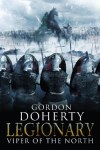
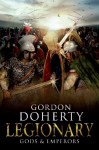
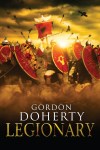
The first time I threw myself fully into the literary time machine I travelled back to the 4th century AD. This was a tale that was later to take shape as ‘Legionary’, the first volume in the eponymous series. Back then, I had lots of time, moderate expectations and a readership of zero. So I spent nearly six years reading and shaping my understanding of the world of the XI Claudia Legion and their stamping ground in the late Eastern Roman Empire. Although there were a few historical bloopers in there, by the time I published the first edition in 2011, I had a pretty solid grasp of the time period.
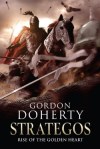
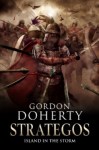
For my second novel, ‘Strategos: Born in the Borderlands’, I hopped into the time machine once more, travelled to the 11th century AD and delved into the mystical world that was apogee-era Byzantium. Now that was a mix of new ground and old. Byzantium was a direct continuation of the Eastern Roman Empire, after all, but by the 11th century it had morphed into something quite unique: blending elements of its western, Latin heritage with its Greek present, its emperors dressing in attire more suited to Persian kings and its people unwavering in their worship of the Christian God. Equally, while the political landscape had changed between the 4th century of Legionary and the 11th century of Strategos, both tales were set in and around the city of Constantinople, and across the countryside of Anatolia (modern Turkey) and Thracia (modern Bulgaria). So, different as Byzantium was, writing the tale of Strategos felt as if I was expanding on my solid Eastern Roman foundations.

That was five years ago. Since then I have stuck faithfully to the two series. Late Rome and apogee Byzantium have been my ‘thing’. Now, however, I have come to a crossroads that I always knew awaited me. The Strategos trilogy is complete and the Legionary series has reached a brief interlude at the end of ‘act 1’ (five books so far). What next? Another Roman tale? Well I am midway through a Roman-era trilogy with my good friend, Simon Turney – watch this space for news on that – but that only takes up a small portion of my writing time.

But what’s my next solo project? Well, the time machine has been nagging me for a long while to take it somewhere – or rather sometime – different. Sometime far more ancient than the world of the Byzantines or the Romans.

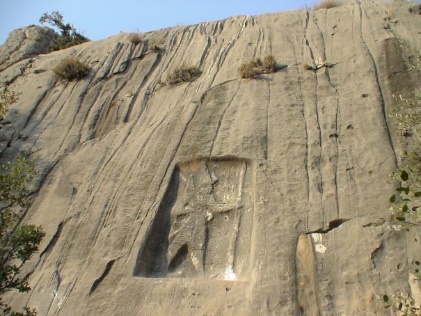
I once read an old text chronicling the history of Anatolia. It spoke of ancient, misunderstood carvings and reliefs on the mountainsides and bluffs of Turkey, mighty stelai telling of a once-great power, lost in the fog of history. The Greek historian Herodotus thought some of these reliefs had been carved by a conquering Bronze Age Egyptian Pharaoh who had marched into and claimed Anatolia…

…he was wrong.

The Karabel Pass in western Turkey. Herodotus mistook the relief to be that of an Egyptian Pharaoh.
3

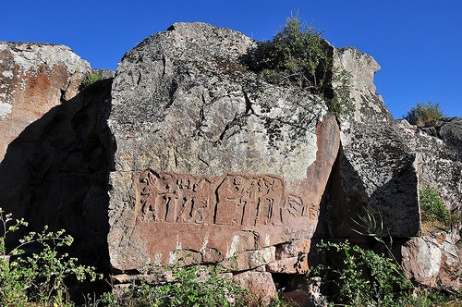
The Fraktin relief in southern Turkey.
4

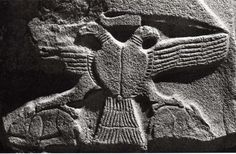
The Haga emblem, emblazoned on the gates of Arinna, a city in north-central Anatolia. It was such a relief that Apion first saw when riding through Chaldia in Mansur’s wagon in Strategos.
5

In Search of the Lost King

These markings are an echo from the Bronze Age, when the flame of antiquity was but young and bright, an age when Great Kings ruled the known world. Indeed, the rulers of Egypt, Assyria and Babylonia were gods incarnate. It is only in the last century or so that we have come to understand that these three divinely-appointed kings were not alone… for there was a fourth – a Great King who ruled Anatolia and whose artisans decorated his realm with reliefs like those above. His kingdom was known as the Land of the Hatti.

Together with the panoply of vassal states on its periphery, we know it as the Empire of the Hittites.

6.png

1260 BC. The powers of the near east in the late Bronze Age. Note that the term ‘Hittite Empire’ is a debate in itself. The Hittites actually called their realm ‘The Land of Hatti’, and referred to themselves as ‘The People of the Land of Hatti’. The term ‘Hittite’ comes from the Hebrew Bible, which refers to a group of relatively insignificant tribes living in the hills of Syria during biblical times – long after the fall of the Bronze Age. Modern Archaeologists, realising that these biblical tribes were the fragmented remnant of ‘The People of the Land of Hatti’, thus took to using the term ‘Hittite’ to refer to the Bronze Age superpower as well.

And as for the Hittite Empire? It was not an empire in the modern sense, more a proto-empire: a kingdom that enjoyed a loose hegemony over a band of vassal states around its borders. So in my story, I could refer to ‘The Hittite Empire’, or ‘The Proto-Empire of the People of the Land of Hatti’. I think I know which I will use 😉

Also note that Babylonia – absent from this map – had by this time been conquered by its more-powerful Assyrian neighbour (the southern end of the Assyrian domain roughly corresponds to ancient Babylonia).

And you will notice the land of ‘Ahhiyawa’ in the west, roughly equitable with modern-day Greece. Was this the land of Homer’s ‘Achaeans’? Were they a fifth great power? One thing is for certain – they had a massive part to play in the cataclysm that was to come…

The Hittites – a Bronze Age Superpower

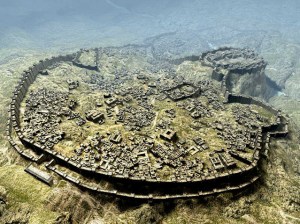
The Hittite King – chosen by the Storm God and the Sun Goddess who stood at the head of their diverse and abundant pantheon – would have scoffed at the notion of Egyptians even setting foot in his homeland, let alone carving a victory relief upon its sacred rock. The Hittite army enjoyed a fierce reputation and defended their heartlands with their lives. Mighty Troy was but a minor vassal on the western outskirts of the Hittite Empire, its fine walls dwarfed by those of the Hittite capital of Hattusa – a sprawling fortress-city set firmly upon a craggy hillside high up on the central Anatolian Plateau.

A reconstruction of Hattusa, capital city of the Hittite Empire for long periods of its history.
7

The site of Hattusa today, as seen from the west, with a reconstructed section of the lower town wall in the foreground and the craggy hillside upon which the city rested behind.

8

Finding the Hittites

You can probably tell from my excitable language in the last few paragraphs that I’ve already answered the time machine’s call. For the last few years I’ve been studying hard to understand the world of the Hittites. And in the last few months a first draft has been blossoming… and is now complete!

There is a long way to go yet before I have a finished novel, but the experience so far has been like a breath of fresh, Anatolian air. A new era, an untouched timeline of kings, wars, glory and ignominy; a whole host of characters rising from the historical sources: principled warriors, dark heroes, venal kings and shadowy courtiers.

Yet for all this promise, the sheer scale of the Hittite world and all they became involved in during the last centuries of the Bronze Age has proved to be very daunting and at times almost overwhelming. Indeed, the ‘step’ backwards into the Bronze Age itself has proved to be a massive leap. It has demonstrated to me how much I have learned about the Roman and Byzantine eras, for at almost every equivalent turn in my Hittite writings, I have met a cyclopean or mud-brick wall etched with a big, fat cuneiform question mark.

How did they say hello? Did they pave their roads? How did they organise their armies? What did they eat? How did they wipe their… well, you get the picture.

9The Hittite Army returning from battle with a long line of POWs (who are set to be put to work in the barren mills, fields and uplands of Anatolia).

The Hittite realm – sometimes called the land of 1000 gods – is a mist-veiled riddle. Their world is alien in comparison to that of the Greeks or Romans: the technology, the language, the customs and values, and their Gods (though Hesiod’s Theogony has many parallels with the Hittite myth of the Storm God’s beginnings). It’s been an absolute whopper of a learning curve, but I love learning (and I love curves? Er… move on!), even when it means trawling books and websites for hours to find the location of an old temple or fort ruin. And that’s the joy of it – ever the Indiana Jones wannabe, I see myself as an explorer at the edge of a dark jungle. I feel fear in my belly at the size of the task ahead and excitement coursing through my veins to think of what wonders might lie within. I refuse to dwell on the former and it’s a pleasure to seize the latter. It has been a privilege to learn, explore and conjure a tale along the way as I journey through the Hittite world.

Oh, and they raised a clenched fist to say hello or at least to salute/greet. They didn’t have paved roads. They organised their armies into divisions, subdivided into thousands (and they didn’t have cavalry – at least not in the sense we might recognise today). Amusingly/disgustingly, they made people eat poo and drink pee as punishment. Oh, and bestiality was punishable by death… unless it was with a horse, in which case it was absolutely fine. There is more, much, much more, but as usual, probably only 30% of the massive vault of facts and figures I’ve compiled will find a place in the story – as a reader I don’t appreciate books that try to shoehorn detail into an otherwise flowing story and I try to make sure I never make this mistake as a writer. That said, I’d never sidestep a thorough research stage: I’ve lost count of the number of times I’ve stopped writing because I’ve been posed a valid question mid-scene (e.g. did the Hittites use birthing stools?) and only had to leaf through my research doc to find the definitive, referenced answer. Off the cuff/on-demand research can work, but it can make progress somewhat jittery and unpredictable.
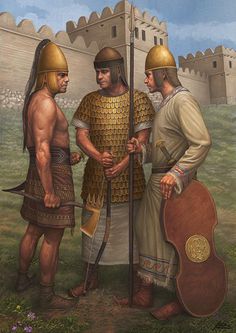
10

Hittite Warriors in discussion outside Hattusa’s mighty walls.

The Art of the First Draft

So how does one write a first draft? Well, some call it the ‘vomit-draft’, which is self-explanatory. I prefer the following analogy:

Gordon’s writing analogies #5617: Research and planning is like identifying a quarry site in the hills and selecting your chisels. The first draft is akin to hacking a big ugly chunk of limestone out of the hillside and dragging it down to your workshop.  The second and subsequent drafts and edits are where the artisan hews, sculpts and polishes the block, eventually producing a gleaming marble statue.

Putting the first sentence of my Hittite tale on the page was very, very difficult. Not because my mind was blank or short of ideas, but because I had a thousand different voices in my head, hectoring and squabbling over the how, where, when and why of that opening line. Yet I got there and it was like breaking the seal on a coffee jar. The first ten thousand or so words just spilled out of me after that, without much thought or doubt, other than to remember not to use the words steel or iron as much as I usually do!

Further along the line I hit some bumps and potholes. As usual, these came in the form of contradictions where one plot line made another impossible, or where I found a hole in my research that needed to be filled in. I stuck to usual practice when this happened: fixing the small issues there and then, but anything that was likely to take more than, say, ten minutes to fix, I’d just add a comment to the relevant section and move on. These comments then serve as a task list to be looked at after the first draft is done (indeed, that’s my next job!).

Some bumps are bigger than others. I was assaulted by a ‘fact-bomb’ just last week: hours after writing the final few lines of the first draft’s concluding chapter, I found a PDF excerpt from an academic paper that summarised the life of my main character and it proudly and smugly (okay, maybe not smugly) asserted that he was born 14 years AFTER my estimate of his birth date. And, as sod and his cursed legal code would have it, my book focuses on the first 14 years of the character’s life… 14 years of events rendered irrelevant to the character by the sneering, triumphant PDF. I’ll fix things though, by reworking the plot (AKA open-heart surgery, which has to happen at least once per book). And I’ll get my revenge on the PDF (by disabling Adobe updates – ha!).

When it comes to character-development, slipping into a pair of Hittite boots (leather, toes upturned) with this first draft has been a reinvigorating experience. I’ve ‘walked’ the ancient Anatolian routes and ‘seen’ that long-gone world through the eyes of the people who will live again in my tale. This, being the first book in a new series, puts me in the unfamiliar situation of having characters not neck-deep in effluent from the previous volume and needing to find a way out. My job, therefore, is to get them into the crap as soon as possible (and when you read the prologue, you’ll see I waste no time in doing so). Some of the characters have played out as planned, but not many. As usual, some of them blurt something out unexpectedly: loyal friends become dark-eyed and jealous; brave warriors suddenly find their guts turning to water, and cool-blooded generals make hot-headed judgements, only to suddenly find themselves in the jaws of disaster.
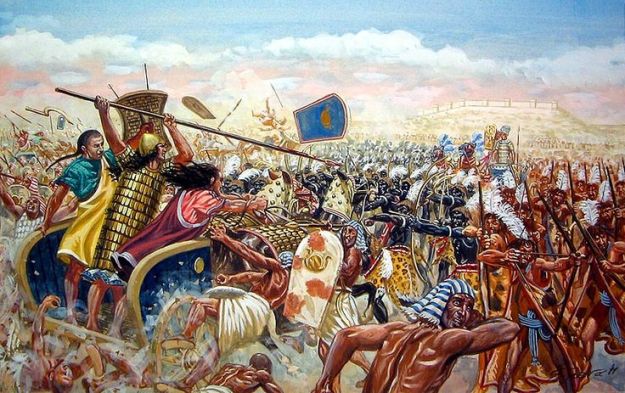
10The thick of battle: a Hittite chariot crew of a driver, a warrior and a shield-bearer.

Watch This Space

So, I hope that gives you a taste of things to come from me. I really hope this all comes together into a tale that readers out there can enjoy as much as my previous books. All being well, and assuming the time machine keeps running smoothly, I expect volume 1 of the new saga to be out in autumn this year. Watch this space for updates!

It’s been great talking with you, David. Thanks for having me.

www.gordondoherty.co.uk

Twitter: @gordondoherty

Facebook: Gordon Doherty

The Legionary Series:

The Strategos Trilogy:


Red Horse by M.J. Logue – Review

Title – Red Horse (An Uncivil War #1)
Author – M.J. Logue
Genre –  Historical Fiction
Length –  357 Pages (Print)
Publication – Jan 2015
My Rating – 5/5 Stars

Synopsis

September 1642, and the storm clouds of civil war are gathering over England. After the King raises his standard against his rebellious Parliament, idealistic young Luce Pettitt sees his duty clear – to defend the noble cause of freedom against the Royal tyrant. He doesn’t expect that duty to lie with possibly the scruffiest, most disreputable troop of cavalry in the Army of Parliament, commanded by maverick ex-mercenary Hollie Babbitt. Events conspire to bring Hollie and Luce to a wary friendship, in spite of their differences. But in the aftermath of the first bloody battle of the war, will Luce keep faith with his ideals, or his friend?

Review

So the English Civil War isn’t a period I’ve read about before but the cavalry have always fascinated me since I was young so when offered the chance to read this book in exchange for an honest review I jumped at the chance.

Now I’ve read a lot of books that contain war scenes and this book did something different to most.. the author decided to focus on the characters rather than the fight so the action moves quickly and you don’t get bogged down trying to imagine the field of battle. It makes for a smooth following story, rich in detail but just enough to give the story it’s realism.. The best detail in the book is left for the characters in my view.

The two main characters are Hollie and Luce. I won’t lie at first I just didn’t either of them.. they both came across as arrogant..they can only see things from their own perspective.. but you know there’s more to them and it compelled me to keep reading instead of going to bed at a reasonable time… I’m sure my wife loved the bedroom light being on at 2am 🙂

Both of these men a flawed, and brilliantly so. I won’t go into detail as I think it would take something away from the reader. My honest view is that these two work well together and to see them develop throughout the story, egged on by each other was just brilliant.

I loved Babbitt’s troop also, when they were around it helped break up all the Hollie and Luce scenes so kept things fresh for the reader. There is also a special bond throughout the book with man and beast which I just loved. You can’t help getting attached to animals and after reading the book I feel a little attached to Babbitt’s horse Tyburn myself

Some of the author’s best bits were when they showed a particular event from two perspectives. I couldn’t help but find myself smirking at how things can be seen differently.

This all felt like a very real tale, with rich detail that made it come alive. The two main characters worked and developed well off of each other and in all honesty I need more.. book 2 will be added to my TBR list very shortly.

This was a very refreshing read for me.. can’t wait to read more

To find out more head to Goodreads, Amazon.co.uk or Amazon.com

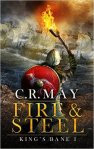
Fire & Steel (King’s Bane Book 1) by C.R. May – Review

28960877

Title – Fire & Steel (King’s Bane Book 1)
Author –  C.R. May
Genre –  Historical Fiction
Length –  355 Pages
Publication – March 2016
My Rating – 4/5 Stars

Synopsis

523 A.D. Arthur is dead.

As Britannia burns a small tribe clings to its colony of Anglia.

Across the German Sea powerful enemies covet Engeln itself.

But the English are not easily cowed.

As Spear-Danes threaten the homeland a hero returns,

leading the fightback with ferocity and guile…

Review

I always like to do a bit of research before I read a book from an author.. as in do they have any other books out etc and a quick look shows C.R. May has a few books under his belt with some very decent reviews so I was looking forward to what could promise to be a great series to get into.

I wasn’t disappointed at all, it’s a nonstop ride for Eofer and his loyal men… honestly the man never stops moving.

I really enjoyed the descriptiveness and the language used to weave this tale, it was a nice blend of words I’m familiar with whilst also engaging my brain with some words I’ve not come across before.. I like this in a book, hooks you in.. keeps your brain active.

Not much is given away by the synopsis but you can tell from that and the cover that war is afoot..and lots of it. Revenge is the word to describe this book.. every action has a reaction and it left me wondering what was coming next..and indeed left me wondering what more can happen in book 2.

I did feel at times the story jumped too fast.. at one stage our hero arrives home and sees his family but with the turn of the page he’s off again. It didn’t leave much chance for the characters to develop or for me to bond with them but the authors style of writing leads me to believe these characters develop long term.. not just over 1 book

From reading the authors notes I can tell some of these characters have appeared in previous books also which will spur me on to read his previous books to gain more perspective into these characters.

While I would have liked to see a bit more growth with a few characters I did however fall I love with a few of the others. There were two who stood out for me as the most interesting Grimwulf and Spearhafoc.. I hope they play a bit part in the next book

The storyline itself took me a few chapters to get into.. to understand who Eofer was.. but once things got going I was hooked. I’m never one for spoiling a story but look out for some awesome battlefield scenes being played out.

Overall this is a very strong book; decent storyline with some very good characters who I hope will develop throughout the series. It’s a fast paced, well written story full of blood and death. The author clearly knows his stuff and the historical note at the end of the book helps keep fact from fiction. Credit to the author, he’s left me with a taste for his work.. and I want more

The book is out now! to find out more head to Goodreads, Amazon.co.uk or Amazon.com

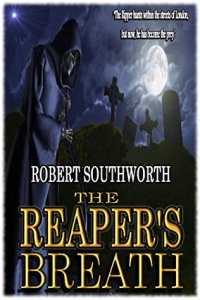
GIVEAWAY!!! – The Reaper’s Breath by Robert Southworth

Ok guys..today i bring to you a great chance to get your hands on a copy of the latest book from Robert Southworth!

29238904

Rob has very kindly offered up 2 copies!

For a chance to win 1 of these books either share this post on twitter or comment below. I’ll choose one person who tweets as well as one person who comments below to win.

Make sure i’m tagged in your tweet so i can see it 🙂

Open to UK residents, closing date is midnight Friday 18th March, winners drawn and announced on Saturday 19th.

If you want to remind yourself what the book is about then here’s the blurb –

Mary Kelly lies dead upon her bed… Her sorrowful eyes capture the agony of her fate. Anger, and fear walk side by side as the populace of London demand justice for the slain. William Harkness is a former officer of the 66th Regiment of Foot and he has entered the hunt. He will not bring a mad man to court, he is not tied by the laws of the land. William Harkness is the killer of killers, assassin of the evil…

You can also read my review here!

I rated it 5* and would love to hear your views.

If you’ve not been introduced to Rob’s work yet you should definitely take part in this giveaway and while your at it check out his other books! Have a look at Robs Amazon author page

The Reaper’s Breath by Robert Southworth – Review

29238904

Title – The Reaper’s Breath (The Ripper Legacies Book 1)
Author – Robert Southworth
Genre – Historical Fiction / Alternative History
Length – 242 Pages
Publication – Feb 2016
My Rating – 5/5 Stars

Synopsis

Mary Kelly lies dead upon her bed… Her sorrowful eyes still hold captive, the agony of her fate. Anger, and fear walk side by side as the populace of London demand justice for the slain. Is it a single mad man or is there a bloody political game being played out in the grime filled streets of the old City? The authorities are powerless to stop the bloodletting and call for a new kind of law. William Harkness, former officer of the 66th Regiment of Foot will join the hunt. His task is not to bring an insane killer to court, his hands are not tied by the laws of the day.
William Harkness is the killer of killers, the assassin of evil…

Review

Finally we have the new book from Robert Southworth. It feels like I’ve been waiting ages.. but let me tell you the wait has been worth it!

If you’ve read Rob’s previous series focusing on Spartacus you will know he has a talent for making a story based loosely on history. It’s an interesting style of story and If I’m honest before reading this book I wasn’t 100% sure it would work..the whole ripper event are well documented so I just couldn’t see an story to be told.. but credit to the author, he easily manages to take a little bit of history and give it a twist which shows just how good his imagination is.

To be clear for anyone who reads the book.. this isn’t a ripper book as such. It’s based on some of the events and some of the real people are mentioned but this is entirely a book of fiction on which Rob has been able to show his unique style of storytelling. I’ve never read anything like Rob’s book before and I’m so glad I found his work.

So.. the story. Well this book follows William Harkness, the classic flawed character which every great book needs. William is approached by Inspector Abberline to help when people turn up murdered.. they think there’s more to these murders than they are willing tell the public… they want him to help catch a killer who has avoided the police for over 15 years!

There was some great stand out characters for me, namely Obadiah & Naismith. Obadiah had the aura around him.. like nothing could hurt him.. ever. Naismith.. mysterious Naismith.. he was just an intriguing character from the start.

Let’s get down to the honesty I like to bring to all my reviews… The plot itself seems well planned out.. everything made sense, nothing seemed out of place or had me confused. At one point I was 100% sure I had figured everything out..Then the author throws in some spectacular twists and turns that I just didn’t see coming.

Emily was an interesting character, to be truthful I would have liked to see more scenes between her and William to see the connection develop but what the author gives us didn’t disappoint me..

The biggest enigma in the book for me was Williams’ dad, Sir Simeon Harkness. You don’t know much about him at first only that he and his son have issues. Throughout the book he develops well and the author finally lets you into the family history that has plagued these two men.

In conclusion Rob has brought his unique style to this book, plenty of suspense and twists to keep you gripped and it’s written so well, enough detail to keep your mind activate but not enough to bog you down.

Robert Southworth has delivered another brilliant book which showcases his talent and I’m eager for more

Look out for an interview with the author on my blog in the near future!

To find out more head to Amazon.co.uk, Amazon.com or Goodreads.

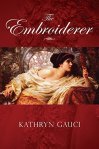
The Embroiderer by Kathryn Gauci – Review

24134515

Title – The Embroiderer
Author – Kathryn Gauci
Genre – Historical Fiction
Length –  433 Pages
Publication – Nov 2014
My Rating – 5/5 Stars

Synopsis

Set against the mosques and minarets of Asia Minor and the ruins of ancient Athens, ‘The Embroiderer’ is a gripping saga of love and loss, hope and despair, and of the extraordinary courage of women in the face of adversity.

1822: During one of the bloodiest massacres of The Greek War of Independence, a child is born to a woman of legendary beauty in the Byzantine monastery of Nea Moni on the Greek island of Chios. The subsequent decades of bitter struggle between Greeks and Turks simmer to a head when the Greek army invades Turkey in 1919. During this time, Dimitra Lamartine arrives in Smyrna and gains fame and fortune as an embroiderer to the elite of Ottoman society. However it is her grand-daughter, Sophia, who takes the business to great heights only to see their world come crashing down with the outbreak of The Balkan Wars, 1912-13. In 1922, Sophia begins a new life in Athens but the memory of a dire prophecy once told to her grandmother about a girl with flaming red hair begins to haunt her with devastating consequences.

1972: Eleni Stephenson is called to the bedside of her dying aunt in Athens. In a story that rips her world apart, Eleni discovers the chilling truth behind her family’s dark past plunging her into the shadowy world of political intrigue, secret societies and espionage where families and friends are torn apart and where a belief in superstition simmers just below the surface.

Review

I feel very lucky to have been offered the chance to review this book, I absolutely loved it.

For the most part the book focuses around Sophia, who came across as a very powerful character who has to deal with so much pain throughout her life… but there’s so much more to the book. It’s covers multiple generations and sometimes you are left with tit bits of information which light is shed onto later in the book. It made this book a fascinating read to say the least.

I felt a lot of time went into this book, the detail given not only to the characters but also the background..the places visited.. the people..and if I’m honest I loved the underlying family traits of painting and embroidery that were explored.

The major theme that plays out throughout the book is war.. and how it affects Sophia and her family.. and at times it was hard to read..i had my hand over my mouth a few times as some of the events.. it was so tragic.

This book was full of character development and the best part.. it was a natural development rather than forced… my heart ached for Sophia.

3 chapters in to the book I was already looking at rating the book a 4* simply because my brain couldn’t understand everything that was going on. It felt like three stories rolled into one.. I think that’s me.. I over think.. I look 10 chapters ahead wondering where a story will go. The way the author managed to tie everything together and to keep me waiting so long for the information I knew would come brought this up to the 5*. The suspense is what kept me reading even when I was tired..i just had to keep reading

The author also gives you a lot of background info to the wars that are being waged. It was hard to take it all in at times but rest assured this info doesn’t take anything away from the main story if you don’t quite understand it all.

In conclusion this is a wonderfully emotional book, full of heartache and love. The author has put so much into this book it’s hard to do it justice.. Read the book.. you’ll enjoy it

To find out more head to Amazon.co.uk, Amazon.com or Goodreads.

The Prospect of This City by Eamonn Martin Griffin – Review

41JA8rHu2ZL._SX311_BO1,204,203,200_

Title – The Prospect of This City: Being a novel of the Great Fire
Author – Eamonn Martin Griffin
Genre – Historical Fiction
Length – 309 Pages
Publication – July 2015
My Rating – 4/5 Stars

Synopsis

London, 1666. Agent provocateur Rufus Challis is given a secret mission by the Dutch government; an attack on England’s capital in reprisal for wartime losses suffered that summer. He has a single weekend to put his plan into motion.

When Tom Farriner, second son to the King’s baker, intercepts an aspect of Challis’s plan, he investigates. Already, a friend’s blood stains the cobbles. Is Tom man enough to bring Challis down? And to what lengths is Challis prepared to go to in order to see the city fall?

A novel for fans of CJ Sansom, Hilary Mantel, and Manda (MC) Scott, The Prospect of This City is a dark historical thriller with a blade concealed in its sleeve

Review

The book focuses on Rufus Challis and Tom Farriner. I’m not going to spoil the plot for anyone but Challis is not a nice man and Tom suspects this pretty early on.

I’m going to tell you straight away why I’ve given this book a 4 star..as I bloody loved the book but I wouldn’t have looked twice at the book if I hadn’t been sent a copy for review. The cover just doesn’t do anything for me. I know not everyone is like me but a cover needs to grab me.. otherwise I wouldn’t turn it over to read what the book is about.

This book for me was a diamond in the rough. I could never have imaged how brilliant the story would turn out to be.

Challis was a brilliant character, I could have read a whole series of books with him in.. his skills, his insight was exceptional. Is it wrong that I found myself liking the bad guy in a book?

Anyhoo, the other character Tom..he’s a bit of a nosy kid but has good intentions. He lives with his father, brother and Alice. There’s a complex family relationship going on throughout this book which added to the plot that develops with Challis led to one of the best tales I’ve read.

This book is full to bursting with detail.. sometimes too much. When the fire starts I found myself rereading bits of text to make sure I understood what the author was conveying.. there was so much to take in to try and place yourself in the fire.

Saying that at times the detail was so good it really did help you imagine what walking the streets would have been like, urine and faeces all around, whores offering their services to mention a few.

For me this was a brilliant historical thriller that I can’t help but feel anyone would enjoy. The plot is exceptional and it would be a great shame if you didn’t read it.

To find out more head to Amazon.co.uk, Amazon.com or Goodreads.

To Be a Queen by Annie Whitehead – Review

18961347

Title – To Be a Queen
Author – Annie Whitehead
Genre – Historical Fiction
Length – 406 Pages
Publication – Nov 2013
My Rating – 5/5 Stars

Synopsis

This is the true story of Aethelflaed, the ‘Lady of the Mercians’, daughter of Alfred the Great. She was the only female leader of an Anglo-Saxon kingdom. It is the tale of one family, two kingdoms and a common enemy. Born into the royal house of Wessex at the height of the Viking wars, she is sent to her aunt in Mercia as a foster-child, only to return home when the Vikings overrun Mercia. In Wessex, she witnesses another Viking attack and this compounds her fear of the enemy. She falls in love with a Mercian lord but is heartbroken to be given as bride to the ruler of Mercia to seal the alliance between the two Anglo-Saxon kingdoms. She must learn to subjugate her feelings for her first love, overcome her indifference to her husband and win the hearts of the Mercians who despise her as a foreigner, twice making an attempt on her life. When her husband falls ill and is incapacitated, she has to learn to rule and lead an army in his stead and when he subsequently dies, she must fight to save her adopted Mercia from the Vikings and, ultimately, her own brother.

Review

Where to begin..I really enjoyed this book. It’s a powerful coming of age tale of Aethelflaed or Teasel as she’s referred to in the book.

At first I didn’t like her but after she was wed to Ethelred and she starts to warm to him I found myself warming to her. Although I have to admit Ethelred was my favourite character in the book. He oozed power and respect and I loved reading any scene with these two in.

The tale is set over many years and we see Teasel grow from a little girl into a powerful woman who manages to break down her defences and those of the Mercians to win their loyalty and to fight for their lives and their land.

We see Teasel deal with love & death.. and a lot of it. You could imagine yourself in her position having no choice to marry a man for convenience.. whilst being in love with another. As she grows she has to deal with those she cares about dying around her.. ageing.. fighting and you sometimes feel that she is about to crack.

The book is full of detail, add to this an insightful historical note from the author left me in no doubt this is a 5 star book. I couldn’t have enjoyed it more.

Annie Whitehead manged to make the character of Aethelflaed come alive for me.. I felt for her..i didn’t want to put the book down

I’ve used this word before but indeed the word that springs to mind when I think about this book is Powerful! Anyone who enjoys historical fiction will enjoy this and anyone who loves a female heroine will absolutely fall in love with it. The development of the two main characters was superb.

This book is a perfect mix of historical detail, love and death to engross any reader.

I was also left thinking about the frailty of life and how things don’t always go the way we would like but that doesn’t mean you give up.. you fight. Not many books leave me with afterthoughts such as this. Credit to the author.. this book had a lot of depth in my view and I loved it.

To find out more head to Amazon.co.uk, Amazon.com or Goodreads.

Song at Dawn by Jean Gill – Review

26590149

Title – Song at Dawn
Author – Jean Gill
Genre – Historical Fiction
Length – 364 Pages
Publication – November 30th 2015 by The 13th Sign (first published October 12th 2011)
My Rating – 4/5 Stars

Synopsis

1150: Provence
On the run from abuse, Estela wakes in a ditch with only her lute, her amazing voice, and a dagger hidden in her underskirt. Her talent finds a patron in Aliénor of Aquitaine and more than a music tutor in the Queen’s finest troubadour and Commander of the Guard, Dragonetz los Pros.

Weary of war, Dragonetz uses Jewish money and Moorish expertise to build that most modern of inventions, a papermill, arousing the wrath of the Church. Their enemies gather, ready to light the political and religious powder-keg of medieval Narbonne.

Set in the period following the Second Crusade, Jean Gill’s spellbinding romantic thrillers evoke medieval France with breathtaking accuracy. The characters leap off the page and include amazing women like Eleanor of Aquitaine and Ermengarda
of Narbonne, who shaped history in battles and in bedchambers.

Review

This story follows Estela, who is thrust into the retinue of the Queen of France after she is found on the road side and proves she may have some worth.

From the start you know there is going to be a back story for Estela but you have no idea what.. and her story slowly comes out as you read the book, this made it a very compelling read as I just needed to find out what her story was.

I won’t lie.. from the cover of the book and the synopsis I was a little worried this book would be to “romance” for my tastes but Jean proved to be a brilliant writer, she gave just the right amount of romance for me to enjoy it.. and want more.

I really enjoyed the character of Dragonetz, a man of many talents not only can he charm women and have an abundance of musical talent he can also wield a sword… A perfect mix when it comes to historical fiction for me. I like blood, guts, laughter, music and love and this book gives it all

The storyline itself was very interesting, the plot that plays out was well thought out and kept me on my toes. I felt like Estela must have… I never quite knew who was behind things.. or who the real target was…. It was frustratingly brilliant.

At points in the book we were introduced to new characters and I did feel a little lost sometimes as at one point they came thick and fast but I soon managed to get me head around who everyone was and where there allegiances lie.

Overall I really enjoyed this book, it has a good mix of romance, violence and mystery to keep the reader interested and its full of rich detail for those who like a good amount of character development like myself.

I’ve already downloaded book 2 ready to read.

This book is currently free so you have no excuse not to get it! And book 2 is at the absolutely ridiculous price of 99p

To find out more head to Amazon.co.uk, Amazon.com or Goodreads.

10 Questions with…Keith Nixon

61BvXyq9J9L._UX250_

Today i bring to you an interview with author Keith Nixon who kindly offered to answer some of my questions. I hope you find this as insightful as i did myself.

Q1 – How long have you been a writer and what influenced you to first put pen to paper?

Since I was about nine but I really started writing properly about 25 years ago in my early 20’s. It was a historical fiction novel – my wife’s grandfather stole a train in WW2 Italy to escape from the Germans. I initially wrote historical fiction as I felt I could only write something around a central event. I started my Roman books because of a visit to Maiden Castle. It’s a massive structure and I wondered how the Romans had managed to take it. Otherwise the drive to put pen to paper (or finger to keyboard) is just something inside. I’ve no idea what produces it.

Q2 – I’ve read 3 of your books so far and they cover quite different subjects. Do you have a particular favourite genre?

My preference is crime. However, I can’t help but add a humorous edge (usually based on sarcasm) at least somewhere in a novel. I might try and outright humour novel next…

Q3 – Where do you get your ideas from and does it take long to see them come to full fruition

That’s a very difficult question to answer. It’s usually from a single spark. It might be an event, big or small that either happens to me, I hear about or read a newspaper article on. Or it might be a person and their behaviour or a couple of words that just makes me want to tell a story around it.

I’m a fast writer, but a slow congealer of a story. I take quite a bit of time pulling all the threads together and reworking story arcs. A 60-70,000 crime novel will take me six months. Considering I can write 1,000 – 2,000 words in a day if I’ve a clear run, that’s quite a stretch. Historical fiction is more like nine months, just because of all the layers of research that need to go in. Mind you, The Eagle’s shadow took nearly two years and nine redrafts.

Q4 – I’d be interested to know out of the novels you’ve wrote do you have a favourite?And if so why?

I’m up to seven published novels now and two more currently being beta read. They’re all a bit different. I’d probably choose The Fix, primarily because I’ll likely never produce anything like it again. I just had a lot of fun pulling it together and I never intended to have it published. Putting it out opened up so many things for me – a whole world of friends and experiences that I wouldn’t have otherwise had.

Q5 – Who have been your biggest influences/support within the writing community?

My biggest influence initially was Ian Rankin. His was the first crime novel I read (the seminal Black and Blue).

In terms of people I know and have worked with the list goes on. The crime genre is very supportive. There are lots of writers, bloggers and reviewers so willing to give of their free time.

Quite remarkable. So I couldn’t really name a single name for fear of leaving someone out. I’m very lucky…

Q6 – Are there any books/authors you’re looking forward to reading this year?

I read a lot less than I used to. A mixture of less time and a struggle to find novels that really do it for me. Tony Black is one author I always read, there’s a rumour he has a new Gus Dury novel out. Can’t wait for that…

Q7 – I note on your website you’ve done a few reviews yourself. Is this something you enjoy and plan to do more of?

Same issue of reading less really. I do enjoy reviewing, it’s a great way of connecting with other authors. I tend to cover crime (unsurprisingly), debuts and Scottish authors, but not exclusively.

I’d like to do more, but time is limited – writing a lot, busy job and family!

Q8 – How important is feedback from your readers?

Extremely important. Reviews are very hard to come by. I’ve sold about 15,000 copies of The Eagle’s Shadow, yet (at time of writing) reviews on Amazon UK are at 92. That’s a tiny level of respondents. I’ve learned a lot from feedback, primarily because as the author it’s a wood for the trees thing. I can see and hear all the behaviours and speech of my characters, but the reader is in a different place. If I’ve badly communicated the plot, they’ll soon tell me. It helps me grow as an author. I’ve been fortunate enough to have far more positive responses than negative.

Q9 – I particularly enjoyed The Eagles Blood & The Eagles Shadow, any plans to revisit Caradoc any time soon?

Caradoc was the one that properly started it for me so absolutely, yes. They’re my best sellers, but the longest to write. I’m just planning my as yet unnamed third Caradoc novel (it’ll have Eagle in the title, for sure). Ironically it’s my 10th novel. Once Caradoc sails away then I expect Fionn will take up the mantle with his own series.

Q10 – Plans for 2016? I’m sure we’d all like to know what you plan to bring us this year

Lots! The two crime books I have in beta (the fourth Konstantin novel and a police procedural) will come out at some point, depending on the publisher, and Caradoc 3 at least. I’d expect to have one further novel well underway by the end of 2016. I just wish I had more hours in the day…

Thank you Keith 🙂 I truly appreciate you taking the time to answer my questions and help myself and other readers have a little insight to your life

If you haven’t already take a look at my Author Spotlight post for Keith to see why i enjoy his books so much.

To find out more about Keith’s books head to Goodreads, Amazon.co.uk or Amazon.com

You can also connect with Keith via his website, Twitter and Facebook